


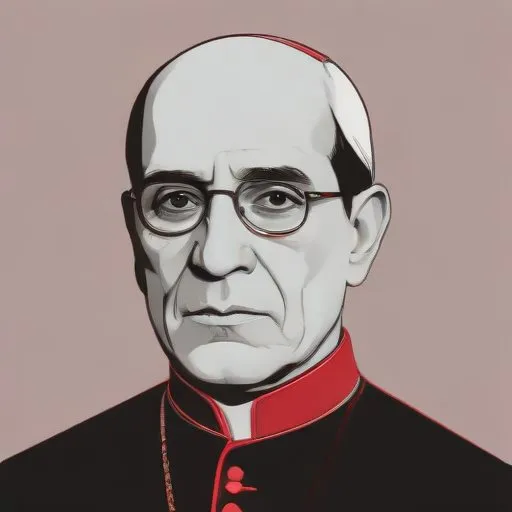
A 17th-century Spanish cleric who rose to prominence as a cardinal and served as the Archbishop of Seville, known for his influential role in the Spanish Inquisition.
Rodrigo de Castro Osorio, also known as Cardinal Rodrigo de Castro, was a prominent figure in the Spanish Inquisition and the Council of State of Spain during the reign of Philip II of Spain. He served as the Cardinal Bishop of Zamora, Diocese of Cuenca, and Archbishop of Seville, leaving an indelible mark on the Catholic Church and Spanish history.
Born on March 5, 1523, in Valladolid, Spain, Rodrigo de Castro Osorio was a member of the noble Castro family. He studied canon law at the University of Salamanca, where his brother, Pedro de Castro Lemos, would later become a bishop. Rodrigo's education and family ties set him on a path to greatness, shaping his future as a revered ecclesiastical prince.
Rodrigo de Castro Osorio's impressive career saw him hold various esteemed positions, including:
His travels and studies took him across Europe, including Flanders, Portugal, France, Italy, and Germany. In 1598, he embarked on a diplomatic mission to receive the Archduchess Margaret of Austria, future queen of Spain, on behalf of Philip III of Spain.
Rodrigo de Castro Osorio was a great-uncle to Pedro Fernández de Castro y Andrade, Count of Lemos. He was deeply connected to the city of Monforte de Lemos in Galicia, where he founded the College of Our Lady of Antigua.
As a Renaissance man, Rodrigo de Castro Osorio was known for his love of luxury, art, and falconry. His philosophical beliefs were deeply rooted in Catholicism, and he played a significant role in shaping the Spanish Inquisition. Despite criticisms of his opulent lifestyle, he remained a devoted servant of the Church and the Spanish monarchy.
Rodrigo de Castro Osorio's legacy extends beyond his numerous titles and accomplishments. He was a patron of the arts, and his love of falconry inspired literary works, such as Pero López de Ayala's "Treaty on Hunting Birds." His influence on Spanish history, the Catholic Church, and the Renaissance era continues to be felt to this day.
Rodrigo de Castro Osorio's life and legacy serve as a testament to his remarkable achievements, marking him as one of the most influential figures of the Spanish Renaissance.
Born in 1476
A fierce defender of Catholic orthodoxy, he implemented strict reforms and established the Roman Inquisition to root out heresy. His papacy was marked by controversy and conflict.
Born in 1568
The 17th-century Catholic leader who reigned for 21 years, known for his strong stance against Galileo Galilei and his scientific discoveries, as well as his extensive patronage of the arts.
Born in 1611
Led the Catholic Church during a tumultuous period, reforming the Church's finances and combating corruption, while also opposing the French monarch's attempts to exert control over the Church.
Born in 1585
A powerful and cunning statesman who dominated French politics during the 17th century, known for his ruthless suppression of dissent and centralization of power. He was a master strategist and diplomat who shaped the course of European history.
Born in 1431
Ruthless and cunning, this Pope was infamous for his corrupt and immoral ways, using his power to further his family's interests.
