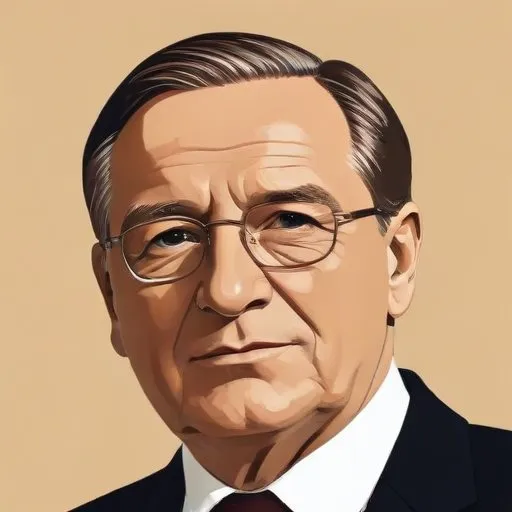
Roman Herzog: The Visionary Leader Who Shaped Modern Germany
A Legacy of Leadership and Constitutional Expertise
Roman Herzog, the seventh President of Germany, was a renowned politician, judge, and legal scholar who left an indelible mark on the country's post-reunification era. From 1994 to 1999, Herzog served as the first president to be elected after the reunification of Germany, earning him a place in the nation's history books.
Early Life and Academic Career
Born on April 5, 1934, in Landshut, Bavaria, Herzog hailed from a Protestant family. His father, an archivist, instilled in him a strong sense of responsibility and a thirst for knowledge. Herzog's academic pursuits took him to the University of Munich, where he studied law and later earned his doctorate in 1958 with a dissertation on the Basic Law and the European Convention on Human Rights.
During his academic tenure, Herzog worked as an assistant at the University of Munich until 1964, where he also passed his second juristic state exam. His paper, "Die Wesensmerkmale der Staatsorganisation in rechtlicher und entwicklungsgeschichtlicher Sicht" (Characteristics of State Organization from a Juristic and Developmental-Historical Viewpoint), earned him the title of professor in 1964.
Rise to Prominence
Herzog's transition to politics began in 1973, when he became a representative of the state of Rhineland-Palatinate in the Federal government in Bonn. His expertise in constitutional law and political science led to his appointment as State Minister for Culture and Sports in the Baden-Württemberg State Government, led by Minister-President Lothar Späth, in 1978.
A Judiciary Career Marked by Excellence
In 1987, Herzog was appointed as a judge of the Federal Constitutional Court, eventually becoming the President of the court from 1987 to 1994. His judicial tenure was marked by his commitment to upholding the principles of democracy and human rights.
Award-Winning Contributions
Herzog's outstanding contributions to European integration and his commitment to promoting democracy earned him the prestigious Charlemagne Prize in 1997.
Legacy and Impact
Roman Herzog's presidency was marked by his efforts to shape a unified Germany, promote European integration, and strengthen the country's role in the global arena. His legacy continues to inspire generations of politicians, judges, and scholars, solidifying his place as one of Germany's most influential leaders of the modern era.
Personal Milestones and Key Life Events
- 1934: Born in Landshut, Bavaria, Germany
- 1958: Earned doctorate from the University of Munich
- 1964: Became a professor of law
- 1973: Began his political career as a representative of the state of Rhineland-Palatinate
- 1987: Appointed as a judge of the Federal Constitutional Court
- 1994: Elected as the President of Germany
- 1997: Awarded the Charlemagne Prize
- 2017: Passed away on January 10, at the age of 82
Philosophical Contributions and Beliefs
Herzog's commitment to democracy, human rights, and European integration was rooted in his profound understanding of constitutional law and political science. His philosophical contributions continue to shape Germany's political landscape, emphasizing the importance of cooperation, tolerance, and respect for human rights.
Influence on Modern Society
Roman Herzog's presidency and judicial career had a profound impact on modern German society. His leadership played a significant role in shaping the country's post-reunification era, promoting European integration, and strengthening Germany's position in the global arena. His legacy continues to inspire generations of leaders, scholars, and citizens, fostering a deeper understanding of democracy, human rights, and the importance of European unity.
FAQ
What is Roman Herzogs profession?
Roman Herzog is a German lawyer and politician, who served as the 7th President of Germany from 1994 to 1999.
What was Roman Herzogs presidency like?
Roman Herzogs presidency was marked by his commitment to European integration, his support for human rights, and his efforts to promote reconciliation and unity in post-reunification Germany.
What awards has Roman Herzog received?
Roman Herzog has received numerous awards for his contributions to politics and law, including the Grand Cross of the Order of Merit of the Federal Republic of Germany and the honorary degree of Doctor of Laws from the University of Oxford.
What is Roman Herzogs legacy in German politics?
Roman Herzogs legacy in German politics is one of stability, reform, and international cooperation, earning him the respect of his peers and the German people.
What is Roman Herzogs current occupation?
Roman Herzog is currently a senior statesman and a prominent figure in German politics, continuing to contribute to public debates and discussions on key issues.