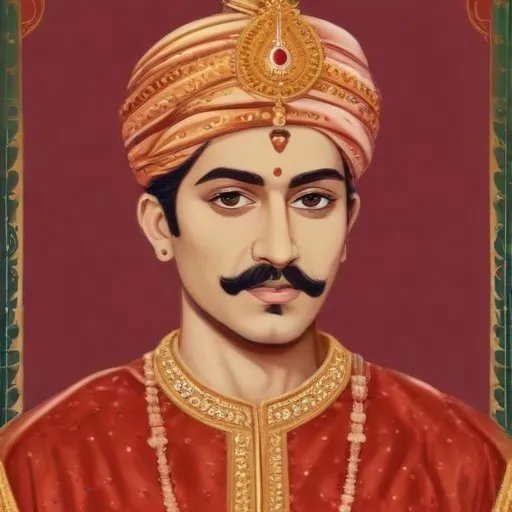
Shah Shuja: The Mughal Prince and Governor of Bengal
A Son of Shah Jahan and Empress Mumtaz Mahal
Shah Shuja, the second son of Mughal Emperor
Shah Jahan and Empress
Mumtaz Mahal, is renowned for being the governor of Bengal and Odisha, with his capital in Dhaka, present-day Bangladesh. Born on June 23, 1616, in Ajmer, Shah Shuja played a significant role in the Mughal Empire, leaving an indelible mark on the region.
Early Life and Family
Shah Shuja was adopted by his father's stepmother, Empress
Nur Jahan, immediately after his birth. This honor was bestowed upon her due to her high rank, political influence, and Jahangir's affection for her. Shah Shuja was a special favorite of his grandfather, Emperor Jahangir. He had several siblings, including
Jahanara Begum,
Dara Shikoh, Roshanara Begum, Aurangzeb, Murad Baksh, Gauhara Begum, and others.
Personal Life and Marriages
Shah Shuja married Bilqis Banu Begum, the daughter of Rustam Mirza, on March 5, 1633. The marriage was arranged by Princess Jahanara Begum, and the wedding presents worth Rupees 10 lakhs were displayed by Jahanara Begum and Satiunnissa Khanum. However, his first wife died in childbirth, and their daughter, Dilpazir Banu Begum, died in infancy. Shah Shuja later married Piari Banu Begum, daughter of Azam Khan, the second governor of Bengal during Shah Jahan's reign. She bore him two sons and three daughters.
Legacy and Impact
As the governor of Bengal and Odisha, Shah Shuja played a crucial role in the administration of the region. His capital, Dhaka, became a center of commerce, art, and culture during his reign. He was known for his patronage of the arts and his fascination with architecture, which led to the construction of several notable buildings and monuments in the region.
Historical Context and Legacy
Shah Shuja's life and reign are significant in understanding the Mughal Empire's expansion and consolidation in the Indian subcontinent. His role as the governor of Bengal and Odisha highlights the importance of the region in the Mughal Empire's economy and politics. Shah Shuja's legacy continues to inspire and influence the cultural and artistic heritage of Bangladesh and India.
Trivia and Fun Facts
- Shah Shuja was adopted by Empress Nur Jahan, who played a significant role in his upbringing.
- He had three sons: Sultan Zainul Din, Sultan Bang, Buland Akhtar, and Zainul Abidin.
- Shah Shuja's daughters were Gulrukh Banu, Roshanara Begum, and Amina Begum.
Conclusion
Shah Shuja, the Mughal prince and governor of Bengal and Odisha, left an indelible mark on the history of the Indian subcontinent. His life, reign, and legacy serve as a testament to the Mughal Empire's grandeur and cultural achievements. Through his patronage of the arts, architecture, and administration, Shah Shuja continues to inspire and influence the cultural heritage of Bangladesh and India.
FAQ
What was Shah Shujas role in the Mughal Empire?
Shah Shuja was a Mughal prince and the governor of Bengal during the reign of his father, Emperor Shah Jahan. He played a key role in the administration of the empire and was known for his military campaigns.
What led to Shah Shujas conflict with his brother Aurangzeb?
Shah Shujas conflict with his brother Aurangzeb arose from a power struggle over the succession to the throne after their fathers death. Shuja claimed the throne, but Aurangzeb ultimately emerged victorious.
How did Shah Shujas reign impact Bengal?
Shah Shujas reign in Bengal saw significant economic growth and cultural development. He encouraged trade and commerce, and his court became a center of learning and culture.
What was Shah Shujas relationship with the English East India Company?
Shah Shuja had a complex relationship with the English East India Company, which was active in Bengal during his reign. He granted them trade concessions, but also clashed with them over issues of taxation and control.
What was Shah Shujas legacy?
Shah Shujas legacy lies in his contributions to the development of Bengal and his role in the Mughal Empire. He is remembered as a skilled military leader and administrator.