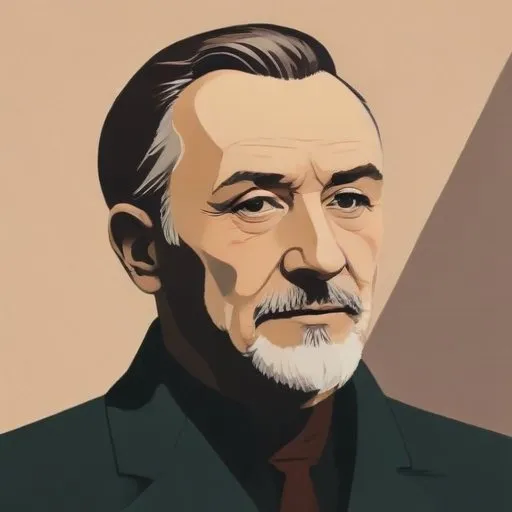
Stanislaw Ignacy Witkiewicz: The Renaissance Man of Polish Culture
Stanislaw Ignacy Witkiewicz, affectionately known as Witkacy, was a Polish polymath who made groundbreaking contributions to the world of art, literature, philosophy, and photography. As a writer, painter, philosopher, theorist, playwright, novelist, and photographer, Witkacy's creative genius knew no bounds, leaving an indelible mark on the cultural landscape of Poland and beyond.
A Creative Upbringing
Born on February 24, 1885, in Warsaw, Poland, Witkacy was the son of Stanislaw Witkiewicz, a painter, architect, and art critic, and Maria Pietrzkiewicz Witkiewiczowa. His family's artistic inclinations and encouragement of his creative pursuits from an early age helped shape his multifaceted talent. Witkacy's godmother, the renowned actress Helena Modrzejewska, further solidified his connection to the world of art.
A Diverse Body of Work
Witkacy's literary oeuvre includes novels, plays, and philosophical treatises that showcase his unique blend of modernist and avant-garde styles. His debut novel, "The 622 Downfalls of Bungo or The Demonic Woman" (1911), is a testament to his innovative narrative approach. As a painter, he was drawn to the avant-garde and expressionist movements, creating works that were both provocative and thought-provoking.
Witkacy's photography, taught to him by his father, is a lesser-known yet equally impressive aspect of his artistic portfolio. His intimate portraits of friends and family, including the composer Karol Szymanowski and anthropologist Bronislaw Malinowski, offer a glimpse into the lives of Poland's intellectual elite during the early 20th century.
Philosophical Contributions and Beliefs
Witkacy's philosophical ideas were deeply rooted in his fascination with the human condition, existence, and the role of art in society. He was drawn to the concept of "pure form," which posited that art should transcend its functional and utilitarian purposes to become a self-contained, autonomous entity. This idea permeates his literary and artistic works, as he sought to create a new, modernist aesthetic that would revolutionize the Polish cultural landscape.
Influence on Modern Society
Witkacy's influence extends far beyond the realm of art and literature. His contributions to Polish modernism and avant-garde movements paved the way for future generations of artists and intellectuals. His emphasis on the importance of individual creative expression and the autonomy of art continues to resonate with contemporary artists and thinkers.
Personal Milestones and Key Life Events
- 1914: Witkacy's fiancée, Jadwiga Janczewska, takes her own life, leading to a personal crisis that deeply affects his work and worldview.
- 1920s: Witkacy becomes close friends with the actress Irena Solska, who features as the heroine in his novel "The 622 Downfalls of Bungo or The Demonic Woman."
Legacy and Impact
Witkacy's untimely death on September 18, 1939, at the outbreak of World War II, marked the end of an era in Polish cultural history. However, his contributions continue to inspire and influence artists, writers, and thinkers to this day. As a testament to his enduring legacy, Witkacy's works remain a vital part of Poland's cultural heritage, a testament to the power of creativity and innovation.
FAQ
What is Stanisław Ignacy Witkiewiczs most famous work?
Stanisław Ignacy Witkiewiczs most famous work is the novel Insatiability, which is considered a classic of Polish literature.
What was Stanisław Ignacy Witkiewiczs role in the avant-garde movement?
Stanisław Ignacy Witkiewicz was a key figure in the Polish avant-garde movement, experimenting with new forms of art and literature.
How does Stanisław Ignacy Witkiewiczs work reflect his philosophical views?
Stanisław Ignacy Witkiewiczs work reflects his philosophical views on the human condition, morality, and the role of art in society.
What is Stanisław Ignacy Witkiewiczs contribution to Polish literature?
Stanisław Ignacy Witkiewiczs contribution to Polish literature is his innovative and provocative writing style, which pushed the boundaries of conventional literary forms.
What is the significance of Stanisław Ignacy Witkiewiczs poetry?
Stanisław Ignacy Witkiewiczs poetry is significant for its exploration of themes such as love, death, and the human condition, which resonated with readers in Poland during the interwar period.