


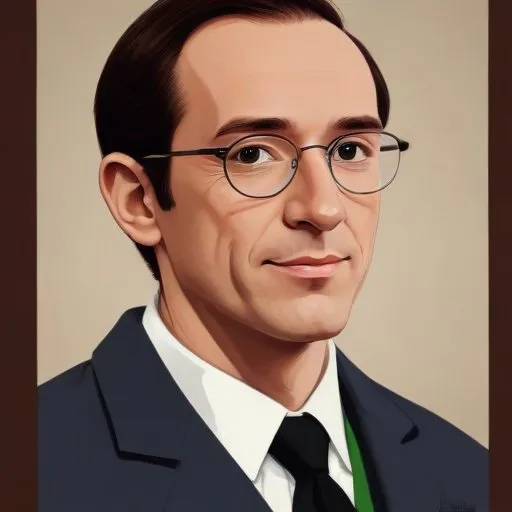
Pioneering physical chemist and academic, known for groundbreaking research in chemical kinetics, spectroscopy, and condensed matter physics, earning numerous awards and honors.
Stuart A. Rice is a renowned American theoretical chemist and physical chemist, celebrated for his groundbreaking contributions to multiple areas of physical chemistry. With a career spanning over five decades, Rice has made significant strides in our understanding of chemical systems, earning him the prestigious National Medal of Science in 1999.
Born on January 6, 1932, Rice grew up in the Bronx, New York, and attended the Bronx High School of Science. He went on to receive his bachelor's degree from Brooklyn College in 1952 and then pursued his master's and doctoral degrees from Harvard University, earning them in 1954 and 1955, respectively.
Rice's academic journey was not without its challenges. He contracted tuberculosis, which threatened to derail his graduate studies. However, he was fortunate to be cured through an experimental treatment of isoniazid and streptomycin. This experience would later shape his approach to scientific inquiry, fostering a strong work ethic and resilience in the face of adversity.
Rice began his academic career as a junior fellow at Harvard University, where he spent three years, including two years conducting research at Yale University's chemistry department. In 1957, he joined the faculty of the University of Chicago, where he has remained for an impressive 57 years, serving in various capacities, including as director of the James Franck Institute, chairman of the department of chemistry, and dean of the physical sciences division.
Rice has been an influential mentor to over 100 Ph.D. students and postdoctoral researchers, many of whom have gone on to become prominent scientists in their own right. His leadership roles at the University of Chicago have enabled him to shape the research landscape, fostering a culture of innovation and collaboration.
Rice's contributions to science have been recognized with numerous awards and honors, including the National Medal of Science, the highest scientific honor bestowed by the United States government. He has also received the Irving Langmuir Award, the Peter Debye Award, and the Hixon Medal, among others.
Stuart A. Rice's pioneering work has had a profound impact on our understanding of chemical systems, influencing generations of scientists. His legacy extends beyond his own research, as he has inspired a new wave of scientists to explore the frontiers of physical chemistry. Through his mentorship, leadership, and scientific contributions, Rice has left an indelible mark on the scientific community.
Rice's work is characterized by a deep appreciation for the intricate interplay between theory and experiment. He has emphasized the importance of fostering a culture of collaboration, wherein theoretical and experimental approaches are intertwined. This holistic approach has enabled him to tackle complex problems, often pushing the boundaries of what is thought possible.
In conclusion, Stuart A. Rice is a towering figure in the world of theoretical chemistry, whose contributions have reshaped our understanding of chemical systems. His dedication to science, mentorship, and leadership have inspired generations of scientists, cementing his legacy as a true pioneer in his field.
Born in 1901
Pioneering chemist and peace activist who won two unshared Nobel Prizes, one for chemistry and one for peace, for his groundbreaking work on the nature of the chemical bond and his tireless efforts to promote nuclear disarmament.
Born in 1896
Developed the molecular orbital method, a fundamental concept in chemistry that explains the structure and behavior of molecules. He was awarded the Nobel Prize in Chemistry in 1966 for his work.
Born in 1899
Developed quantum mechanics theories, including the concept of magnetism, and was awarded the Nobel Prize in Physics in 1977.
Born in 1902
A Hungarian physicist and mathematician who made groundbreaking contributions to quantum mechanics and nuclear physics, and was awarded the Nobel Prize in Physics in 1963.
Born in 1904
Developed the valence bond theory, a fundamental concept in chemistry that describes the formation of chemical bonds between atoms. This theory revolutionized the field of chemistry and paved the way for modern molecular physics.
Born in 1923
A Nobel Prize-winning chemist and academic who developed the theory of electron transfer, a fundamental concept in chemistry, and made significant contributions to our understanding of chemical reactions.
