


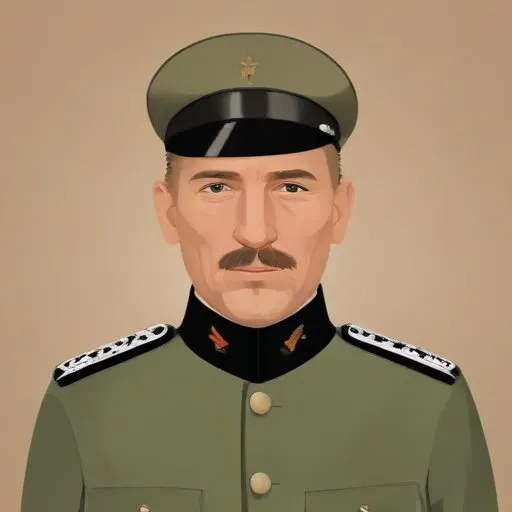
A Danish-German soldier and author who wrote gritty, semi-autobiographical novels about his experiences on the Eastern Front during World War II, offering a unique perspective on war's brutality.
Sven Hassel, the pen name of Børge Willy Redsted Pedersen, is known for his gripping novels about German soldiers fighting in World War II. His works have captivated readers worldwide, making him one of the bestselling Danish authors, potentially second only to Hans Christian Andersen.
Hassel claimed to have joined the merchant navy at 14 and later served in the German Army during World War II, fighting in tank units and surrendering to Soviet troops in Berlin in 1945. However, these claims have been discredited as false and outright fabrications by numerous post-war investigations.
In reality, Hassel was a Danish criminal who joined the German Army but was incarcerated for lying about his convictions. He was not captured in Berlin, as he was in prison in Denmark. In the post-war period, his false testimony led to the arrest and imprisonment of innocent people.
Despite his tainted past, Hassel's writing career took off in the 1950s. His debut novel, Legion of the Damned, was published in 1953, followed by a string of successful novels that drew readers into the gritty world of WWII.
Hassel's works often explored the horrors and complexities of war, raising questions about morality, loyalty, and the human condition. While his personal beliefs remain ambiguous, his writing sparked important discussions about the nature of war and its impact on individuals and society.
In 1951, Hassel married Laura Dorthea Guldbæk Jensen, a divorced film translator, in Copenhagen. The couple moved to Barcelona, Spain, in 1964, where Hassel lived until his death in 2012.
Hassel's novels have had a significant impact on popular culture, influencing many other writers and artists. His work has also sparked interest in WWII history, encouraging readers to explore the complexities of the war beyond traditional narratives.
Hassel's fabrications and criminal past have led to controversy and criticism, with some accusing him of profiting from false claims. However, his writing has also been praised for its raw, unflinching portrayal of war and its ability to captivate readers.
Hassel's writing is marked by vivid descriptions and poignant insights, such as: "War is not about heroes, it's about people who are forced to do things they don't want to do."
Hassel's works serve as a reminder of the complexities and horrors of WWII, contributing to a broader understanding of the war's impact on individuals and society. Despite controversy, his writing remains a significant part of literary history, continues to engage readers, and inspires new generations of writers.
Hassel's writing style and themes can be compared to those of other notable WWII authors, such as Erich Maria Remarque and Günter Grass. While each offers a unique perspective, they all share a common goal of exploring the human experience during wartime.
Hassel's marriage to Laura Dorthea Guldbæk Jensen was marked by a deep connection and mutual support. The couple's move to Barcelona, Spain, provided a tranquil backdrop for Hassel's writing, allowing him to focus on his craft.
Despite controversy, Hassel's writing has earned recognition and acclaim, with his novels remaining popular and influential in the literary world.
Born in 1898
A German-Swiss soldier and author, best known for writing the classic novel "All Quiet on the Western Front", a powerful anti-war tale that vividly depicts the horrors of World War I.
Born in 1888
A pioneering tank commander who revolutionized modern warfare with his innovative blitzkrieg tactics, earning him the nickname "Father of the Panzerwaffe".
Born in 1890
A German general who led the Sixth Army during World War II, ultimately surrendering to Soviet forces at Stalingrad, marking a major turning point in the war. He was the first German field marshal to surrender.
Born in 1876
A German naval leader who played a key role in the Kriegsmarine during World War II, overseeing the German U-boat fleet and naval operations. He was a close advisor to Adolf Hitler and implemented the German naval strategy during the war.
Born in 1891
A German naval commander who led the U-boat fleet during World War II and briefly served as President of Germany after Hitler's death, known for his role in the war and its aftermath.
Born in 1893
A high-ranking Nazi official, he was a decorated World War I fighter pilot and later became a prominent politician, serving as Minister President of Prussia. He's infamous for his role in the Nazi regime and war crimes trials.
Born in 1897
A mastermind of Nazi propaganda, he crafted a persuasive narrative that fueled the Third Reich's rise to power, leaving a lasting impact on the world.
Born in 1900
Leading the SS and Gestapo, he oversaw the Nazi regime's brutal security apparatus and implemented the "Final Solution," orchestrating the genocide of six million Jews during World War II.
