


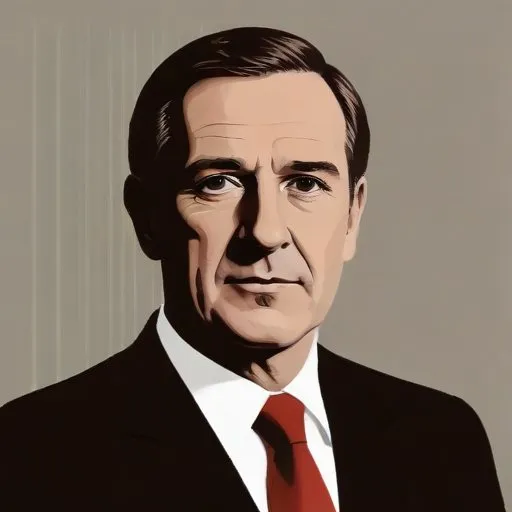
Australian High Commissioner to New Zealand, serving as a key diplomatic figure in fostering strong bilateral relations between the two nations. Noted for his efforts in promoting trade, cultural exchange, and mutual understanding.
Sir Ted Hicks is renowned for his exemplary career as a senior Australian public servant and diplomat, most notably serving as the Secretary of the Department of Defence from 1956 to 1968. During his tenure, he demonstrated exceptional leadership and vision, earning him widespread recognition and respect within the Australian government and beyond.
Ted Hicks was born on June 9, 1910, in Elsternwick, Melbourne, and grew up in a family that valued education. He attended Haileybury College and Melbourne Grammar School, before moving to Canberra in 1927 with his parents. Hicks pursued his interest in commerce at the Canberra University College, now known as the Australian National University.
Hicks' dedication and expertise led to his appointment as Secretary of the Department of Air in 1951. His impressive performance in this role paved the way for his promotion to the position of Secretary of the Department of Defence in 1956, succeeding the long-serving Frederick Shedden.
During his tenure as Secretary of Defence, Hicks played a pivotal role in shaping Australia's defence policies and strategies. He worked closely with government officials, defence personnel, and international partners to ensure the country's national security and interests.
Hicks' outstanding contributions to public service and defence were recognized with several prestigious awards and honors.
Sir Ted Hicks passed away on May 14, 1984, at the Royal Canberra Hospital, leaving behind a legacy of dedicated public service and exceptional leadership. His contributions to Australia's defence and diplomacy continue to inspire future generations of public servants and diplomats.
Hicks' work had a profound impact on modern Australian society, shaping the country's defence and foreign policies, and solidifying its position in the Asia-Pacific region. His leadership and vision continue to influence the development of Australia's defence capabilities and international relations.
Through his remarkable career and achievements, Sir Ted Hicks left an indelible mark on Australian history, serving as a testament to the power of dedication, hard work, and vision in shaping the country's future.
Born in 1905
A renowned Australian historian, poet, and politician who served as the 17th Governor-General of Australia, known for his literary works and contributions to the country's cultural heritage.
Born in 1894
The 12th Prime Minister of Australia, a lawyer-turned-politician who played a crucial role in shaping the country's post-war economy and foreign policy, and is often credited with establishing the modern Australian identity.
Born in 1908
The 17th Prime Minister of Australia, a lawyer-turned-politician who mysteriously disappeared while swimming, leaving behind a legacy of economic reform and a nation's unanswered questions.
Born in 1900
An Australian farmer-turned-politician who served as the country's 18th Prime Minister, known for his brief but significant tenure during a time of great change. He played a crucial role in shaping the nation's economy and foreign policy.
Born in 1916
The 21st Prime Minister of Australia, a lawyer, and lieutenant who introduced sweeping social and economic reforms, including universal healthcare and free education, and played a significant role in shaping the country's modern identity.
96 Years Old
The 22nd Prime Minister of Australia, serving from 1975 to 1983, known for leading the country through a period of significant social and economic change, and for his strong stance on human rights and multiculturalism.
70 Years Old
Australia's first female Minister for Foreign Affairs, serving from 2013 to 2018, known for her diplomatic efforts and advocacy for women's empowerment.
