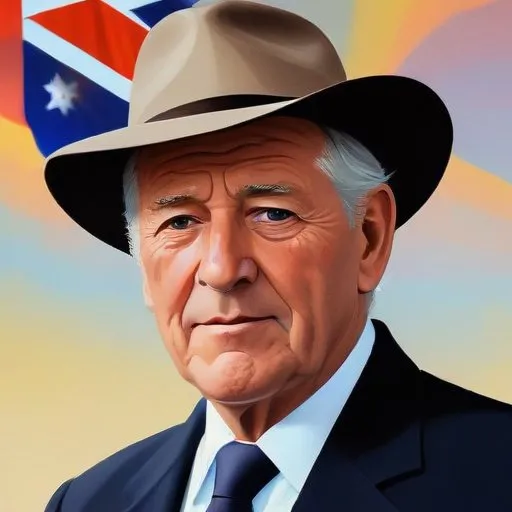
John McEwen: The Country Party Leader and Caretaker Prime Minister of Australia
The Legacy of a True Statesman
John McEwen is renowned for his exceptional leadership and dedication to the Country Party, serving as the 18th Prime Minister of Australia from 1967 to 1968, and as the inaugural Deputy Prime Minister of Australia from 1968 to 1971. As a farmer-turned-politician, McEwen's remarkable career spanned over three decades, leaving an indelible mark on Australian politics and economy.
Early Life and Career
Born on March 29, 1900, in Chiltern, Victoria, McEwen's life took a dramatic turn when he was orphaned at the tender age of seven. Raised by his grandmother, he went on to leave school at 13 and joined the Australian Army at 18. After the war, McEwen took advantage of the soldier settlement scheme and established a dairy farm in Stanhope. However, he later shifted his focus to beef cattle farming, which became a cornerstone of his life.
Rise to Prominence
McEwen's foray into politics began with his election to the House of Representatives in 1934. He swiftly rose through the ranks, becoming a cabinet minister under
Joseph Lyons in 1937. In 1940, McEwen became the Deputy Leader of the Country Party, and eventually, he succeeded
Arthur Fadden as the Leader of the Country Party in 1958. This marked the beginning of his remarkable 13-year tenure as the party leader.
Policies and Achievements
As a seasoned politician, McEwen played a pivotal role in shaping Australia's economic policies, particularly in the areas of agriculture, manufacturing, and trade. His expertise and vision earned him a spot in the Liberal-Country Coalition government, which came to power in 1949. McEwen's influence extended to various sectors, including primary industry development, infrastructure, and social welfare.
A Caretaker Prime Minister
In December 1967, following the sudden disappearance of Prime Minister
Harold Holt, McEwen took on the role of caretaker Prime Minister. At 67, he became the oldest person to assume the office, and only the third from the Country Party. During his 23-day tenure, McEwen demonstrated his leadership skills, paving the way for
John Gorton to take over as the new Prime Minister. In recognition of his service, McEwen was appointed Deputy Prime Minister, a position he held until 1971.
Personal Milestones and Key Life Events
- McEwen was married to Anne Mills McEwen from 1921 until her death in 1965.
- He was knighted in 1966 for his services to politics.
- McEwen passed away on November 20, 1980, at the age of 80.
Legacy and Impact
John McEwen's remarkable life and career have left an enduring impact on Australian politics and society. His dedication to the Country Party, his leadership, and his commitment to the nation have cemented his place in history. As a true statesman, McEwen's legacy continues to inspire generations of Australians, serving as a testament to the power of hard work, perseverance, and vision.
FAQ
What were John McEwens contributions to Australian politics?
John McEwen made significant contributions to Australian politics, serving as the 18th Prime Minister of Australia and playing a key role in shaping the countrys economic and trade policies.
What was John McEwens role in the Australian Country Party?
John McEwen was a prominent figure in the Australian Country Party, serving as its leader from 1958 to 1971. He played a crucial role in maintaining the partys influence and shaping its policies.
How did John McEwens background as a farmer shape his political views?
John McEwens background as a farmer shaped his political views, particularly his strong support for rural development and his commitment to promoting the interests of Australian farmers.
What were John McEwens views on trade policy?
John McEwen was a strong advocate for protectionist trade policies, believing that they were necessary to protect Australian industries and promote economic growth.
How did John McEwens leadership style impact Australian politics?
John McEwens leadership style was characterized by his strong sense of conviction and his ability to build coalitions and negotiate with other parties. His leadership had a lasting impact on Australian politics, particularly in the areas of trade and economic policy.