


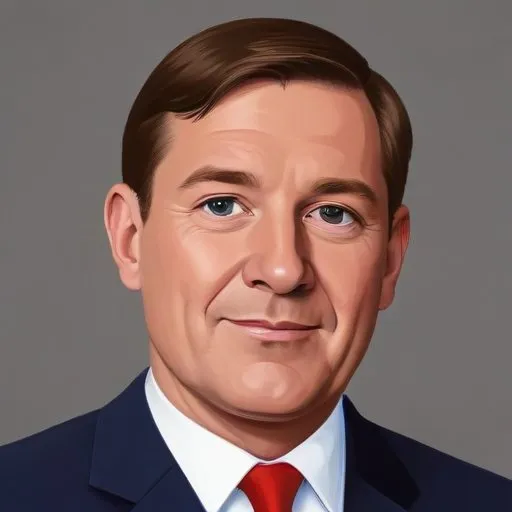
The 33rd Premier of South Australia, a pioneering figure who oversaw significant infrastructure development and economic growth in the state during the late 19th and early 20th centuries. He's most known for his visionary leadership and nation-building projects.
Sir Thomas Playford IV is renowned for his remarkable 26-year tenure as the Premier of South Australia, a milestone that etched his name in the annals of Australian history as the longest-serving premier of any state or territory. During his remarkable stint, he navigated the state through unprecedented economic and population growth, cementing his position as a stalwart champion of South Australian interests.
Born on July 5, 1896, into the esteemed Playford family, Thomas was the fifth generation to bear the name, with his grandfather, Thomas Playford II, having served as premier in the 19th century. Growing up on the family farm in Norton Summit, Thomas developed a strong affinity for the land and its people. His experience as a soldier in World War I, fighting in Gallipoli and Western Europe, instilled in him a sense of duty and perseverance that would later define his political career.
After the war, Thomas returned to farming, but his foray into politics was not far behind. He was elected as a representative for Murray in the 1933 state election, quickly earning a reputation as an outspoken backbencher who dared to challenge party norms. His unwavering advocacy for laissez-faire economics and opposition to protectionism and government investment often put him at odds with his party colleagues.
In 1938, following the resignation of Richard Layton Butler, Thomas Playford IV became the premier of South Australia, a position he would hold for the next 26 years. Initially viewed as a transitional leader, Playford defied expectations, skilfully navigating the complexities of a minority government and securing the support of independents to propel his vision for the state.
Thomas Playford IV was unapologetically parochial in his approach, zealously advocating for South Australia's interests and shamelessly extracting a disproportionate share of federal funding for the state. His folksy, down-to-earth demeanor earned him the affection of his constituents, who saw him as a champion of their cause.
Playford's legacy is not without its controversies. The malapportionment system, dubbed the "Playmander," was criticized for favoring rural areas at the expense of urban centers. Additionally, his unwavering support for big business and industries has been accused of contributing to environmental degradation and social inequality.
Thomas Playford IV's remarkable tenure as premier has left an indelible mark on South Australia. His unwavering commitment to the state's interests, his folksy charm, and his ability to secure resources have all contributed to his enduring legacy. While controversies surrounding his premiership cannot be ignored, his role as a champion of South Australia's growth and progress remains unchallenged.
In the annals of Australian history, Sir Thomas Playford IV will be remembered as a true original, a maverick leader who unapologetically pushed the boundaries to serve his beloved state.
Born in 1894
The 12th Prime Minister of Australia, a lawyer-turned-politician who played a crucial role in shaping the country's post-war economy and foreign policy, and is often credited with establishing the modern Australian identity.
Born in 1894
The 13th Prime Minister of Australia, serving from 1941, known for his brief but significant term during World War II, and his role in shaping the country's economy.
Born in 1877
The 28th Premier of South Australia, serving from 1925 to 1928, known for his role in shaping the state's economy and infrastructure during a period of significant growth. He implemented various reforms, including the establishment of the State Bank of South Australia.
Born in 1852
The 24th Premier of South Australia, a Welsh-Australian politician who served from 1905 to 1909 and implemented various reforms, including workers' compensation and electoral reform. He's also known for his role in shaping the state's economy and infrastructure.
Born in 1900
An Australian farmer-turned-politician who served as the country's 18th Prime Minister, known for his brief but significant tenure during a time of great change. He played a crucial role in shaping the nation's economy and foreign policy.
Born in 1908
The 17th Prime Minister of Australia, a lawyer-turned-politician who mysteriously disappeared while swimming, leaving behind a legacy of economic reform and a nation's unanswered questions.
Born in 1845
The 4th Prime Minister of Australia, a Scottish-Australian lawyer and politician who served from 1904 to 1905, known for his role in shaping the country's early years and contributing to its growth.
Born in 1856
The 2nd Prime Minister of Australia, a key figure in the country's early development, known for his role in shaping Australia's constitution and federation. He played a crucial part in uniting the country's six colonies into a single nation.
