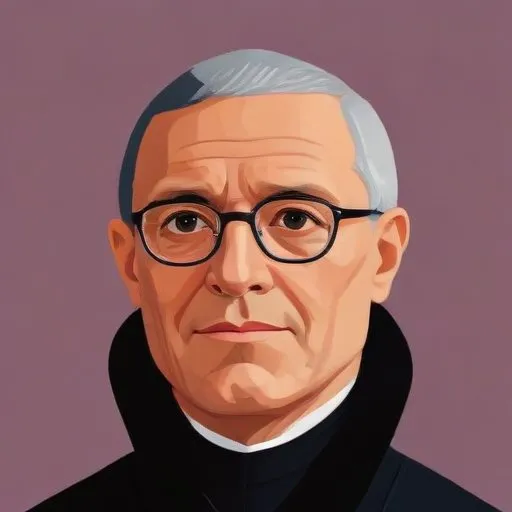
Valentin Friedland

Valentin Friedland

Valentin Friedland was born on February 14th, 1490

Full Name: Valentin Friedland
Profession: Scholar and educationist
Nationality: German
Born: 1490
Died: 1556
Notable Work: Commentary on Cicero
Influenced: Philipp Melanchthon
Education: University of Leipzig

A 16th-century German scholar and educationist who played a key role in shaping the Reformation through his writings and teachings, advocating for educational reforms and promoting Lutheran ideals.

Valentin Friedland: The Pioneering Educationist of the Reformation Era

A Renowned Scholar and Devoted Schoolmaster

Valentin Friedland is eminently recognized as a distinguished German scholar and educationist of the Reformation period, celebrated for his innovative approach to education and his profound influence on the intellectual landscape of his time. His remarkable career as a schoolmaster, marked by unwavering dedication and an unrelenting passion for learning, has left an indelible mark on the history of education.

Early Life and Education

Born on February 14, 1490, in the town of Trozendorf near Grlitz in Upper Lusatia, Friedland's early life was marked by poverty and hardship. Despite these challenges, he demonstrated an insatiable thirst for knowledge, teaching himself to read and write while herding cattle. His mother's parting words, "Stick to the school, dear son," had a profound impact on his career, as he refused all ecclesiastical promotion and remained committed to the vocation of a schoolmaster.

Following his education at the University of Leipzig, where he studied under the tutelage of renowned scholars such as Peter Mosellanus and Richard Croke, Friedland was appointed assistant master in the school at Grlitz in 1515. His academic prowess and pedagogical expertise soon earned him recognition, and he was summoned to study under Martin Luther and Melanchthon at Wittenberg.

Career Highlights and Major Works

Friedland's pedagogical approach, which emphasized the importance of clear expression and respect for individual honor, revolutionized the education system of his time. His innovative methods, which included entrusting elder scholars with the responsibility of teaching younger classes, soon gained widespread recognition.

Philosophical Contributions and Beliefs

Friedland's philosophical contributions were deeply rooted in his commitment to education as a means of empowering individuals and fostering intellectual growth. He believed in the inherent potential of every individual, and his pedagogical approach was designed to unlock this potential.

His emphasis on clear expression and respect for individual honor reflects his profound understanding of the human psyche and his commitment to nurturing well-rounded individuals.

Legacy and Historical Context

Valentin Friedland's legacy is inextricably linked with the Reformation era, a time of great intellectual and cultural transformation. His pioneering work in education played a significant role in shaping the intellectual landscape of his time.

As a contemporary of prominent figures such as Martin Luther and Melanchthon, Friedland's contributions to education and scholarship helped lay the foundations for the emergence of a new generation of thinkers and scholars.

Influence on Modern Society

Friedland's innovative approach to education has had a lasting impact on modern society. His emphasis on individual honor and clear expression has influenced generations of educators and scholars, shaping the course of educational thought and practice.

As we reflect on the life and legacy of Valentin Friedland, we are reminded of the transformative power of education and the enduring impact of visionary thinkers who have shaped our understanding of the world.

Timeline
1490
Born in Thuringia
Valentin Friedland was born in Thuringia, Germany, where he would later become a prominent scholar and educationist of the Reformation.
1515
Studied at University of Leipzig
Friedland pursued his studies at the University of Leipzig, developing his expertise in classical languages and literature.
1520
Became rector of the school in Schneeberg
Friedland was appointed as the rector of the school in Schneeberg, where he implemented his innovative educational methods.
1530
Published Institutionum graecarum
Friedland published his work Institutionum graecarum, a comprehensive guide to Greek grammar and syntax.
1543
Died in Schneeberg
Valentin Friedland passed away in Schneeberg, leaving behind a legacy as a prominent German scholar and educationist of the Reformation.
Valentin Friedland

Valentin Friedland Quiz

What was Valentin Friedland's primary role in the Reformation?

Score: 0/5
FAQ
What was Valentin Friedlands role in the Reformation?
Valentin Friedland was a German scholar and educationist who played a significant role in the Reformation, advocating for educational reform and promoting Lutheran ideals.
What were Valentin Friedlands contributions to education?
Valentin Friedland made important contributions to education, including the establishment of the University of Leipzig and the development of new teaching methods.
What was Valentin Friedlands relationship with Martin Luther?
Valentin Friedland was a close friend and ally of Martin Luther, supporting his ideas and working together to promote the Reformation.
How did Valentin Friedlands work influence later scholars?
Valentin Friedlands work had a significant impact on later scholars, with his ideas on education and reform influencing prominent figures such as Philip Melanchthon.
What was Valentin Friedlands legacy in the history of education?
Valentin Friedland left a lasting legacy in the history of education, with his contributions to the development of the University of Leipzig and his advocacy for educational reform remaining important to this day.

Related People:

Martin Luther

Born in 1483

A German monk and priest who sparked the Protestant Reformation, challenging Catholic Church authority and shaping Western Christianity. He's famous for nailing 95 theses to a church door, sparking a religious revolution.

Philip Melanchthon

Born in 1497

A 16th-century Renaissance scholar who made significant contributions to the development of the Protestant Reformation and education, known for his theological writings and astronomical observations.

Johannes Bugenhagen

Born in 1485

A key figure in the Protestant Reformation, he played a crucial role in shaping Lutheran theology and was a close advisor to Martin Luther. He's also known for his work in establishing the Lutheran Church in Denmark and Norway.

Justus Jonas

Born in 1493

A 16th-century Lutheran reformer and theologian who played a key role in shaping the Protestant Reformation, particularly in Germany. He's known for his translations of Luther's works and his own theological writings.

Andreas Osiander

Born in 1498

A 16th-century theologian who sparked controversy by anonymously publishing a preface to Copernicus' De revolutionibus orbium coelestium, which led to a misunderstanding of the astronomer's heliocentric model. They also contributed to the development of Lutheran theology.

Johannes Brenz

Born in 1499

A prominent figure in the Protestant Reformation, this theologian played a key role in shaping Lutheran theology and was a close associate of Martin Luther. He's also known for his biblical commentaries and liturgical reforms.

Huldrych Zwingli

Born in 1484

Leader of the Swiss Reformation, advocating for church reform and inspiring other Protestant movements.

John Calvin

Born in 1509

A French pastor and theologian who played a key role in the Protestant Reformation, shaping Christian theology and influencing Western civilization. He's famous for his teachings on predestination and his role in establishing Calvinism.