


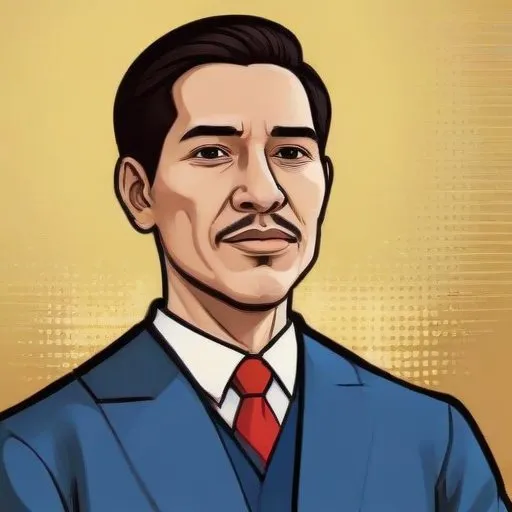
A Filipino lawyer and politician who served as a senator and was a key figure in the country's struggle for independence, known for his role in drafting the Philippine Constitution.
Vicente Sotto is best known as the author of the Press Freedom Law, also known as the Sotto Law, Republic Act No. 53, which was enacted in 1946. This landmark legislation has had a profound impact on the country's journalism and freedom of expression, cementing Sotto's legacy as a champion of press freedom in the Philippines.
Vicente Yap Sotto was born on April 18, 1877, in Cebu City to Marcelino Sotto and Pascuala Yap. He finished his secondary education at the University of San Carlos (formerly Colegio de San Carlos) in Cebu City. Sotto then pursued a degree in Bachelor of Laws in Letran and Judicial Science, and later studied law in Manila Law College, where he passed the bar examinations in 1907.
Sotto's entry into politics began in 1902 when he ran for the municipal council of Cebu and won. In 1907, he was elected mayor, despite being absent during the election due to a court battle. Sotto returned to the country in 1914 and continued to serve in various political roles, including as a representative of the second district of Cebu from 1922 to 1925 and as a senator from 1946 to 1950.
Sotto's most significant contribution to Philippine history is the Press Freedom Law, which he authored and was enacted in 1946. This law guarantees the freedom of the press, allowing journalists to report without fear of censorship or retribution. The law has been instrumental in promoting a free and independent press in the Philippines, and its impact is still felt today.
Sotto was a member of the Philippine Independent Church, also known as the Aglipayan Church, which he saw as a symbol of national pride and independence from the Roman Catholic Church.
Vicente Sotto's legacy extends beyond his political career and the Press Freedom Law. He is remembered as a principled and recalcitrant individual who fought for what he believed in. His commitment to promoting press freedom has inspired generations of journalists and freedom fighters, and his impact on Philippine society is immeasurable.
When Sotto passed away on May 28, 1950, at the age of 73, he left behind a legacy that continues to shape the country's media landscape. His contribution to the promotion of press freedom is a testament to his enduring impact on Philippine history.
Born in 1878
The 2nd President of the Philippines, a key figure in the country's fight for independence from the US, known for his leadership during World War II and establishing a government-in-exile.
Born in 1878
The 4th President of the Philippines, a lawyer and politician who played a key role in the country's transition from American colonial rule to independence. He's most known for his efforts in rebuilding the war-torn nation after World War II.
Born in 1869
Led the Philippine Revolution against Spanish colonial rule and later established the First Philippine Republic, becoming its first president. He's revered as a national hero for his fight for independence.
Born in 1899
A Filipino soldier and politician who served as President of the United Nations General Assembly, known for his efforts to promote international cooperation and peace. He was a key figure in shaping the UN's early years.
Born in 1910
A Filipino lawyer and politician who served as the 9th President of the Philippines, known for his efforts to reform the country's economy and introduce the Filipino language as the national language.
Born in 1917
A Filipino leader who ruled with an iron fist, implementing martial law and amassing wealth, leaving a legacy of controversy and economic turmoil.
93 Years Old
First female president of the Philippines, led the People Power Revolution, and restored democracy after decades of authoritarian rule.
89 Years Old
The 13th President of the Philippines, a former actor turned politician, is known for his populist appeal and controversial presidency marked by corruption allegations and an eventual impeachment trial. He's also remembered for his efforts to address poverty and inequality.
