


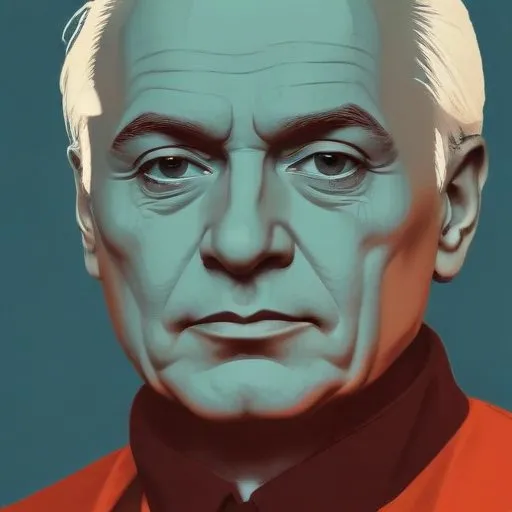
A Soviet-era dissident and writer who exposed the atrocities of the Soviet psychiatric system, and advocated for human rights and democracy.
Vladimir Bukovsky, a Russian-born British human rights activist and writer, is renowned for his fearless crusade against the Soviet Union's oppressive regime, exposing the political abuse of psychiatry, and advocating for democracy and individual liberties.
Bukovsky's activism began in the late 1950s, when he was still a teenager, and continued until his exile from the Soviet Union in 1976. During this period, he spent a total of 12 years in psychiatric prison-hospitals, labor camps, and prisons, a testament to his unwavering commitment to challenging the Soviet system.
Bukovsky's most significant contribution was his campaign to expose the Soviet Union's practice of using psychiatry as a tool to suppress political dissent. He documented numerous cases of dissidents being forcibly committed to psychiatric institutions, subjected to brutal treatment, and diagnosed with fabricated mental illnesses. His work led to international outrage and eventual reforms.
Bukovsky's tireless advocacy earned him several prestigious awards, including the Truman-Reagan Medal of Freedom in 2001, awarded by the Victims of Communism Memorial Foundation.
Born on December 30, 1942, in Belebey, Bashkir Autonomous Soviet Socialist Republic (now the Republic of Bashkortostan, Russian Federation), Bukovsky's family was evacuated to Moscow during World War II. His father, Konstantin, was a well-known Soviet journalist. Bukovsky's own life was marked by struggles, including his expulsion from school for creating and distributing anti-Soviet literature.
In his later years, Bukovsky faced controversy when he was prosecuted in the United Kingdom on charges of possessing child pornography, which he attributed to a setup by Russian security services. Although he died in 2019 before the trial, his legacy as a champion of human rights and freedom remains unblemished.
Vladimir Bukovsky's unwavering commitment to human rights, democracy, and individual liberties has inspired generations of activists, writers, and thinkers. His work has been instrumental in shaping the global discourse on human rights, and his courage in the face of oppression has made him a legendary figure in the fight for freedom.
Born in 1921
A Soviet physicist and dissident who advocated for human rights and nuclear disarmament, earning a Nobel Peace Prize in 1975. He's known for his courageous stance against the Soviet regime, promoting peace and democracy.
Born in 1918
A Russian literary giant who exposed the harsh realities of Soviet forced labor camps through his writings, earning him a Nobel Prize in Literature.
95 Years Old
The last leader of the Soviet Union, who introduced reforms that led to the end of the Cold War and the collapse of communism, earning a Nobel Peace Prize. He's known for his policies of glasnost and perestroika, which transformed the Soviet Union and the world.
95 Years Old
First President of Russia, leading the country's transition from communism to democracy, and known for his bold reforms and iconic leadership style.
74 Years Old
A Russian politician who has dominated the country's politics for over two decades, known for his authoritarian leadership style and controversial foreign policy decisions.
61 Years Old
Russian lawyer and politician who served as President of Russia from 2008 to 2012, known for his efforts to modernize Russia's economy and politics. He also served as Prime Minister from 2012 to 2020.
78 Years Old
A Ukrainian-Israeli physicist and politician who served as Deputy Prime Minister of Israel, known for his advocacy for human rights and democracy, particularly during his imprisonment in the Soviet Union. He's a symbol of resistance against oppression and a champion of freedom.
Born in 1923
A prominent human rights activist in the Soviet Union, she fought for democracy and exposed government abuses, earning her the Nobel Peace Prize in 1975.
