


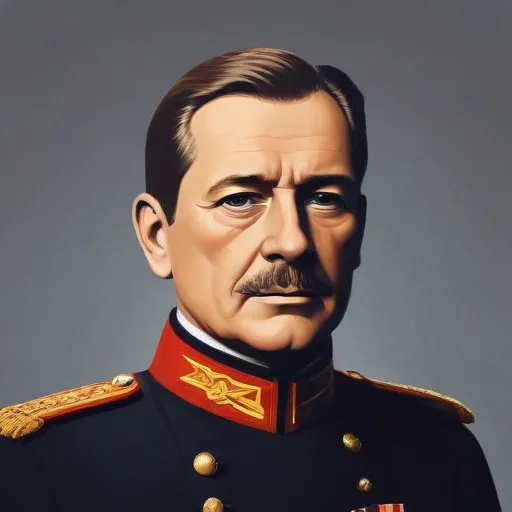
A high-ranking officer in the German Wehrmacht during World War II, known for his loyalty to Adolf Hitler and his role in the final days of the war. He was one of the last people to see Hitler alive.
Wilhelm Burgdorf is infamously known as the German general who played a pivotal role in the forced suicide of Field Marshal Erwin Rommel and later became the chief adjutant to Adolf Hitler during the final years of World War II. His name is often synonymous with the tragic events that unfolded in the Führerbunker, where he ultimately took his own life on May 2, 1945.
Burgdorf was born on February 15, 1895, in Fürstenwalde, Province of Brandenburg, Kingdom of Prussia, German Empire. Little is known about his childhood, but it is evident that he was drawn to a military career from a young age.
Burgdorf joined the Prussian Army in 1915 as an officer cadet during World War I. He was commissioned as an infantry officer in Grenadier Regiment 12 and quickly rose through the ranks. After the war, he served in the Reichswehr and was promoted to captain in 1930.
In October 1942, Burgdorf became the Deputy Chief of the Army Personnel Office, earning him the rank of Generalmajor. This promotion catapulted him into the inner circle of Nazi leaders, where he would play a crucial role in shaping the war's final years.
On October 1, 1944, Burgdorf assumed the role of chief of the Army Personnel Office and chief adjutant to Adolf Hitler, solidifying his position as one of the Führer's most trusted advisors. This appointment came with a promotion to General der Infanterie, the highest rank he would achieve during his military career.
Burgdorf's role in the forced suicide of Field Marshal Erwin Rommel is one of the most controversial events of his career. Rommel, a highly respected military strategist, had been critical of Hitler's leadership and was implicated in a plot to assassinate the Führer. Burgdorf, acting on Hitler's orders, played a key role in convincing Rommel to take his own life to avoid a public trial and maintain the illusion of unity within the Nazi high command.
As the Battle of Berlin reached its climax, Burgdorf remained loyal to Hitler until the very end. On May 2, 1945, he committed suicide inside the Führerbunker, bringing an end to his tumultuous career.
Burgdorf's legacy is forever tied to the dark pages of World War II history. His actions, though often shrouded in mystery, have become a testament to the brutal and calculating nature of the Nazi regime. Today, his story serves as a reminder of the devastating consequences of blind loyalty and the importance of moral courage in the face of tyranny.
Born in 1900
Leading the SS and Gestapo, he oversaw the Nazi regime's brutal security apparatus and implemented the "Final Solution," orchestrating the genocide of six million Jews during World War II.
Born in 1889
The dictator of Nazi Germany, responsible for the genocide of six million Jews and millions of other people during World War II, and infamous for his extreme nationalist and anti-Semitic ideology.
Born in 1893
A high-ranking Nazi official, he was a decorated World War I fighter pilot and later became a prominent politician, serving as Minister President of Prussia. He's infamous for his role in the Nazi regime and war crimes trials.
Born in 1897
A mastermind of Nazi propaganda, he crafted a persuasive narrative that fueled the Third Reich's rise to power, leaving a lasting impact on the world.
Born in 1893
A German diplomat who served as the Nazi regime's Foreign Minister, orchestrating key alliances and treaties that led to World War II. He was a close associate of Adolf Hitler and played a crucial role in shaping Nazi foreign policy.
Born in 1891
A German naval commander who led the U-boat fleet during World War II and briefly served as President of Germany after Hitler's death, known for his role in the war and its aftermath.
Born in 1876
A German naval leader who played a key role in the Kriegsmarine during World War II, overseeing the German U-boat fleet and naval operations. He was a close advisor to Adolf Hitler and implemented the German naval strategy during the war.
Born in 1880
A German field marshal who led the Wehrmacht during World War II, playing a key role in the invasion of Poland and the Battle of Moscow. He was a prominent figure in the German high command during the war.
