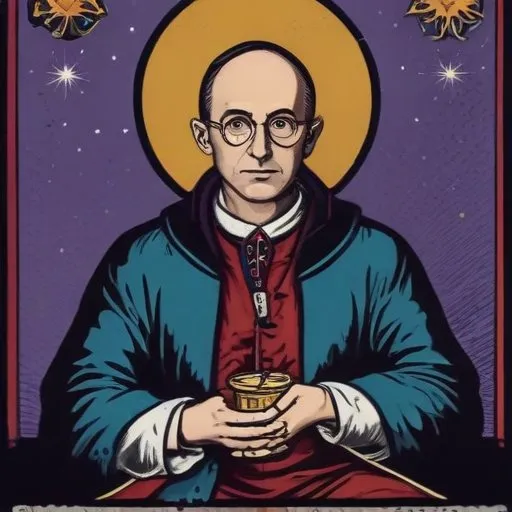
William Backhouse

William Backhouse

William Backhouse was born on January 17th, 1593

Full Name: William Backhouse
Place of Birth: England
Occupation: Alchemist and Astrologer
Nationality: English
Born: 1593
Died: 1641
Notable Works: The Magical and Astrological Works
Field of Study: Alchemy and Astrology

An English alchemist and astrologer who wrote extensively on spiritual and mystical themes, blending Hermetic and Christian philosophies. Their works influenced later esoteric thinkers.

Written by: Carlos Hernandez Carlos Hernandez

William Backhouse: The Enigmatic Esoteric Mentor

A Legacy of Alchemical Knowledge

William Backhouse, a 17th-century English philosopher, alchemist, astrologer, and translator, is best remembered for his mentorship of Elias Ashmole, a prominent figure in the history of alchemy. Through their intense exchange of alchemical documents and information, Backhouse played a pivotal role in shaping Ashmole's understanding of the esoteric arts, leaving an indelible mark on the development of modern alchemy.

Early Life and Education

Born on January 17, 1593, into the wealthy Backhouse family, William was exposed to the finer aspects of education, studying at Oxford University. This exposure likely influenced his later pursuits in alchemy and the occult. His family's coat of arms, granted in 1574, testifies to their status and reputation.

The Ashmole Connection

By 1651, Backhouse had taken Elias Ashmole as his spiritual son and heir, engaging in a profound exchange of alchemical knowledge and manuscripts. This relationship, characterized by mutual respect and a deep sharing of esoteric understanding, had a profound impact on Ashmole's development as an alchemist. Despite Backhouse's poor health and fear of public identification, their collaboration flourished, with Ashmole crediting Backhouse as a significant influence on his work.

Philosophical Contributions and Beliefs

Backhouse's philosophical leanings were deeply rooted in the esoteric traditions of alchemy and astrology. His motto, "Silence and Secrecy," reflects his distaste for the public eye, as he preferred to operate within a network of like-minded individuals. This secrecy, however, has contributed to the scarcity of information about his life and beliefs.

Personal Milestones and Key Life Events

In 1637, Backhouse married Anne Richards, with whom he had three children. Outliving all his siblings and children, except for one, he died on May 30, 1662, leaving his possessions to his daughter, Flower Backhouse, the last of the Backhouse family.

Influence on Modern Society

Through his mentorship of Elias Ashmole, Backhouse's impact on modern society is twofold. Firstly, his guidance shaped Ashmole's understanding of alchemy, which, in turn, influenced the development of modern chemistry. Secondly, Backhouse's emphasis on the importance of silence and secrecy within esoteric circles has contributed to the mystique surrounding alchemical knowledge.

Contemporaries and Comparative Analysis

Backhouse's contemporaries, including Anthony Wood and C. H. Josten, described him as a respected figure in the occult community, possessing a gift for languages and a poetic vein. In comparison to other alchemists of his time, Backhouse's unique approach to esoteric knowledge, characterized by his emphasis on silence and secrecy, sets him apart as a distinct personality.

Legacy and Historical Context

William Backhouse's legacy lies in the esoteric knowledge he shared with Elias Ashmole, which has contributed to the development of modern alchemy and chemistry. His life, shrouded in mystery, serves as a testament to the importance of secrecy within esoteric circles, ensuring that his influence extends beyond his own lifetime.

Quotes and Memorable Sayings

"Silence and Secrecy" - Backhouse's motto, reflecting his distaste for public recognition and his emphasis on the importance of discretion within esoteric circles.

Final Thoughts

William Backhouse, an enigmatic figure in the history of alchemy, has left an indelible mark on the development of modern esoteric knowledge. His legacy, shaped by his mentorship of Elias Ashmole and his emphasis on the importance of silence and secrecy, continues to fascinate and inspire scholars of the occult.
Timeline
1593
Born in England
William Backhouse was born on January 17th, 1593. He would go on to become an English alchemist and astrologer.
1620
Published Alchemical Book
Backhouse published his first alchemical book, which described his theories on the Philosophers Stone and alchemical processes.
1635
Became Member of the Worshipful Society of Apothecaries
Backhouse became a member of the Worshipful Society of Apothecaries, a prestigious medical organization in England.
1662
Died in England
William Backhouse died on July 22nd, 1662, leaving behind a legacy as a prominent figure in English alchemy.
1663
Published Posthumous Work
Backhouses posthumous work was published, which included his theories on astrology and the microcosm.
William Backhouse

William Backhouse Quiz

What philosophical traditions did William Backhouse blend in his writings?

Score: 0/5
FAQ
What was William Backhouse known for?
William Backhouse was an English alchemist and astrologer known for his writings on alchemy and astronomy. He was particularly interested in the works of Paracelsus and wrote extensively on the subject.
What was the focus of William Backhouses alchemical work?
William Backhouses alchemical work focused on the pursuit of transmutation and the philosophers stone. He believed in the concept of spiritual transformation through alchemy and wrote about the importance of spiritual purification.
Did William Backhouse have any notable publications?
Yes, William Backhouse published several books on alchemy and astrology, including The Square of Twelve Inches and The Astrologers Guide. His works provide valuable insights into the alchemical practices of the 17th century.
What was William Backhouses approach to astrology?
William Backhouse approached astrology from a spiritual perspective, believing that the positions of celestial bodies influenced human affairs. He wrote about the importance of understanding the movements of the planets and their effects on human destiny.
How did William Backhouses work influence later alchemists?
William Backhouses work influenced later alchemists, including Sir Isaac Newton, who was known to have studied his writings. Backhouses emphasis on spiritual transformation and the pursuit of the philosophers stone also inspired subsequent generations of alchemists.

Related People:

Robert Boyle

Born in 1627

Pioneering scientist who discovered Boyle's Law, which describes the relationship between pressure and volume of gases, and laid foundations for modern chemistry.

Edmond Halley

Born in 1656

Predicted celestial events, including the return of a comet that bears his name, and made significant contributions to navigation, astronomy, and mathematics.

Alessandro Scarlatti

Born in 1660

Baroque-era mastermind behind over 600 cantatas, operas, and orchestral works, shaping the course of classical music with his innovative style and harmonic genius.

Henry Purcell

Born in 1659

A renowned Baroque composer, known for his iconic opera "Dido and Aeneas" and contributions to English classical music.

John Locke

Born in 1632

A 17th-century thinker who laid the groundwork for modern democracy, arguing that governments derive their power from the people and that individuals have inherent rights to life, liberty, and property.

Christopher Wren

Born in 1632

A renowned 17th-century polymath who made groundbreaking contributions to physics, mathematics, and architecture, designing iconic landmarks like St Paul's Cathedral. Their innovative works continue to inspire and influence modern architecture and design.

Samuel Pepys

Born in 1633

A 17th-century diarist and politician who chronicled his daily life, including significant historical events like the Great Fire of London, in a candid and detailed manner. His diary is a valuable historical resource and a window into the past.