


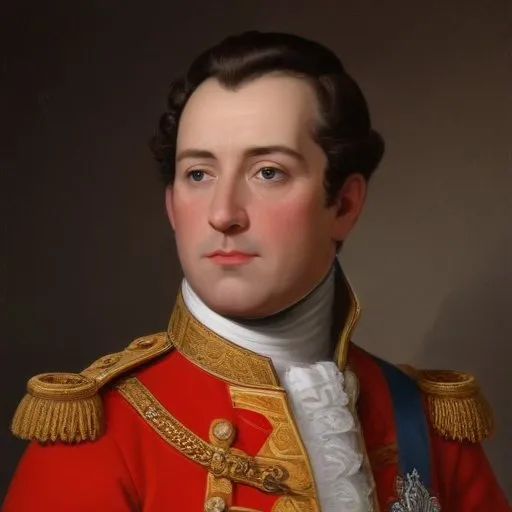
A British aristocrat and politician who served as Governor-General of India, implementing significant reforms to reduce corruption and promote social justice. He's also known for his role in the abolition of sati, a practice where widows were burned alive on their husbands' funeral pyres.
William Bentinck, 1st Earl of Portland, was a Dutch-born English nobleman who rose to prominence as the trusted advisor and confidant of William, Prince of Orange, and future King of England. He played a pivotal role in shaping the course of English history, facilitating the Glorious Revolution, and securing the throne for his patron.
Born on July 20, 1649, in Diepenheim, Overijssel, Bentinck was the son of Bernard, Baron Bentinck, and descended from an ancient and noble family of Guelders and Overijssel. His life took a dramatic turn when he was appointed as the first page of honor and chamberlain to William, Prince of Orange, in 1665. This proximity to the prince led to a momentous occasion in 1675, when Bentinck nursed the prince back to health from a bout of smallpox, thereby securing a lifelong bond of trust and friendship.
In 1677, Bentinck was dispatched to England to negotiate the marriage between Prince William and Mary, daughter of James, Duke of York, and future King of England. This mission marked the beginning of his role as a skilled diplomat and communicator, a talent he would hone in the years to come. He would return to England in 1683 and 1685, solidifying his position as a trusted intermediary between Prince William and his English allies.
By 1688, Prince William was preparing to invade England and overthrow King James II, and Bentinck played a crucial role in securing the support of German princes and orchestrating the logistics of the invasion. He oversaw the raising of funds, the hiring of a massive transport fleet, and the dissemination of propaganda to sway public opinion. Bentinck's meticulous planning and execution paved the way for Prince William's triumphant landing in England, which would ultimately lead to the Glorious Revolution and the ascension of William and Mary to the throne.
In recognition of his unwavering dedication and service, Prince William, now King of England, bestowed upon Bentinck the title of Earl of Portland in 1689. This esteemed honor was a testament to the earl's integral role in the Glorious Revolution and his unshakeable loyalty to the monarch.
William Bentinck, 1st Earl of Portland, left an indelible mark on English history, facilitating the Glorious Revolution and shaping the course of the monarchy. His steadfast loyalty, diplomatic prowess, and organizational genius made him an indispensable asset to King William III, earning him a permanent place in the annals of English history.
In conclusion, Bentinck's remarkable journey from humble beginnings to becoming one of the most influential noblemen of his time serves as a testament to the power of dedication, loyalty, and strategic thinking. His legacy continues to inspire and educate, offering valuable insights into the intricacies of statecraft, diplomacy, and the intricacies of human relationships.
Born in 1650
The Prince of Orange, King of England, Scotland, and Ireland, led the Glorious Revolution, overthrowing the Catholic King James II, and ruled with his wife Mary II, establishing a Protestant monarchy. He's also known for his military victories in Ireland and Europe.
Born in 1516
The first queen to rule England in her own right, Bloody Mary tried to restore Catholicism, earning her notorious reputation for burning hundreds of Protestants at the stake.
Born in 1650
A renowned military strategist and politician who led British forces to numerous victories in the War of the Spanish Succession, earning him great acclaim and prestige. He was also a trusted advisor to Queen Anne.
Born in 1645
A skilled politician and financier who played a crucial role in shaping England's economy and government during the late 17th and early 18th centuries. He was a trusted advisor to Queen Anne and helped secure the Acts of Union in 1707.
Born in 1678
A 17th-18th century philosopher and politician who played a significant role in shaping British politics and philosophy, particularly in the areas of conservatism and empiricism. He's also known for his influential writings on history and politics.
Born in 1631
A prominent 17th-century politician who served as Treasurer of the Navy, known for his influential role in English politics and naval affairs during the Restoration period.
Born in 1647
A 17th-century English politician who served as Lord President of the Council, playing a key role in shaping the country's government and policies. He's most known for his influential position during the Glorious Revolution.
