


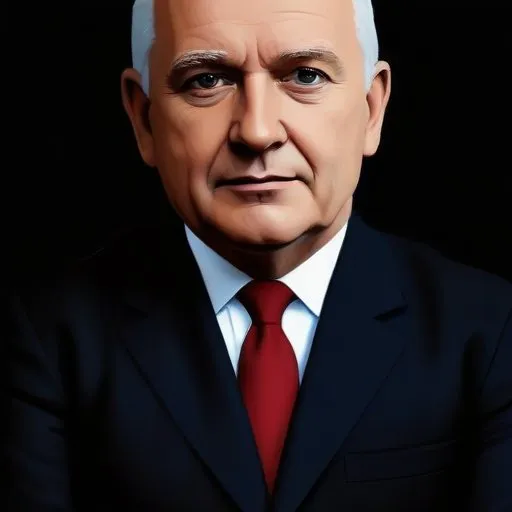
The 17th Premier of Queensland, serving from 1906 to 1907, is most known for his progressive reforms, including introducing a workers' compensation scheme and establishing the University of Queensland.
William Kidston, the Australian bookseller-turned-politician, is best known for his unwavering commitment to labor rights and social reform, serving as the Premier of Queensland twice, from January 1906 to November 1907 and again from February 1908 to February 1911.
Throughout his political career, Kidston championed the causes of the working class, fighting against the conservative colonial government's attempts to suppress industrial unrest and advocating for electoral reform, abolition of plural voting, and extension of the franchise.
Born on August 17, 1849, in Falkirk, Scotland, Kidston was the son of an ironworker and began his apprenticeship as an ironmoulder at the tender age of 13.
Dissatisfied with his career, Kidston emigrated to New South Wales with his family in 1882 and later moved to Queensland, arriving in Rockhampton in 1883.
In Rockhampton, Kidston started a new career as a bookseller, but it was his involvement in the labor movement that would define his true calling.
The 1891 Australian shearers' strike marked a turning point in Kidston's life, as he refused to enrol as a special constable in the anti-strike force, earning him a court martial.
His poem, "The Ballot is the Thing," became a rallying cry for the labor movement, and Kidston emerged as a key figure in the Australian Labour Federation (ALF), campaigning for electoral reform and social change.
In 1896, Kidston was elected as an endorsed Labor candidate, marking the beginning of his political career.
As a parliamentarian, Kidston tirelessly worked to repeal antiquated anti-striking laws and expand the franchise, pushing for social and political reforms that would benefit the working class.
His advocacy for separatist organisations in Rockhampton, which sought to make Central Queensland a separate colony, demonstrated his unwavering commitment to regional autonomy and self-determination.
Kidston's legacy is a testament to his unyielding dedication to social justice and labor rights, inspiring generations of activists and politicians to continue the fight for a more equitable society.
Today, his name is synonymous with courage, conviction, and a commitment to creating a better world for all.
Kidston's poem, "The Ballot is the Thing," remains an iconic symbol of the labor movement's struggle for justice and equality.
His famous quote, "The ballot is the thing, the only thing, the one thing needful," continues to inspire social activists and reformers around the world.
Kidston's remarkable life and legacy serve as a powerful reminder of the importance of standing up for what is right, even in the face of adversity, and continue to inspire generations to come.
Born in 1862
The 5th Prime Minister of Australia, a key figure in the country's early 20th-century politics, known for his role in shaping Australia's social and economic landscape. He played a crucial part in establishing the country's old-age pension and maternity allowance systems.
Born in 1867
Third Prime Minister of Australia, serving from 1904 to 1905, known for his efforts to establish a national government and implement progressive reforms.
Born in 1845
The 4th Prime Minister of Australia, a Scottish-Australian lawyer and politician who served from 1904 to 1905, known for his role in shaping the country's early years and contributing to its growth.
Born in 1856
The 2nd Prime Minister of Australia, a key figure in the country's early development, known for his role in shaping Australia's constitution and federation. He played a crucial part in uniting the country's six colonies into a single nation.
Born in 1860
The 6th Prime Minister of Australia, a key figure in the country's early 20th-century politics, known for his role in shaping Australia's economy and foreign policy. He played a crucial part in Australia's transition from a British colony to an independent nation.
Born in 1880
A lawyer, academic, and politician who served as the 11th Prime Minister of Australia, known for his brief but significant term during World War II. He played a crucial role in shaping Australia's war effort and post-war reconstruction.
Born in 1883
Led Australia through the 1920s, implementing significant economic and social reforms, and played a key role in the country's transition from a British dominion to an independent nation.
