


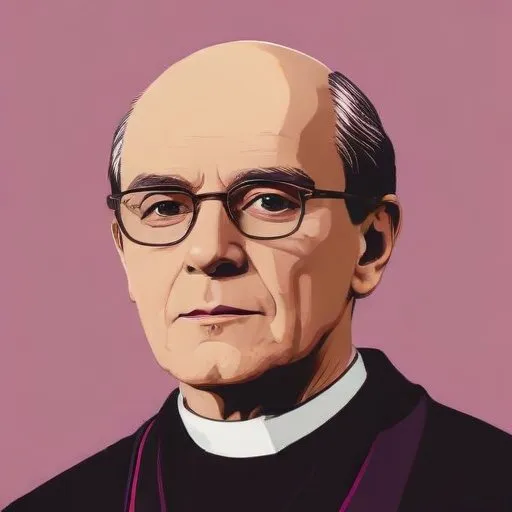
A priest and philosopher who coined the term "scientist" and made significant contributions to the fields of philosophy, morality, and science, particularly in the areas of induction and probability.
William Whewell was a true Renaissance man - a master of multiple disciplines, including science, philosophy, theology, and literature. He is perhaps best known for coining the term "scientist" in 1834, but his contributions to various fields are far more extensive and profound.
Whewell was born on May 24, 1794, in Lancaster, England, to a master carpenter father who wished him to follow in his footsteps. However, Whewell's exceptional math skills at Lancaster Royal Grammar School and Heversham Grammar School earned him a scholarship to Trinity College, Cambridge, in 1812. He went on to excel in both poetry and mathematics, reflecting his eclectic interests.
Whewell's philosophical ideas were deeply rooted in his understanding of science and its methods. He believed in the importance of inductions and the role of probability in scientific inquiry. His work, Novum Organum Anticipatum, explored the relationship between science and philosophy, and he was critical of the empiricist approach, advocating instead for a more holistic understanding of knowledge.
Whewell's linguistic creativity is staggering. He coined numerous terms, including:
Whewell organized an international effort to study ocean tides, mobilizing thousands of volunteers in what is now considered one of the first citizen science projects. He received the Royal Medal in 1837 for this groundbreaking work.
Whewell married twice, first to Cordelia Marshall in 1841, and after her death, to Everina Frances Affleck in 1858. He died on March 6, 1866, at the age of 71, following a fall from his horse. His legacy is a testament to the power of interdisciplinary thinking and his profound impact on the development of modern science.
William Whewell's remarkable life and achievements continue to inspire and fascinate scholars across various disciplines. His work remains a testament to the boundless potential of human inquiry and the importance of exploring the intersections between science, philosophy, and literature.
Born in 1809
Developed the theory of evolution through natural selection, revolutionizing our understanding of life on Earth. This groundbreaking idea transformed the fields of biology, ecology, and beyond.
Born in 1785
Founded the Cambridge School of Geology and was a pioneer in the field of stratigraphy, discovering the Cambrian Period and establishing the concept of geological time scales.
Born in 1806
A prominent 19th-century thinker who championed individual liberty, free speech, and women's rights, and is best known for his influential book "On Liberty".
Born in 1792
Developed a system of mathematical astronomy, cataloging over 2,500 nebulae and star clusters, and made significant contributions to the field of photography. His work laid the foundation for modern astronomy and astrophysics.
Born in 1791
Pioneering scientist who discovered electromagnetic induction, formulated the laws of electrolysis, and invented the first electrical generator, revolutionizing our understanding of electricity and its applications.
Born in 1806
Developed the De Morgan's laws, which are fundamental principles in logic and set theory, and made significant contributions to the development of modern mathematics.
Born in 1791
A pioneer in computer science, credited with inventing the first mechanical computer, the Difference Engine, and conceptualizing the Analytical Engine, a precursor to modern computers.
