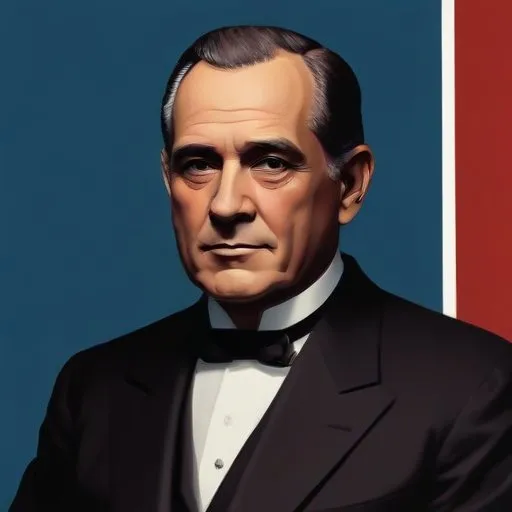
William Z. Foster: A Pioneering Figure in American Labor and Communist Politics
A Life of Activism and Leadership
William Z. Foster was a radical American labor organizer and Communist politician, renowned for his instrumental role in shaping the country's labor movement and Communist party. As the General Secretary of the Communist Party USA from 1945 to 1957, Foster played a pivotal role in promoting worker's rights and advocating for socialist ideals.
Early Life and Influences
Born William Edward Foster on February 24, 1881, in Taunton, Massachusetts, Foster's early life was marked by his family's Irish-American heritage and his father's involvement in the Fenian Rising in Ireland. His mother, Elizabeth McLoughlin, was an English Catholic textile worker who instilled in him the importance of social justice. Foster's peripatetic childhood, spent moving between various cities, exposed him to the harsh realities of working-class life, shaping his early commitment to labor activism.
Labor Organizing and Radical Politics
Foster's early career was marked by his involvement in the Industrial Workers of the World (IWW) and the Socialist Party of America. During World War I, he led the drive to organize packinghouse industry workers, and in 1919, he played a key role in the steel strike, solidifying his reputation as a labor leader. Foster's dedication to the working class and his conviction in socialist ideals led him to join the Communist Party USA in the 1920s.
Leadership and Legacy
As General Secretary of the Communist Party USA, Foster worked tirelessly to promote the party's agenda, publishing numerous works on labor history and Marxist theory. His leadership during the Great Depression and World War II era helped to galvanize support for the party, particularly among industrial workers. Foster's commitment to social justice and equality earned him both admiration and criticism, cementing his place as a significant figure in American labor and political history.
Philosophical Contributions and Beliefs
Foster's philosophical contributions centered on the importance of class struggle, the role of the proletariat in revolutionary change, and the need for a socialist society. He advocated for the creation of a worker's state, where the means of production would be collectively owned and controlled. Foster's beliefs were deeply rooted in Marxist theory, and he was instrumental in popularizing Marxist ideology in the United States.
Personal Milestones and Key Life Events
- 1905: Foster homesteaded for a year in Oregon, working various odd jobs to make ends meet.
- 1919: Foster played a key role in the steel strike, leading to his rising prominence in labor circles.
- 1945: Foster became the General Secretary of the Communist Party USA, a position he held until 1957.
- 1961: Foster passed away on September 1, at the age of 80, leaving behind a legacy as a pioneering figure in American labor and Communist politics.
Influence on Modern Society
William Z. Foster's life's work has had a lasting impact on modern society. His dedication to labor organizing and socialist ideals has inspired generations of activists and politicians. Foster's commitment to social justice and equality has contributed to the advancement of worker's rights and the promotion of progressive ideals in the United States.
Historical Context and Legacy
Foster's life and work must be viewed within the context of early 20th-century American history, marked by rapid industrialization, labor unrest, and the rise of socialist and Communist movements. His legacy serves as a testament to the power of grassroots activism and the importance of promoting social justice and equality. As a pioneering figure in American labor and Communist politics, William Z. Foster continues to inspire and influence contemporary debates around worker's rights, socialism, and progressive ideals.
FAQ
What was William Z. Fosters role in the American labor movement?
William Z. Foster was a prominent figure in the American labor movement, serving as the leader of the Communist Party USA and the chairman of the Trade Union Unity League. He played a key role in organizing strikes and protests during the early 20th century.
How did William Z. Fosters views on socialism impact the labor movement?
Fosters views on socialism and communism influenced the labor movement by promoting the idea of worker-led unions and advocating for greater worker control over industry. He believed that socialism was the only way to achieve true workers rights and social justice.
What were William Z. Fosters most significant achievements?
Fosters most significant achievements include leading the steel strike of 1919, organizing the Trade Union Unity League, and running for president as the Communist Party candidate in 1928 and 1932.
How did William Z. Fosters personal life impact his politics?
Fosters personal life was marked by poverty and hardship, which influenced his political views and motivated him to fight for workers rights. His experiences as a worker and a soldier also shaped his perspective on socialism and communism.
What is William Z. Fosters legacy in the American labor movement?
Fosters legacy in the American labor movement is that of a dedicated organizer and advocate for workers rights. He played a significant role in shaping the labor movement and promoting socialist ideas in the United States.