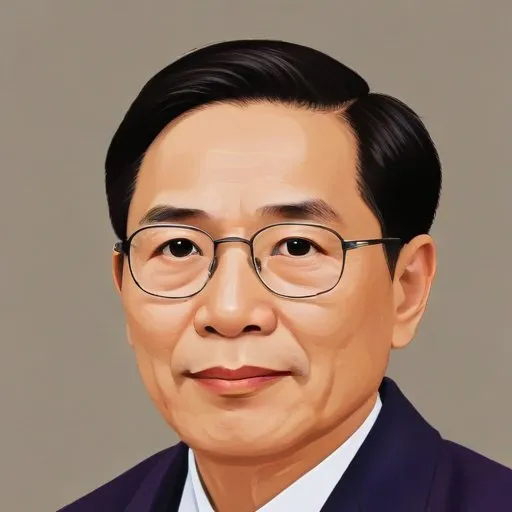
Yuan T. Lee

Yuan T. Lee

Yuan T. Lee was born on November 19th, 1936

Full Name: Yuan Tseh Lee
Birth Date: November 19, 1936
Place of Birth: Hsinchu, Taiwan
Profession: Chemist, Academic
Notable Awards: Nobel Prize in Chemistry
Education: National Taiwan University
Zodiac Sign: Scorpio
Nationality: Taiwanese-American

A Nobel Prize-winning chemist who pioneered the use of molecular beams to study chemical reactions, making groundbreaking discoveries in the field of chemistry.

Written by: Oliver Wren Oliver Wren

Yuan T. Lee: The Trailblazing Chemist Who Illuminated the Secrets of Chemical Reactions

Unlocking the Dynamics of Chemical Elementary Processes

Yuan T. Lee is renowned for his groundbreaking contributions to the field of chemistry, earning him the prestigious Nobel Prize in Chemistry in 1986. Alongside John C. Polanyi and Dudley R. Herschbach, Lee's pioneering work on the dynamics of chemical elementary processes has revolutionized our understanding of chemical reactions.

A Life of Science and Discovery

Born on November 19, 1936, in Shinchiku City, Taiwan, Lee's fascination with science began at a young age. His artistic father, Lee Tzefan, and elementary school teacher mother, Tsai Pei, instilled in him a love for learning and exploration.

Lee's academic prowess earned him exemption from entrance examinations, and he was directly admitted to National Taiwan University, where he earned a B.S. in 1959. He then pursued his M.S. at National Tsing Hua University in 1961 and Ph.D. at the University of California, Berkeley in 1965, under the guidance of Bruce H. Mahan.

Crossed Molecular Beams: A Breakthrough in Chemical Kinetics

Lee's Nobel Prize-winning work focused on the development of advanced chemical kinetics techniques using crossed molecular beams. This innovative approach enabled the manipulation and investigation of chemical reactions at the molecular level, revealing the intricate dynamics of chemical elementary processes.

A Distinguished Career in Academia and Beyond

Lee's illustrious career has spanned multiple prestigious institutions, including Harvard University, where he worked with Dudley Herschbach, and the University of California, Berkeley, where he is currently a Professor Emeritus. From 1994 to 2006, he served as the President of the Academia Sinica of Taiwan, and in 2011, he was elected head of the International Council for Science.

A Legacy of Scientific Excellence and Inspiration

Yuan T. Lee's contributions to chemistry have had a profound impact on our understanding of chemical reactions. His work has inspired generations of scientists, and his leadership in the scientific community has fostered collaboration and innovation worldwide.

Awards and Honors

Personal Milestones and Key Life Events

A Quote to Inspire

"Basic scientific research is of the highest importance, as it not only provides the foundation for the development of new technologies, but also leads to a deeper understanding of the natural world and our place within it."

A Lasting Impact on the Field of Chemistry

Yuan T. Lee's groundbreaking research has left an indelible mark on the field of chemistry. His work continues to inspire new generations of scientists, ensuring a bright future for the advancement of chemical knowledge and its applications.
Timeline
1936
Born in Taiwan
Yuan T. Lee was born on November 29, 1936, in Hsinchu, Taiwan. He would go on to become a renowned chemist and Nobel laureate.
1962
Earned Ph.D. from UC Berkeley
Lee received his Ph.D. in chemistry from the University of California, Berkeley, where he would later become a professor.
1986
Won Nobel Prize in Chemistry
Lee, along with Dudley R. Herschbach and John C. Polanyi, was awarded the Nobel Prize in Chemistry for his contributions to the development of the crossed molecular beam method.
1994
Became President of Academia Sinica
Lee was appointed as the president of Academia Sinica, Taiwans top research institution, where he served until 2006.
2001
Awarded the National Medal of Science
Lee was awarded the National Medal of Science, the highest scientific honor in the United States, for his contributions to chemistry and physics.
Yuan T. Lee

Yuan T. Lee Quiz

Yuan T. Lee is known for pioneering the use of what technique to study chemical reactions?

Score: 0/5
FAQ
What did Yuan T. Lee win the Nobel Prize for?
Yuan T. Lee was awarded the Nobel Prize in Chemistry in 1986 for his contributions to the development of chemical reaction dynamics.
What is Yuan T. Lees most notable research?
Lees research on crossed molecular beams led to significant advances in understanding chemical reactions, earning him international recognition.
What is Yuan T. Lees academic background?
Lee holds a Bachelors degree from National Taiwan University and a Ph.D. from the University of California, Berkeley, where he conducted his Nobel Prize-winning research.
What awards has Yuan T. Lee received besides the Nobel Prize?
Lee has received numerous honors, including the National Medal of Science and the Ernest Orlando Lawrence Award.
What legacy has Yuan T. Lee left on the field of chemistry?
Yuan T. Lees groundbreaking research has paved the way for further exploration of chemical reaction dynamics, inspiring future generations of chemists.

Related People:

Chen-Ning Yang

Born in 1922

A renowned physicist who made groundbreaking contributions to our understanding of subatomic particles, earning a Nobel Prize for his work on parity non-conservation.

Tsung-Dao Lee

99 Years Old

A Chinese-American physicist and academic who won the Nobel Prize for his work on the parity non-conservation of weak interactions, revolutionizing our understanding of particle physics.

Roald Hoffmann

88 Years Old

A Nobel Prize-winning chemist who pioneered the field of organic chemistry and introduced the concept of orbital symmetry, revolutionizing our understanding of chemical reactions.

Herbert C. Brown

Born in 1912

Developed groundbreaking methods for synthesizing and using boranes, a class of compounds crucial in organic chemistry, earning the Nobel Prize in Chemistry in 1979.

Harold Urey

Born in 1893

A pioneering scientist who discovered deuterium, a heavy isotope of hydrogen, and later contributed to the discovery of many other elements, revolutionizing our understanding of the universe.

Glenn T. Seaborg

Born in 1912

A renowned chemist and academic who discovered and isolated ten transuranic elements, including plutonium, and was a leading figure in the development of nuclear energy. His work had a profound impact on our understanding of the periodic table and the properties of atomic nuclei.

Linus Pauling

Born in 1901

Pioneering chemist and peace activist who won two unshared Nobel Prizes, one for chemistry and one for peace, for his groundbreaking work on the nature of the chemical bond and his tireless efforts to promote nuclear disarmament.