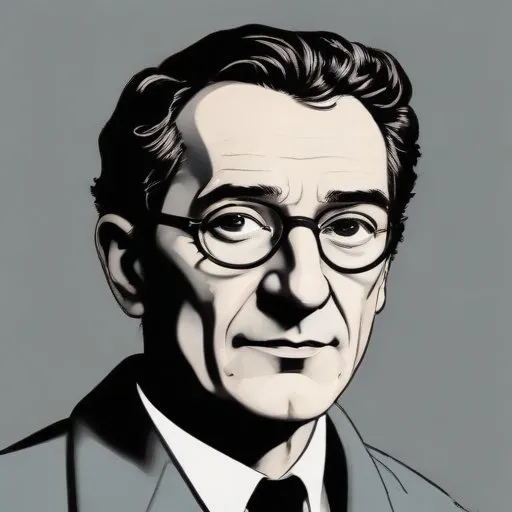
was born on March 3rd, 1868

Full Name: Émile-Auguste Chartier
Birthplace: Villefranche-sur-Saône, France
Profession: Philosopher and Journalist
Nationality: French
Pen Name: Alain
Born: March 3, 1868
Died: June 2, 1951
Notable Work: Propos

A French philosopher and journalist who wrote extensively on ethics, politics, and social issues, advocating for individual freedom and moral responsibility. His works influenced 20th-century thought, particularly in the realms of existentialism and humanism.

Timeline
1858
Born in France
Émile Chartier, a French philosopher and journalist, was born on March 4th, 1858, in Morvan, France.
1887
Becomes Editor of LOpinion
Chartier became the editor of the French newspaper LOpinion in 1887, where he promoted liberal and republican values.
1893
Founded Le Figaro
Chartier co-founded Le Figaro, a French daily newspaper, in 1893, which became a prominent platform for his philosophical and political ideas.
1915
Opposes WWI
Chartier opposed Frances involvement in World War I, advocating for pacifism and international cooperation.
1923
Passes Away
Émile Chartier passed away on June 21st, 1923, at the age of 65, leaving behind a legacy in French philosophy and journalism.
Ã?mile Chartier

Quiz

What philosophical movement was Ãmile Chartier's work influential in?

Score: 0/5
FAQ
What were the main philosophical contributions of �mile Chartier?
�mile Chartier was a French philosopher and journalist who made significant contributions to the fields of ethics, politics, and aesthetics. His philosophical ideas emphasized individualism, moral relativism, and the importance of critical thinking.
How did �mile Chartiers writings influence French intellectual thought?
�mile Chartiers writings had a profound impact on French intellectual thought, inspiring a generation of thinkers and writers. His essays and articles challenged conventional wisdom and encouraged readers to question authority.
What was �mile Chartiers stance on politics and government?
�mile Chartier was a vocal critic of authoritarianism and nationalism. He advocated for individual liberties, democratic values, and international cooperation, influencing the development of liberal thought in France.
How did �mile Chartiers views on aesthetics influence French art and literature?
�mile Chartiers ideas on aesthetics emphasized the importance of individual creativity and artistic freedom. His writings influenced a range of French artists and writers, including those associated with the Surrealist and Existentialist movements.
What was �mile Chartiers relationship with other notable French philosophers?
�mile Chartier was part of a vibrant intellectual circle that included influential thinkers like Jean-Paul Sartre, Albert Camus, and Simone de Beauvoir. His interactions with these figures helped shape the development of French philosophy in the 20th century.

Related People:

Jean-Paul Sartre

Born in 1905

Existentialist philosopher and playwright who argued that humans have complete freedom to choose their actions and create their own meaning in life, influencing modern thought on morality and individual responsibility.

Martin Heidegger

Born in 1889

A German philosopher and academic who explored the meaning of existence, time, and human existence, influencing 20th-century philosophy with his concept of "Being-in-the-world".

Karl Marx

Born in 1818

A 19th-century philosopher who developed the theory of communism, arguing that capitalism would eventually be replaced by a socialist society. He's known for his critique of capitalism and the concept of class struggle.

Georg Wilhelm Friedrich Hegel

Born in 1770

A German philosopher and academic who developed a comprehensive and systematic philosophy that emphasized the unity of all things and the dialectical process of thesis, antithesis, and synthesis. His ideas have had a profound impact on modern thought, influencing fields such as philosophy, politics, and art.

Arthur Schopenhauer

Born in 1788

A pessimistic philosopher who wrote about the human condition, emphasizing the struggles and sufferings of life, and is famous for his concept of the "will to life".

Simone de Beauvoir

Born in 1908

A pioneering feminist philosopher who wrote extensively on ethics, politics, and gender, famously arguing that "one is not born, but rather becomes, a woman."

Jean-Jacques Rousseau

Born in 1712

A pioneering thinker who shaped modern democracy and education with his ideas on social contracts, general will, and the importance of early childhood education. His writings influenced the French Revolution and modern political thought.