


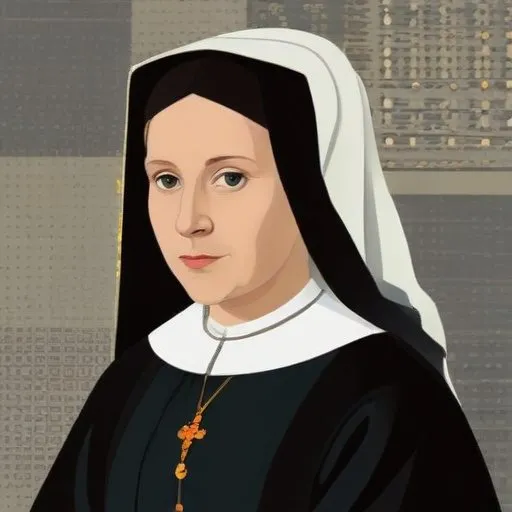
An 18th-century German princess who ruled Quedlinburg Abbey, promoting arts and education, and leaving a lasting cultural legacy. She was a patron of the arts, supporting famous composers like Johann Sebastian Bach.
Anna Amalia, Princess of Prussia, was a pioneering composer, music curator, and princess-abbess of Quedlinburg, who left an indelible mark on the world of music and beyond. As the daughter of Frederick William I of Prussia and the sister of Frederick the Great, Anna Amalia's life was a symphony of contradictions, marked by royal expectations, personal passions, and a determination to pave her own path.
Born on November 9, 1723, in Berlin, Kingdom of Prussia, Anna Amalia was the 12th child and 7th daughter of the royal couple. Growing up in the Royal Palace, surrounded by the intrigues of court life, Anna Amalia's early years were marked by a strict upbringing, with her father enforcing a Spartan regime. However, it was during this time that Anna Amalia discovered her love for music, secretly nurturing her talent despite her father's disapproval.
In 1756, Anna Amalia's life took a dramatic turn when she became the princess-abbess of Quedlinburg, a prestigious position that granted her autonomy and the means to pursue her creative passions. As abbess, she transformed the convent into a hub of cultural and artistic activity, attracting musicians, composers, and intellectuals from across Europe.
Anna Amalia's compositions, though limited in number, showcased her talent and innovation. Her music reflected the Rococo style, characterized by intricate melodies, lavish ornamentation, and a sense of lightness. Her most famous work, the cantata "Die Hirten bei der Krippe zu Bethlehem" (The Shepherds at the Manger in Bethlehem), demonstrates her mastery of choral music.
Anna Amalia's advocacy for women's education and empowerment was ahead of her time. She believed in the importance of education, not only for personal growth but also for the betterment of society. Her convent became a sanctuary for women seeking knowledge and independence, reflecting her progressive views on gender roles.
Anna Amalia's legacy extends beyond her music and abbey. She inspired generations of women to pursue careers in the arts and education. Her commitment to cultural exchange and patronage helped foster a vibrant cultural scene in Quedlinburg, which continues to thrive today.
In conclusion, Anna Amalia's remarkable life serves as a testament to the power of determination, creativity, and women's empowerment. As we reflect on her legacy, we are reminded of the profound impact one individual can have on the world, leaving behind a harmonious blend of music, art, and inspiration that continues to resonate today.
Born in 1749
A German literary giant who penned iconic works like "Faust" and "The Sorrows of Young Werther", shaping the Romantic movement and influencing countless writers.
Born in 1759
A renowned poet and playwright who crafted influential works that explored the human condition, morality, and the struggle for freedom, leaving a lasting impact on German literature.
Born in 1714
A pioneering opera composer who revolutionized the art form with his innovative and expressive works, blending music and drama in a way that captivated audiences.
Born in 1714
A renowned 18th-century musician, he was a prolific composer and virtuosic performer, known for his expressive and innovative keyboard music that bridged the Baroque and Classical styles. His compositions, particularly for harpsichord and piano, showcased his mastery of counterpoint and harmony.
Born in 1685
A master of Baroque music, he composed over 1,000 works, including orchestral suites, cantatas, and passions, that still inspire and influence musicians today. His innovative use of counterpoint and harmony raised the bar for classical music.
Born in 1685
A renowned Baroque composer and organist, famous for creating majestic orchestral suites, operas, and oratorios, including the iconic "Messiah" masterpiece.
Born in 1715
Germany's first female medical doctor, who broke gender barriers in 1754, paved the way for women in medicine. She earned a medical degree from the University of Halle, defying societal norms.
Born in 1751
The last child of King Frederick William II of Prussia, she was a princess who played a significant role in 18th-century European royalty, known for her strong will and diplomatic efforts. She was a key figure in maintaining alliances and preventing wars between European nations.
