


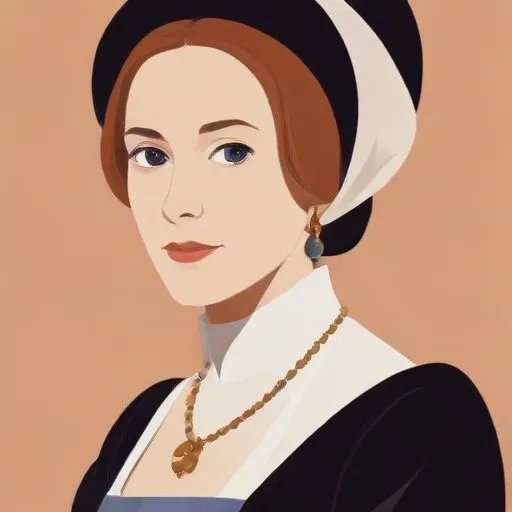
The last of the Mowbray line, she was a child heiress to a powerful earldom, and her short life was marked by a strategic marriage to a young Richard, Duke of York.
Anne de Mowbray, 8th Countess of Norfolk, is prominently remembered as the child bride of Richard of Shrewsbury, Duke of York, one of the infamous Princes in the Tower. Her life, though cut short, left a lasting impact on the noble lines of England and continues to fascinate historians to this day.
Born on December 10, 1472, at Framlingham Castle in Suffolk, Anne was the only surviving child of John de Mowbray, 4th Duke of Norfolk, and Lady Elizabeth Talbot. Her maternal grandparents were John Talbot, 1st Earl of Shrewsbury, and his second wife Lady Margaret Beauchamp. Following her father's death in 1476, Anne became a wealthy heiress at a tender age.
On January 15, 1478, at the age of five, Anne married Richard of Shrewsbury, Duke of York, the four-year-old younger son of King Edward IV and his Queen, Elizabeth Woodville. The union took place in St. Stephen's Chapel, Westminster, and marked a strategic alliance between the de Mowbray and York families.
Anne's life was tragically cut short when she died at Greenwich in London, nearly two years before her husband disappeared into the Tower of London with his older brother, Edward V. Upon her death, her heirs would have normally been her cousins, William, Viscount Berkeley, and John, Lord Howard. However, an act of Parliament in January 1483 redirected the rights to her husband Richard, with reversion to his descendants, and, failing that, to the descendants of his father Edward IV.
Anne was initially buried in a lead coffin in the Chapel of St. Erasmus of Formia in Westminster Abbey. When the chapel was demolished in 1502 to make way for the Henry VII Lady Chapel, Anne's coffin was moved to a vault under the Abbey of the Minoresses of St. Clare without Aldgate, run by nuns of the Order of Poor Clares Franciscans. Her coffin was rediscovered in December 1964 by construction workers in Stepney, and after analysis by scientists, her remains were re-entombed in Westminster Abbey in May 1965. The rediscovery revealed that her red hair was still intact on her skull, and her shroud remained wrapped around her.
Anne de Mowbray's short life may have been marked by convenience and circumstance, but her legacy persists as a poignant reflection of the intricate web of alliances and power struggles that shaped medieval England. Though she may have been a mere pawn in the grand game of nobility, her story continues to captivate historians and enthusiasts alike, a testament to the enduring power of history to inspire and educate us.
Born in 1367
The last king of the House of Plantagenet, deposed in a coup, known for his extravagance and tyranny, leading to his downfall and the rise of the Lancastrian dynasty.
Born in 1284
The king whose disastrous reign led to his eventual deposition and mysterious death, remembered for his alleged homosexual relationships and power struggles with nobles.
Born in 1449
Younger brother of King Edward IV and King Richard III, known for his brief rebellion against Edward IV and his eventual murder in the Tower of London.
Born in 1133
King of England from 1154 to 1189, known for establishing a strong centralized government, reforming the English church, and his tumultuous relationships with Thomas Becket and his sons.
Born in 1430
Wife of King Henry VI of England, she played a significant role in the Wars of the Roses, leading the Lancastrian faction and fighting for her husband's claim to the throne.
Born in 1442
A powerful nobleman in 15th-century England, he played a significant role in the Wars of the Roses and was a key figure in the reign of King Edward IV.
