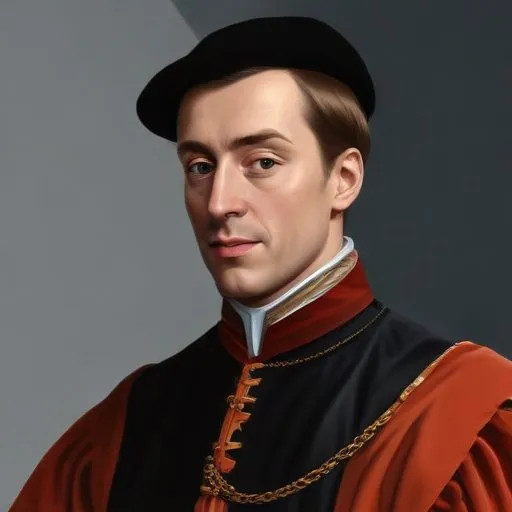
John de la Pole, 2nd Duke of Suffolk: A Magnate of 15th Century England
A Powerhouse of Influence and Intrigue
John de la Pole, 2nd Duke of Suffolk, was a major magnate in 15th century England, known for his significant influence, strategic marriages, and notable family connections. As the great-grandson of the famous poet Geoffrey Chaucer, John's life was marked by a complex web of alliances, power struggles, and battles for dominance.
A Turbulent Childhood and Rise to Power
Born in 1442, John's youth was marred by the political fall and murder of his father,
William de la Pole, 1st Duke of Suffolk, in 1450. This sudden loss of power and wealth left John with limited resources, making him one of the poorest dukes in England. Despite these challenges, John persevered and eventually inherited the title of Duke of Suffolk in 1463.
Strategic Marriages and Family Alliances
John's marriages played a crucial role in shaping his destiny and influence. His first marriage was annulled, but his second marriage to
Elizabeth of York, sister of
Edward IV and Richard III, secured his position as brother-in-law to two kings. This union produced eleven children, including John, who would later be named heir to Richard III in 1484.
A Delicate Balance of Power
Throughout his life, John maintained a delicate balance of power, avoiding direct involvement in the tumultuous Wars of the Roses. Although aligned with the House of York through his marriage, he refused to take up arms until Edward IV had claimed the throne. Instead, John focused on settling feuds with his East Anglian neighbors, the Paston family, over inheritances and parliamentary elections.
A Complex Legacy
John de la Pole's legacy is marked by his ability to navigate the treacherous landscape of 15th century English politics. Despite his limited resources and tumultuous youth, he managed to maintain his power and influence, often through clever alliances and strategic marriages. His story serves as a testament to the complexities of power, family, and loyalty in medieval England.
Personal Milestones and Key Life Events
- 1442: Born on September 27th
- 1450: Father, William de la Pole, 1st Duke of Suffolk, murdered
- 1463: Inherits the title of Duke of Suffolk
- Marries Elizabeth of York, sister of Edward IV and Richard III
- 1484: Son, John, named heir to Richard III
- 1492: Dies on May 29th
Historical Context and Legacy
John de la Pole's life and legacy are intricately woven into the fabric of 15th century English history. His story serves as a reminder of the complexities of power, family, and loyalty during a time of great turmoil and change. As a great-grandson of Geoffrey Chaucer, John's legacy is also a testament to the enduring power of family connections and strategic alliances.
FAQ
Who was John de la Pole, 2nd Duke of Suffolk?
John de la Pole, 2nd Duke of Suffolk, was a member of the English nobility and a powerful magnate during the Wars of the Roses. He was a loyal supporter of the Yorkist cause and played a crucial role in the reign of King Edward IV.
What were John de la Pole, 2nd Duke of Suffolks accomplishments?
During his lifetime, John de la Pole, 2nd Duke of Suffolk, served as a military commander and diplomat, participating in several key battles and negotiations. He was also a patron of the arts and architecture.
What was John de la Pole, 2nd Duke of Suffolks relationship like with King Edward IV?
John de la Pole, 2nd Duke of Suffolk, was a loyal and trusted advisor to King Edward IV, serving as one of his most important nobles. He played a key role in the kings military campaigns and was rewarded with lands and titles.
How did John de la Pole, 2nd Duke of Suffolk die?
John de la Pole, 2nd Duke of Suffolk, died on October 16, 1492, at the age of 44. The exact circumstances of his death are unknown, but it is believed to have been due to natural causes.
What was John de la Pole, 2nd Duke of Suffolks legacy?
John de la Pole, 2nd Duke of Suffolks legacy is marked by his loyalty to the Yorkist cause and his service to King Edward IV. He is remembered as a powerful and influential noble during a tumultuous period in English history.