


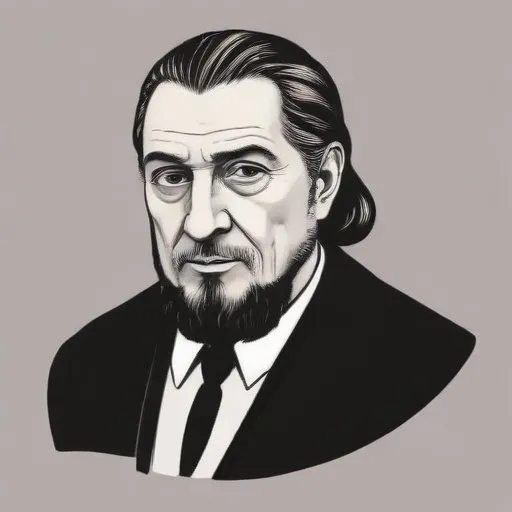
A Dutch Grand Pensionary who played a crucial role in shaping the country's foreign policy and was a key figure in the Glorious Revolution of 1688. He's known for his diplomatic skills and strategic alliances.
Anthonie Heinsius, a Dutch statesman, etched his name in the annals of history as the Grand Pensionary of Holland from 1689 to 1720, earning the reputation as one of the greatest opponents of Louis XIV's expansionist policies in France.
Heinsius's unwavering stance against French aggression and his role in shaping the anti-France coalitions of the Nine Years War and the War of the Spanish Succession cemented his position as a preeminent statesman in Europe outside of France.
Anthonie Heinsius was born on November 23, 1641, in Delft, Netherlands, to Adriaan Heinsius and Maria Dedel. His father belonged to the governing families of Delft, where Anthonie completed his education at the Latin school.
He later attended the University of Orléans, earning a doctorate in both civil and canon law in 1662. Upon returning to Delft, he practiced law until his appointment as the city's pensionary in 1679.
In the States of Holland, Heinsius aligned with Amsterdam in opposition to William III of Orange's foreign policy. This stance led to his assignment in 1682 to Paris, where he was tasked with addressing the acts of violence orchestrated by Louis XIV in the Principality of Orange.
Heinsius's resistance to French encroachments and his unyielding negotiation style earned him recognition, and in 1689, he became the Grand Pensionary of Holland, a position he held until his death in 1720.
Heinsius played a crucial role in shaping the anti-France coalitions of the Nine Years War and the War of the Spanish Succession, demonstrating his exceptional diplomatic skills and strong leadership.
Even after King William III's death in 1702, Heinsius remained a dominant figure in Dutch politics, replacing William as the main policy maker in foreign affairs. He continued to wield significant influence, supported by a Cabinet noir under the direction of his private secretary Abel Tassin d'Alonne.
Heinsius's life and work were deeply intertwined with the turbulent landscape of 17th-century Europe. He navigated the complex web of alliances and rivalries, always prioritizing the interests of the Dutch Republic.
His unwavering stance against French aggression and his role in shaping the anti-France coalitions had a profound impact on the course of European history, earning him a place among the most influential statesmen of his time.
Born in 1625
A 17th-century genius who made significant contributions to mathematics, particularly in the field of algebra, and served as a prominent politician in the Dutch Republic. He's also known for his role in shaping the country's naval and economic policies.
Born in 1623
A 17th-century Dutch statesman who played a key role in the country's Golden Age, advocating for tolerance and republican government, and was brutally murdered in a political conspiracy.
Born in 1650
The Prince of Orange, King of England, Scotland, and Ireland, led the Glorious Revolution, overthrowing the Catholic King James II, and ruled with his wife Mary II, establishing a Protestant monarchy. He's also known for his military victories in Ireland and Europe.
Born in 1516
The first queen to rule England in her own right, Bloody Mary tried to restore Catholicism, earning her notorious reputation for burning hundreds of Protestants at the stake.
Born in 1533
Led the Dutch Revolt against Spanish rule, establishing the Netherlands as an independent nation and paving the way for its Golden Age of prosperity and cultural flourishing.
Born in 1584
Led the Dutch Republic to greatness during the Eighty Years' War, capturing key cities and fortifications, and earning the nickname "Stadtholder of Holland, Zeeland, Utrecht, Guelders, and Overijssel". He's also known for his military genius and strategic thinking.
Born in 1547
A Dutch statesman who played a crucial role in the Dutch Revolt against Spanish rule, leading to the formation of the Dutch Republic. He's known for his diplomatic and strategic skills in unifying the Dutch provinces.
