


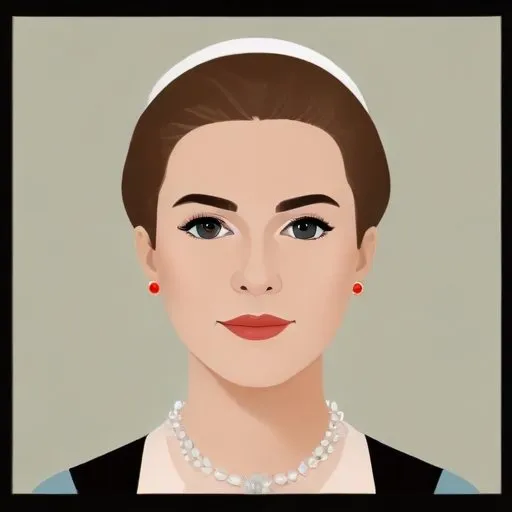
The last imperial child of Austria-Hungary, known for her rebellious spirit and marrying a Czech nobleman, becoming a princess of Liechtenstein. She defied royal conventions, living a life of simplicity and humility.
Known as the "Red Archduchess," Elisabeth Marie of Austria was a trailblazing aristocrat who defied royal conventions and became a symbol of socialism and progress. Born in 1883, she was the only child of Crown Prince Rudolf of Austria and Princess Stphanie of Belgium, making her the granddaughter of Emperor Franz Joseph I of Austria and King Leopold II of Belgium.
Elisabeth Marie, affectionately called "Erzsi" by her family, was born at Schloss Laxenburg on September 2, 1883. She was named after her grandmothers, Empress Elisabeth of Austria and Queen Marie Henriette of Belgium. Erzsi's early life was marked by tragedy when her father, Crown Prince Rudolf, was found dead in a suspected murder-suicide pact at the Imperial hunting lodge at Mayerling in 1889.
After her father's death, Emperor Franz Joseph took over her guardianship, and she was forbidden to leave Austria with her mother. This led to a strained relationship between Erzsi and her mother, who was subjected to strict rules and surveillance by the imperial family.
As Erzsi grew older, she developed a strong personality and a passion for social activism. She became a member of the Austrian Social Democratic Party, earning her the nickname "The Red Archduchess." This move was a bold statement against the traditional royal ideology, and her actions sparked controversy and admiration in equal measure.
Erzsi's commitment to socialism was more than just a passing fancy. She was deeply invested in improving the lives of working-class people and fought for women's rights, education, and social welfare. Her charitable work and donations to social causes earned her recognition and respect from the people of Austria.
Archduchess Elisabeth Marie's impact on modern society was significant. Her defiance of royal protocol and her commitment to social activism paved the way for future generations of royals to engage in humanitarian work. Her legacy serves as a testament to the power of individuals to create positive change, even within the constraints of their station.
In conclusion, Archduchess Elisabeth Marie of Austria was a trailblazer who refused to be bound by royal conventions. Her life was a testament to the power of courage, conviction, and compassion, and her legacy continues to inspire people to this day.
Archduchess Elisabeth Marie of Austria may have been born into privilege, but she chose to use her position to make a difference in the lives of others. Her story serves as a reminder that even in the highest echelons of society, individuals have the power to create change and inspire others to do the same.
Born in 1830
The longest-reigning ruler of Austria-Hungary, presiding over a vast empire that spanned across Central Europe, and remembered for his role in shaping European history through diplomacy and war.
Born in 1858
The heir to the Austro-Hungarian throne, known for his liberal views and tragic death in a murder-suicide pact with his mistress at Mayerling hunting lodge. His life and death have been the subject of numerous books, films, and operas.
Born in 1793
Emperor of Austria from 1835 to 1848, known for his role in the Revolutions of 1848 and his abdication in favor of his nephew Franz Joseph.
Born in 1887
Last Emperor of Austria-Hungary, ruling from 1916 to 1918, and known for his attempts to reform the empire and end World War I.
Born in 1892
The last Empress of the Austro-Hungarian Empire, a symbol of a bygone era, known for her courage and dedication to her husband and family during World War I. She was a unifying figure, beloved by her people.
