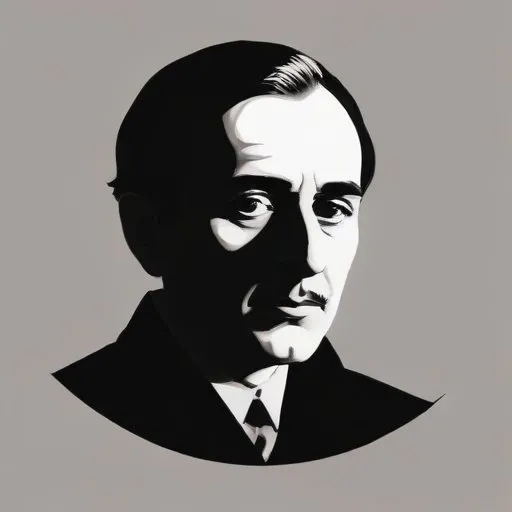
Arturo Graf

Arturo Graf

Arturo Graf was born on January 19th, 1848

Full Name: Arturo Graf
Place of Birth: Athens, Greece
Nationality: Italian of German ancestry
Profession: Poet
Field of Study: Literature and Philology
University: University of Turin
Years Active: 1854-1909
Notable Work: Italian and German translations

A German-ancestry Italian poet, known for his Symbolist and Decadent poetry that explored themes of love, death, and the human condition. His works are characterized by their lyricism and musicality.

Written by: Jack Thompson Jack Thompson

Arturo Graf: The Poetic Maestro of Italy

Renowned Poet and Literary Critic

Arturo Graf is esteemed as one of Italy's most celebrated poets and literary critics of the late 19th and early 20th centuries. His extensive contributions to Italian literature, criticism, and education have left an indelible mark on the nation's cultural heritage.

Early Life and Education

Born on January 18, 1848, in Athens, Greece, to a German-Italian father and an Italian mother, Graf was exposed to a multilingual environment from an early age. His father, a merchant with a passion for literature, instilled in him a love for languages and literature. After his father's death in 1855, Graf moved to Romania with his family, where he learned Latin from private tutors.

He later moved to Naples, Italy, to further his studies, graduating from Liceo in 1867. Graf went on to study law at the University of Naples, but his true calling lay in literature. He began composing poetry during his travels through Italy, laying the foundation for his future success.

Academic and Literary Career

Graf's academic career took off when he became a lecturer on Italian literature at the University of Rome. In 1876, he was appointed professor of Comparative History of Neo-Latin Literature at the University of Turin, solidifying his reputation as a scholar and critic. He later became professor of Italian literature at Turin, a position he held until 1910.

Literary Works and Contributions

Graf's poetic prowess is evident in his numerous volumes of verse, including Poesie e novelle (1874), Dopo il tramonto, versi (1893), Le Danaidi (1897), Morgana (1901), Poemetti drammatici (1904), and Le rime della selva (1905). These works earned him a prominent place among Italy's leading lyrical writers.

In addition to his poetry, Graf was a prolific literary critic, publishing valuable prose criticism in various journals, such as Giornale della letteratura italiana, Nueva Antologia, and Rivista Europea. His romance novel, Il riscatto (1901), further showcased his versatility as a writer.

Legacy and Impact

Arturo Graf's contributions to Italian literature, education, and criticism have left a lasting impact on the nation's cultural landscape. His poetry and criticism continue to inspire generations of writers and scholars, solidifying his position as a literary giant of Italy.

Personal Life and Milestones

Graf's life was marked by various health issues, which eventually led to his resignation as a professor in 1910. He passed away on May 30, 1913, leaving behind a rich legacy of literary works and academic contributions.

Quotes and Memorable Sayings

Historical Context and Legacy

Graf's life and work were shaped by the cultural and literary movements of the late 19th and early 20th centuries. His contributions to Italian literature and education have secured his place in the country's cultural heritage, influencing generations of writers, scholars, and critics.
Timeline
1848
Born in Milan, Italy
Arturo Graf was born on January 19, 1848, in Milan, Italy, to a German family. He would go on to become a renowned Italian poet.
1869
Published First Poems
Graf published his first collection of poems, which received critical acclaim and established him as a rising star in the Italian literary scene.
1876
Appointed Professor of Italian Literature
Graf was appointed as a professor of Italian literature at the University of Turin, where he would teach for many years and influence a generation of Italian writers.
1903
Elected to Italian Academy
Graf was elected to the Italian Academy, a prestigious honor that recognized his contributions to Italian literature and culture.
1913
Died in Turin, Italy
Arturo Graf passed away on January 18, 1913, in Turin, Italy, leaving behind a legacy as one of Italys most beloved poets.
Arturo Graf

Arturo Graf Quiz

What style of poetry is Arturo Graf known for?

Score: 0/5
FAQ
What is Arturo Grafs poetic style?
Arturo Grafs poetic style is characterized by its lyricism, sensuality, and exploration of themes such as love, nature, and the human condition. His poetry is known for its musicality and expressive language.
What is the significance of Grafs Italian-German heritage?
Grafs Italian-German heritage had a significant impact on his work, as he drew inspiration from both cultures. His poetry often reflects his dual cultural identity and explores themes related to identity, belonging, and cultural heritage.
What is Grafs most famous poem?
One of Grafs most famous poems is Alla Luna (To the Moon), which showcases his lyrical style and explores themes of love, beauty, and the fleeting nature of human existence.
How did Grafs poetry respond to the Italian Risorgimento?
Grafs poetry responded to the Italian Risorgimento by expressing his support for the movement and its ideals of national unity and independence. His poetry often celebrated Italian culture and identity.
What is Grafs legacy in Italian literature?
Grafs legacy in Italian literature is significant, as he is considered one of the leading poets of the Scapigliatura movement, a literary and artistic movement that sought to revitalize Italian culture in the late 19th century.

Related People:

Giosuè Carducci

Born in 1835

A renowned Italian poet and educator, known for his patriotic and lyrical works that explored themes of Italian identity and unity. He was the first Italian to receive the Nobel Prize in Literature.

Gabriele D'Annunzio

Born in 1863

A flamboyant and provocative Italian artist, known for his bold and innovative works that blended literature, politics, and drama, inspiring a generation of artists and intellectuals.

Ugo Foscolo

Born in 1778

A leading figure of Italian Romanticism, known for his passionate and patriotic poetry, which often explored themes of love, beauty, and the struggle for Italian independence.

Alessandro Manzoni

Born in 1785

Wrote influential novels that helped shape the modern Italian language and identity, particularly with his iconic work "I Promessi Sposi" (The Betrothed).

Giovanni Pascoli

Born in 1855

A renowned Italian poet and classical scholar, he's celebrated for his lyrical and symbolic poetry, as well as his groundbreaking work in classical philology.

Italo Svevo

Born in 1861

A pioneering figure in modernist literature, known for his influential novels of psychological insight, particularly "The Confessions of Zeno".

Luigi Pirandello

Born in 1867

A renowned Italian writer who crafted innovative, psychologically complex works that explored the human condition, earning him the Nobel Prize in Literature. His plays and novels continue to influence modern theatre and literature.

Eugenio Montale

Born in 1896

A renowned Italian poet and translator, celebrated for his unique and expressive style that explores the human condition, earning him the Nobel Prize in Literature.