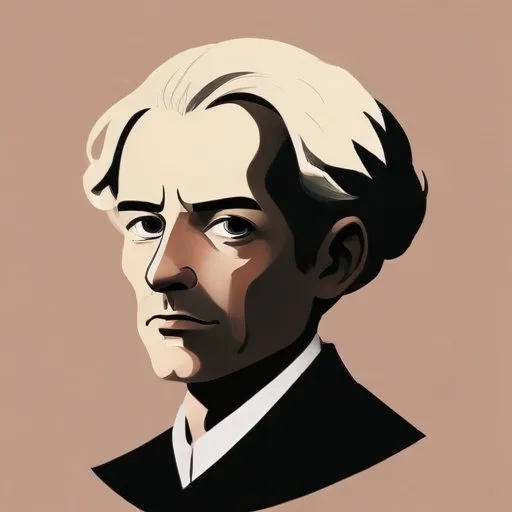
Barthold Heinrich Brockes: The Pioneering German Poet of Nature
A Legacy of Simplicity and Devotion
Barthold Heinrich Brockes, a renowned German poet, is celebrated for his pioneering contribution to the world of literature, particularly in the early 18th century. He is best known for his poetic works, which emphasized the beauty of nature and the importance of simplicity, paving the way for future generations of German poets.
Early Life and Education
Brockes was born on September 22, 1680, in Hamburg, Germany, and received his education at the Gelehrtenschule des Johanneums. He further pursued his studies in jurisprudence at Halle, which laid the foundation for his future political and literary career.
A Life of Travel and Public Service
Following his education, Brockes embarked on an extensive journey across Italy, France, and the Netherlands, which profoundly influenced his perspective on life and literature. In 1704, he returned to Hamburg and began his career in public service, eventually becoming a member of the Hamburg senate in 1720. He held several important offices, including the position of Amtmann at Ritzebüttel from 1735 to 1741.
Poetic Contributions
Brockes' poetic works, published in nine volumes under the title
Irdisches Vergnügen in Gott (Earthly Delight in God), showcased his unique style, which emphasized simplicity, clarity, and a deep reverence for nature. His poetry, although not inherently valuable, marked a significant shift in German literature, moving away from the bombastic imitations of Marini and towards a more natural and expressive form.
Translations and Collaborations
In addition to his original works, Brockes was a prolific translator, rendering notable works into German, including
Giambattista Marino's
La Strage degli innocenti, Alexander Pope's
Essay on Man, and
James Thomson's
The Seasons. His translations not only introduced German readers to international literary masterpieces but also facilitated the exchange of ideas between cultures.
The Brockes Passion: A Musical Legacy
One of Brockes' most enduring contributions is his libretto,
Der für die Sünden der Welt gemarterte und sterbende Jesus (The Suffering and Dying Jesus for the Sins of the World), commonly known as the Brockes Passion. This innovative work, which blended poetry and music, was set to music by prominent composers such as
Reinhard Keiser, Georg Philipp Telemann,
George Frideric Handel, and
Johann Mattheson, among others, cementing its place in the annals of musical history.
Influence and Legacy
Brockes' contributions to German literature paved the way for future generations of poets, including the celebrated
Friedrich Gottlieb Klopstock. His emphasis on simplicity, clarity, and the beauty of nature inspired a new wave of German poets, who sought to express the intricate relationship between humanity and the natural world. As a result, Brockes is remembered as a trailblazing figure in German literature, whose innovative style and poetic vision continue to inspire and influence writers to this day.
Personal Life and Later Years
Brockes died on January 16, 1747, in Hamburg, leaving behind a rich legacy of literary and musical works. His autobiography, published by JM Lappenberg, provides valuable insights into his life and creative process, offering a unique glimpse into the mind of this visionary poet.
Remembering Brockes
Today, Barthold Heinrich Brockes is remembered as a pioneering figure in German literature, who dared to challenge the conventions of his time and forge a new path for his country's poetry. His emphasis on simplicity, nature, and devotion continues to inspire generations of readers, writers, and musicians, ensuring his legacy as a true giant of German literature.