


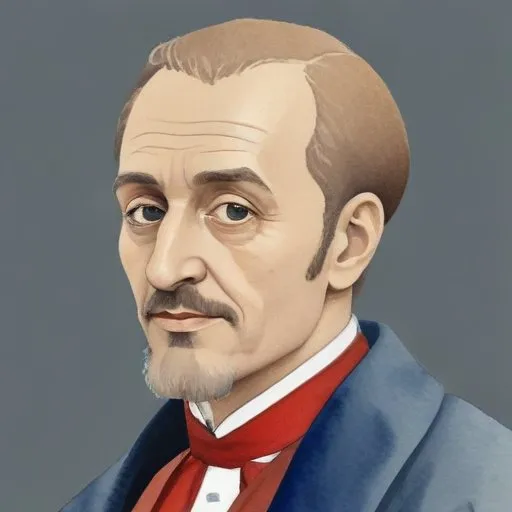
A Romanian-French philosopher, poet, and critic who explored the intersection of existentialism, phenomenology, and literature, leaving a mark on 20th-century French intellectual history.
Benjamin Fondane, a Romanian-French poet, critic, and existentialist philosopher, left an indelible mark on the literary and intellectual landscape of the 20th century. Known for his eclectic talent and multiple pursuits, Fondane's work spanned poetry, film, theater, and philosophy, earning him a reputation as a true Renaissance man.
Born Benjamin Wechsler on November 14, 1898, in Iași, Romania, Fondane was part of a Jewish Romanian family with strong intellectual ties. His uncle, Elias Schwartzfeld, was a prominent Jewish intellectual, and Fondane'searly life was steeped in the rich cultural heritage of his native Moldavia. He began writing poetry at a young age, eventually becoming a prominent figure in Romanian Symbolist circles.
In 1923, Fondane relocated to Paris, where he became affiliated with the Surrealist movement. However, his strong opposition to the movement's communist leanings led him to forge his own path, blending elements of Jewish existentialism and philosophical inquiry. His essays on Charles Baudelaire and Arthur Rimbaud showcased his unique literary critique and rejection of rationalism, anticipating the existentialist thought that would come to define his later work.
Fondane's parallel career in cinema saw him work as a film critic and screenwriter for Paramount Pictures. He collaborated with Dimitri Kirsanoff on the film Rapt and directed the now-lost Argentine film Tararira. This dichotomy between high art and popular culture reflects Fondane's innate curiosity and versatility.
During World War II, Fondane was taken prisoner by the Nazis but later released. The experience profoundly affected him, leading to a deeper exploration of existentialist thought and the human condition. His later poetry and essays reflect a sense of historical catastrophe and the redemptive power of literature.
Fondane's eclectic career and intellectual pursuits influenced a wide range of thinkers and artists, including Emil Cioran, David Gascoyne, and Jacques Maritain. His unique blend of poetic and philosophical inquiry has left an indelible mark on modern literature and thought.
"The poet is not a maker of verses, but a maker of myths."
"In the face of anxiety, the only possible attitude is that of the tragic hero."
Benjamin Fondane's remarkable life and work serve as a testament to the power of human creativity and intellectual curiosity. His unique blend of artistic and philosophical pursuits continues to inspire generations of thinkers and artists, ensuring his legacy as a true Renaissance man of Romanian-French letters.
Born in 1911
A Romanian-French philosopher and academic who wrote extensively on the human condition, exploring themes of nihilism, pessimism, and the absurdity of life. His works are known for their poetic and provocative style.
Born in 1909
A Romanian-French playwright and critic, known for his absurdist plays that ridicule the human condition, exploring the futility of communication and the search for meaning in a seemingly meaningless world.
Born in 1906
A pioneering absurdist writer who crafted avant-garde novels, poems, and plays that probed the human condition, often with dark humor and existential themes. His works are renowned for their complexity and influence on modern literature.
Born in 1905
Existentialist philosopher and playwright who argued that humans have complete freedom to choose their actions and create their own meaning in life, influencing modern thought on morality and individual responsibility.
Born in 1889
A German philosopher and academic who explored the meaning of existence, time, and human existence, influencing 20th-century philosophy with his concept of "Being-in-the-world".
Born in 1913
A French novelist, philosopher, and journalist who wrote influential works like "The Stranger" and "The Plague", exploring absurdism and the human condition.
Born in 1910
A renowned French playwright and screenwriter, known for his poignant and thought-provoking works that often explored the human condition, morality, and the absurdity of life.
Born in 1897
A French philosopher, novelist, and poet who explored the relationships between eroticism, literature, and philosophy, and is known for his concept of "expenditure" and the idea that humans have an innate desire to waste and excess.
