


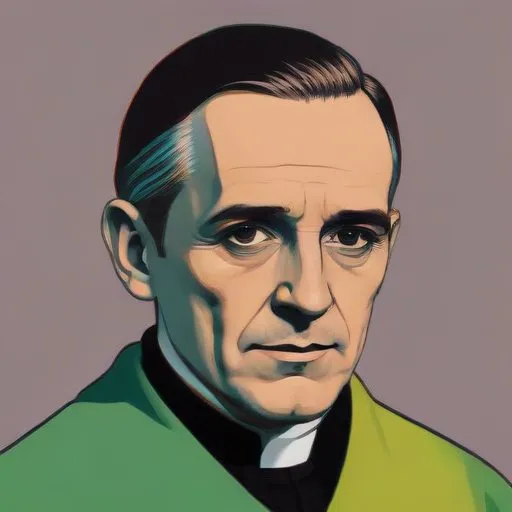
An Irish priest who wrote poetry and hymns, including the popular "Burial of Sir John Moore at Corunna", which is still studied in schools today.
Charles Wolfe is renowned for his poignant and evocative poem, "The Burial of Sir John Moore after Corunna", which has become a staple of 19th-century poetry anthologies. This Irish poet's masterpiece has been widely acclaimed for its powerful and emotive portrayal of the fallen hero, Sir John Moore.
Born on December 14, 1791, in Blackhall, County Kildare, Ireland, Wolfe was the youngest son of Theobald Wolfe and his cousin, Frances. After his father's death, the family moved to England, where Wolfe received his education. His ill health led to a brief stint at a school in Bath, followed by tutoring under Dr. Evans in Salisbury. Later, he attended Hyde Abbey School in Winchester, where he proved to be extremely popular among his peers.
In 1808, his family returned to Ireland, and Wolfe was enrolled in Trinity College, Dublin, where he graduated in 1814. During his time at Trinity College, he developed a romantic interest in a young woman, which led him to decline a scholarship opportunity that required celibacy. After graduating, Wolfe was ordained as a Church of Ireland priest in 1817 and took up the Curacy of Ballyclog in County Tyrone, later transferring to Donaghmore, County Tyrone.
Wolfe's magnum opus, "The Burial of Sir John Moore after Corunna", is a testament to his poetic prowess. This powerful and emotive poem has become an iconic representation of the fallen hero, Sir John Moore, who died during the Peninsular War. The poem's vivid imagery and poignant language have made it a timeless classic, anthologized in numerous collections.
During his time in Donaghmore, Wolfe developed a close friendship with the Rev. Thomas Meredith, Rector of nearby Ardtrea. This friendship had a profound impact on Wolfe's life and work, as evidenced by the two epitaphs he wrote for Meredith. Wolfe's deep respect for Meredith is a testament to the strong bonds he formed with those around him.
Charles Wolfe's contribution to Irish literature is immeasurable. His poem, "The Burial of Sir John Moore after Corunna", has become an integral part of the literary canon, inspiring generations of poets and writers. Wolfe's work continues to be celebrated for its emotional depth, powerful imagery, and timeless relevance.
Charles Wolfe's poetry continues to captivate readers with its beauty, emotion, and power. His legacy serves as a testament to the enduring impact of his work on Irish literature and beyond.
Born in 1667
A witty wordsmith who penned scathing social commentaries, including the iconic "Gulliver's Travels", which continue to delight and provoke readers to this day.
Born in 1728
A celebrated 18th-century writer, known for his witty plays and novels of manners that satirized the social class system, leaving a lasting impact on English literature.
Born in 1729
An 18th-century thinker who shaped modern conservatism, advocating for gradual social change and warning against the dangers of radical revolution. He's also known for his philosophical writings on aesthetics and the sublime.
Born in 1751
A witty and influential 18th-century playwright and politician who penned iconic comedies like "The School for Scandal" and "The Rivals", shaping English literature and theatre.
Born in 1778
Leader of the 1803 Irish rebellion against British rule, known for his passionate speeches and tragic execution at age 25.
Born in 1775
Irish lawyer and politician who championed Catholic emancipation and served as Lord Mayor of Dublin, known for his advocacy for Irish rights and liberties.
Born in 1478
A renowned Renaissance humanist and statesman who served as Lord Chancellor of England, famous for his literary work "Utopia" and his martyrdom for refusing to acknowledge the English monarch's supremacy over the Church.
Born in 1771
A renowned author of historical novels, plays, and poetry, credited with creating the genre of historical fiction and influencing the development of the novel as a literary form.
