


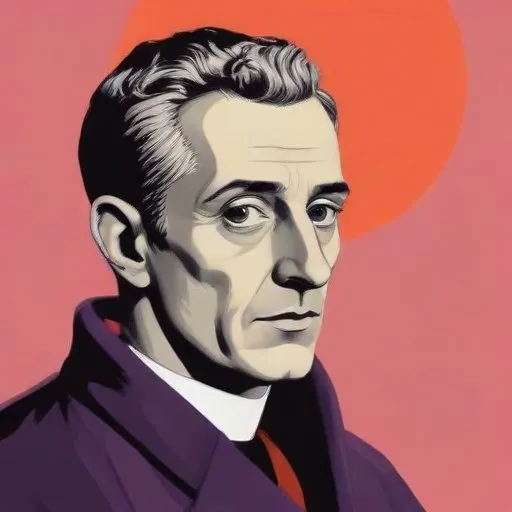
A 17th-century French scholar and author who wrote extensively on classical literature and history, earning recognition for his expertise in ancient Greek and Roman texts.
Claudius Salmasius, also known as Claude Saumaise, was a renowned French classical scholar who made significant contributions to the field of textual criticism and classical studies. Born on April 15, 1588, in Semur-en-Auxois, Burgundy, Salmasius was a prolific author and scholar who left an indelible mark on the academic community.
Salmasius' father, a counsellor of the Parlement of Dijon, recognized his son's intellectual prowess and sent him to Paris at the age of 16. There, Salmasius befriended the esteemed scholar Isaac Casaubon and began his journey in classical studies. In 1606, he enrolled at the University of Heidelberg, where he was mentored by the jurist Denis Godefroy and developed a deep appreciation for the classics under the guidance of Jan Gruter, the university's librarian.
Salmasius' academic career took off in 1631 when he accepted the professorship at Leiden University, a position previously held by the renowned scholar Joseph Scaliger. During his tenure, he authored numerous groundbreaking works, including his edition of the Greek text of the New Testament. His magnum opus, Defensio Regis, published in 1649, earned him recognition and praise from Queen Christina of Sweden, who invited him to visit her court.
In 1623, Salmasius married Anne Mercier, a Protestant lady from a distinguished family. He was a devoted husband and father, but his commitment to his faith led to personal struggles, including the loss of his father's post in Burgundy due to his Protestantism.
Salmasius' academic career was not without controversy. He engaged in a public feud with Daniel Heinsius over the Greek text of the New Testament, which led to personal attacks and professional repercussions. His acceptance of Queen Christina's invitation to visit Sweden sparked further controversy, as he faced criticism and gossip from his enemies, including Nikolaes Heinsius and Isaac Vossius.
Claudius Salmasius passed away on September 3, 1653, in Spa, but his legacy lives on through his numerous publications and contributions to classical studies. His work continues to influence scholars and inspire new generations of classicists, cementing his place as one of the most important figures in the history of classical scholarship.
Today, Salmasius' name is synonymous with excellence in classical studies, and his commitment to academic rigor and intellectual integrity serves as a model for scholars around the world.
"The study of classical languages is the key to understanding the roots of our culture and the foundation of our civilization."
" Scholarship is not about personal gain or recognition, but about uncovering the truth and sharing it with the world."
| 1588 | Born in Semur-en-Auxois, Burgundy |
| 1606 | Enrolled at the University of Heidelberg |
| 1623 | Married Anne Mercier |
| 1631 | Became professor at Leiden University |
| 1649 | Published Defensio Regis |
| 1650 | Visited Queen Christina's court in Sweden |
| 1653 | Died in Spa |
Claudius Salmasius' remarkable life and career serve as a testament to the power of dedication, hard work, and intellectual curiosity. His contributions to classical studies continue to inspire and educate scholars, ensuring his legacy as one of the greatest classical scholars of all time.
Born in 1596
Developed influential philosophical and mathematical concepts, including the famous phrase "I think, therefore I am," and laid the foundation for modern Western philosophy.
Born in 1592
A 17th-century polymath who made significant contributions to the scientific revolution, merging ancient Greek philosophy with modern scientific methods, and providing a foundation for modern astronomy. He's also known for his work on the concept of the vacuum and the behavior of gases.
Born in 1583
A 17th-century philosopher and jurist who laid the foundations for modern international law, particularly the concept of "just war" and the laws of the sea.
Born in 1712
A pioneering thinker who shaped modern democracy and education with his ideas on social contracts, general will, and the importance of early childhood education. His writings influenced the French Revolution and modern political thought.
Born in 1694
A witty and insightful 18th-century writer and philosopher who used satire to critique societal norms and advocate for reason, tolerance, and human rights.
Born in 1509
A French pastor and theologian who played a key role in the Protestant Reformation, shaping Christian theology and influencing Western civilization. He's famous for his teachings on predestination and his role in establishing Calvinism.
Born in 1561
A 16th-17th century Renaissance figure who pioneered the scientific method and empiricism, and served as a prominent government official.
Born in 1623
A 17th-century genius who made major contributions to mathematics, physics, and philosophy, inventing the mechanical calculator and developing the theory of probability. His writings also explored the human condition and faith.
