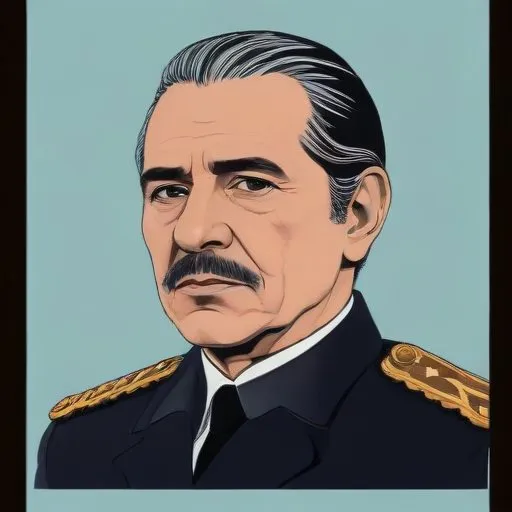
Cornelio Saavedra: The Visionary Leader Behind Argentina's Independence
A Military Officer and Statesman Ahead of His Time
Cornelio Saavedra is renowned for his instrumental role in Argentina's May Revolution, the catalyst for the country's independence from Spain. As the first head of state of the autonomous nation, Saavedra's leadership and strategic thinking paved the way for Argentina's transformation into the country we know today.
A Life of Service and Leadership
Born on September 15, 1759, in Buenos Aires, Saavedra embarked on a military career, eventually becoming the first commanding officer of the Regiment of Patricians. This prestigious role allowed him to become a prominent figure in local politics, utilizing his influence to shape the country's future.
The May Revolution and the Primera Junta
Saavedra's masterpiece was his key involvement in the May Revolution, which ousted the Spanish viceroy and led to the establishment of the Primera Junta, the first autonomous government in Argentina. As president of the Primera Junta, Saavedra navigated the complexities of local politics, skillfully balancing the interests of criollos and peninsulars.
Rivalry with Mariano Moreno and the Struggle for Power
Saavedra's moderate approach often clashed with the more radical views of Secretary
Mariano Moreno. Their differing ideologies led to a power struggle, with Saavedra eventually emerging victorious. However, his subsequent absence from politics allowed his opponents to establish the First Triumvirate, forcing him to relinquish the presidency.
Military Campaigns and Later Life
Saavedra's military expertise was crucial in the Army of the North, where he led campaigns against the Spanish. Despite the setbacks, he remained committed to the cause of independence, continuing to influence Argentine politics until his passing on March 29, 1829.
Legacy and Impact on Modern Argentina
Saavedra's contributions to Argentina's independence and early governance have left an indelible mark on the nation's history. His legacy serves as a testament to the power of visionary leadership, strategic thinking, and unwavering dedication to a cause.
Personal Milestones and Key Life Events
- September 15, 1759: Born in Buenos Aires
- 1780s: Became the first commanding officer of the Regiment of Patricians
- 1810: Played a key role in the May Revolution and the establishment of the Primera Junta
- 1810-1811: Served as president of the Primera Junta
- 1811-1815: Led the Army of the North in campaigns against the Spanish
- March 29, 1829: Passed away, leaving behind a legacy as a champion of Argentine independence
Quotes and Memorable Sayings
"La patria es un deber, no un negocio" ("The homeland is a duty, not a business") - Cornelio Saavedra
This quote epitomizes Saavedra's unwavering commitment to the Argentine people and his dedication to building a nation founded on principles, rather than personal gain.
FAQ
What was Cornelio Saavedras role in Argentinean independence?
Cornelio Saavedra was a key figure in Argentinean independence, serving as the president of the Primera Junta, the first national government of Argentina, from 1810 to 1811. He played a crucial role in the early stages of the Argentine War of Independence.
How did Cornelio Saavedra contribute to the Argentine War of Independence?
Cornelio Saavedra was a skilled military leader, leading Argentinean forces to several victories against the Spanish, including the Battle of Suipacha in 1810.
What was Cornelio Saavedras most notable achievement?
Cornelio Saavedras most notable achievement was his leadership during the Argentine War of Independence, helping to establish Argentina as a sovereign nation.
How did Cornelio Saavedras military background influence his politics?
Cornelio Saavedras military background gave him a strong sense of discipline and leadership, which influenced his approach to politics and government during the Argentine War of Independence.
Where did Cornelio Saavedra study military tactics?
Cornelio Saavedra studied military tactics in Spain, where he trained as a cadet in the Spanish Army and later served as an officer in the Buenos Aires Regiment.