


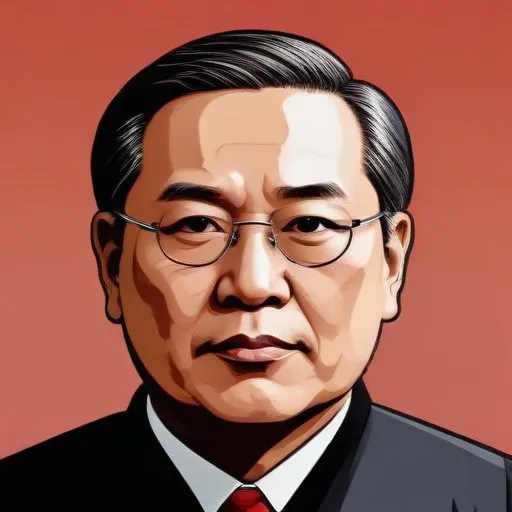
A Chinese judge and politician who served as the Chairman of the People's Republic of China, playing a key role in the country's early years and Communist Party politics.
Dong Biwu was a Chinese communist revolutionary and politician who served as the acting Chairman of the People's Republic of China between 1972 and 1975. He is one of the few individuals who attended both the founding congress of the Chinese Communist Party and the proclamation ceremony of the People's Republic of China, 28 years later.
Born on March 5, 1886, in Huanggang, Hubei, Dong Biwu came from a landlord family and received a classical education. In 1911, he joined the Tongmenghui, a secret society dedicated to overthrowing the Qing dynasty, and participated in the Wuchang Uprising.
In 1913, Dong traveled to Japan to study law at Nihon University, where he joined Sun Yat-sen's newly formed Chinese Revolutionary Party, later to become the Kuomintang. Upon his return to China in 1915, he organized resistance against the Yuan Shikai regime in his native Hubei, which led to his imprisonment for six months.
After his release from prison, Dong returned to Japan to complete his law studies. Between 1919 and 1920, he lived in Shanghai, where he was first exposed to Marxism through a group of Communist intellectuals centered around Li Hanjun. This encounter had a profound impact on his political ideology, and he eventually became a strong advocate for communism.
In 1921, Dong attended the 1st National Congress of the Chinese Communist Party, representing Wuhan along with Chen Tanqiu. Throughout the first half of the 1920s, he remained a member of both the Kuomintang and the Communist Party, but eventually chose to side with the Communists in the summer of 1927.
After the Nanchang Uprising, Dong was forced into hiding, first seeking refuge in Kyoto for eight months and then making his way to the Soviet Union. There, he attended the International Lenin School and the Moscow Sun Yatsen University between 1928 and 1931, where he deepened his understanding of Marxist-Leninist ideology.
Upon his return to China in 1932, Dong became active in the Jiangxi Soviet, where he played a key role in the Communist Party's struggle against the Kuomintang. His experiences during this period had a lasting impact on his political views and shaped his future as a leader.
Dong Biwu's later life was marked by his steadfast commitment to the Communist Party and his country. He served as the acting Chairman of the People's Republic of China between 1972 and 1975, during which he worked tirelessly to consolidate the Party's power and implement socialist reforms.
Throughout his life, Dong Biwu remained a devoted Marxist-Leninist, and his contributions to the Chinese Communist Revolution are undeniable. As one of the few senior leaders who attended both the founding congress of the Communist Party and the proclamation ceremony of the People's Republic of China, Dong Biwu's legacy serves as a testament to his unwavering dedication to the cause of socialism and communism in China.
Dong Biwu's contributions to the Chinese Communist Revolution have had a lasting impact on modern Chinese society. His commitment to Marxism-Leninism and his role in consolidating the Communist Party's power have shaped the country's political landscape. Today, Dong Biwu is remembered as a dedicated revolutionary and a loyal servant of the Chinese people.
Born in 1893
Leader of the Chinese Communist Party who implemented radical social and economic reforms, including the Great Leap Forward and the Cultural Revolution, shaping modern China's politics and economy.
Born in 1898
The first Premier of the People's Republic of China, serving from 1949 until his death in 1976, is most known for his key role in the Chinese Communist Party and his diplomatic efforts to improve relations with the West. He played a crucial part in shaping China's foreign policy and economy during a pivotal period in the country's history.
Born in 1898
A prominent military leader who played a crucial role in the Chinese Civil War and later became a key figure in the Communist Party, known for his criticisms of Mao's policies. He was eventually purged and persecuted during the Cultural Revolution.
Born in 1907
A powerful Chinese military leader and politician who rose to prominence during the Chinese Civil War and later became a close ally of Mao Zedong, playing a crucial role in the Cultural Revolution. He is infamous for his alleged plot to overthrow Mao and his mysterious death in a plane crash.
Born in 1904
A Chinese revolutionary and statesman who led the country's economic reforms, transforming it into a global superpower. He's credited with opening up China to the world and introducing capitalist principles.
73 Years Old
A renowned Chinese violinist and composer, blending Eastern and Western musical styles, creating a unique sound that showcases cultural fusion.
Born in 1896
A prominent Chinese military leader and politician who played a key role in the Chinese Civil War and later served as the 1st Vice Premier of the People's Republic of China, known for his efforts in modernizing the Chinese military. He was a close ally of Mao Zedong and helped establish the People's Liberation Army.
