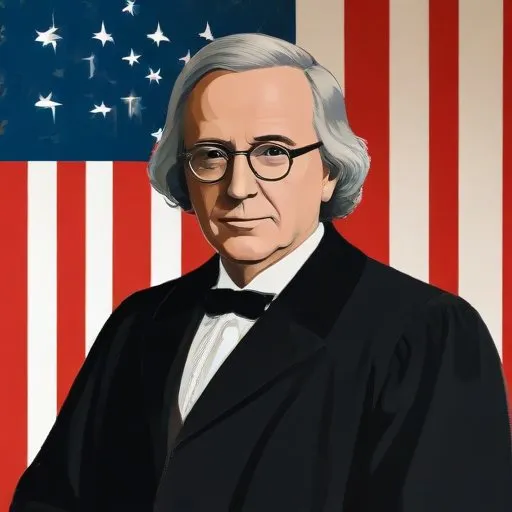
Edward Livingston: The Architect of the Louisiana Civil Code
A Legacy of Jurisprudence and Statesmanship
Edward Livingston was an American jurist, statesman, and slaveholder whose influential legacy extends far beyond his storied career in politics and law. He is perhaps best known for his pivotal role in drafting the Louisiana Civil Code of 1825, a comprehensive and progressive codification of law that drew heavily from the Napoleonic Code.
Early Life and Family
Born on May 28, 1764, in Clermont, colonial Albany County, Province of New York, Livingston was the youngest son of Judge
Robert Livingston and Margaret Beekman Livingston. His father, a respected judge and member of the New York Provincial Assembly, instilled in him a strong sense of justice and civic duty. Livingston's maternal grandparents, Henry Beekman and Janet Livingston Beekman, were descendants of
Wilhelmus Beekman, a prominent early American settler.
A Career of Public Service
Livingston represented both New York and Louisiana in Congress, where he distinguished himself as a champion of progressive legislation and a stalwart defender of individual rights. In 1831, he was appointed U.S. Secretary of State by President
Andrew Jackson, a position he held until 1833. Subsequently, he served as Minister to France from 1833 to 1835. Additionally, Livingston held the distinction of serving as the 46th mayor of New York City.
The Louisiana Civil Code of 1825
Livingston's most enduring legacy is undoubtedly the Louisiana Civil Code of 1825, a groundbreaking codification of law that continues to influence legal systems around the world. Drawing from the Napoleonic Code, Livingston crafted a comprehensive and progressive code that emphasized individual rights, property protection, and social justice. This monumental work remains a testament to his jurisprudential acumen and commitment to the principles of liberty and equality.
Influence on Modern Society
Livingston's contributions to American jurisprudence and politics have had a lasting impact on modern society. His advocacy for individual rights, social justice, and progressive legislation continues to inspire generations of lawyers, politicians, and activists. Furthermore, the Louisiana Civil Code of 1825 has served as a model for legal systems worldwide, shaping the course of legal development and informing the development of human rights instruments.
Personal Milestones and Key Life Events
- May 28, 1764: Born in Clermont, colonial Albany County, Province of New York
- 1831-1833: Served as U.S. Secretary of State under President Andrew Jackson
- 1833-1835: Served as Minister to France
- 1825: Drafted the Louisiana Civil Code
- May 23, 1836: Passed away at the age of 71
Legacy and Historical Context
Edward Livingston's life and legacy serve as a powerful reminder of the importance of public service, jurisprudential innovation, and commitment to social justice. As a statesman, jurist, and slaveholder, he navigated the complexities of his time, leaving an indelible mark on American history. His work continues to inspire and inform contemporary debates around law, politics, and human rights.
FAQ
What was Edward Livingstons role in American politics?
Edward Livingston was an American jurist and politician who served as the 11th Secretary of State from 1831 to 1833. He played a significant role in shaping American foreign policy and domestic politics during a period of significant change and growth.
What were Edward Livingstons contributions to the development of American law?
Edward Livingston was a prominent lawyer and jurist who made significant contributions to the development of American law. He was a strong advocate for judicial reform and the importance of an independent judiciary.
How did Edward Livingston respond to the Nullification Crisis?
Edward Livingston was a strong opponent of nullification and the crisis that threatened American unity in the 1830s. He played a key role in shaping the federal governments response to the crisis and promoting national unity.
What was Edward Livingstons relationship with other American politicians?
Edward Livingston was part of a network of prominent American politicians, including Andrew Jackson and Henry Clay. He collaborated and corresponded with these figures, contributing to the development of American politics and policy during the early 19th century.
What is Edward Livingstons legacy in American history?
Today, Edward Livingston is remembered as a significant figure in American history, particularly for his role in shaping American foreign policy and domestic politics during a period of significant change. His contributions to the development of American law and his commitment to national unity continue to be studied and celebrated by scholars and historians.