


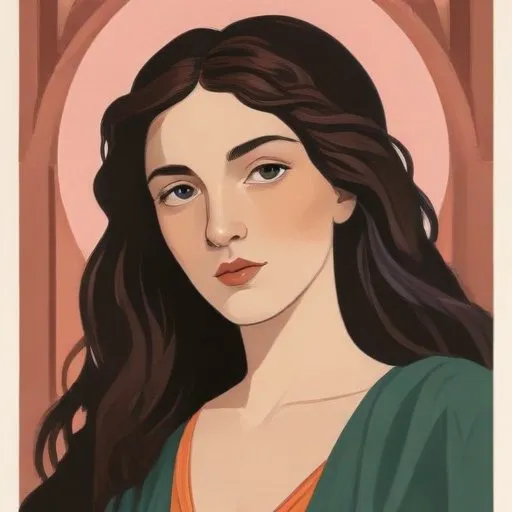
A British artist celebrated for her dreamlike, symbolic, and often mythological paintings that explored themes of love, death, and feminism. Her work is characterized by vivid colors, intricate details, and a sense of mysticism.
Evelyn De Morgan was a renowned English painter known for her extraordinary works that embodied spiritual, mythological, and allegorical themes, primarily focusing on the female body. Her unique style, which blended Aestheticism and Symbolism, captivated the art world and left an indelible mark on the Pre-Raphaelite Movement.
Born Mary Evelyn Pickering on August 30, 1855, in London, England, De Morgan was the daughter of Percival Pickering QC, the Recorder of Pontefract, and Anna Maria Wilhelmina Spencer Stanhope. Her mother, a descendant of Coke of Norfolk, Earl of Leicester, played a pivotal role in shaping De Morgan's education. She was educated at home, receiving the same instruction as her brother, which included studies in Greek, Latin, French, German, Italian, classical literature, and mythology.
De Morgan's artistic career spanned over three decades, during which she created numerous masterpieces that showcased her unique style. Some of her notable works include:
De Morgan's art was not only aesthetically pleasing but also conveyed her deep-seated philosophical beliefs. Her works often explored themes of spirituality, feminism, and pacifism. She was a strong supporter of the suffrage movement and signed the Declaration in Favour of Women's Suffrage in 1889. Her pacifist views led her to create a series of war paintings, expressing her horror at the atrocities of war.
In August 1883, De Morgan met William De Morgan, a ceramicist and son of the mathematician Augustus De Morgan. The couple married on March 5, 1887, and spent their lives together in London, with annual trips to Florence from 1895 to 1914. William De Morgan was a significant influence on Evelyn's work, and she often incorporated ceramic-like elements into her paintings.
Evelyn De Morgan's artistic legacy extends beyond her captivating paintings. Her unique style and philosophical beliefs have inspired generations of artists, writers, and thinkers. Her contributions to the Pre-Raphaelite Movement and her commitment to pacifism and feminism have cemented her place in art history. Today, her works continue to captivate audiences, offering a glimpse into the creative and imaginative world of this visionary painter.
Evelyn De Morgan's life and art are a testament to her boundless creativity and unwavering commitment to her artistic vision. Her work continues to inspire and captivate audiences, ensuring her legacy as one of the most innovative and visionary painters of her time.
Born in 1845
A renowned artist and illustrator, he is celebrated for his whimsical and intricate designs that brought children's books to life, particularly in the late 19th and early 20th centuries.
Born in 1833
A leading figure in the Pre-Raphaelite movement, creating dreamlike, romantic, and mythological paintings that captivated the Victorian era. His works continue to inspire artists, designers, and writers to this day.
Born in 1828
A Victorian-era poet and painter who founded the Pre-Raphaelite Brotherhood, creating dreamlike, sensual works that explored themes of love, beauty, and mortality.
Born in 1830
A renowned Victorian-era poet and author, celebrated for her lyrical and symbolic poetry, particularly "The Goblin Market and Other Poems" and "The Prince's Progress".
Born in 1837
A prominent Victorian-era writer, known for his poetic works that explored themes of beauty, death, and the human condition, with a distinctive style that blended sensuality and symbolism.
Born in 1829
A renowned Pre-Raphaelite artist, famous for his exquisite and intricate paintings, particularly "Ophelia" and "Christ in the House of His Parents", which showcased his mastery of color and detail.
Born in 1819
A prominent art critic and social reformer who championed the Pre-Raphaelite movement and advocated for social justice, leaving a lasting impact on art, architecture, and literature.
Born in 1827
A British soldier-turned-artist, he co-founded the Pre-Raphaelite Brotherhood, creating vivid, symbolic, and emotionally charged paintings that explored themes of faith, morality, and beauty.
