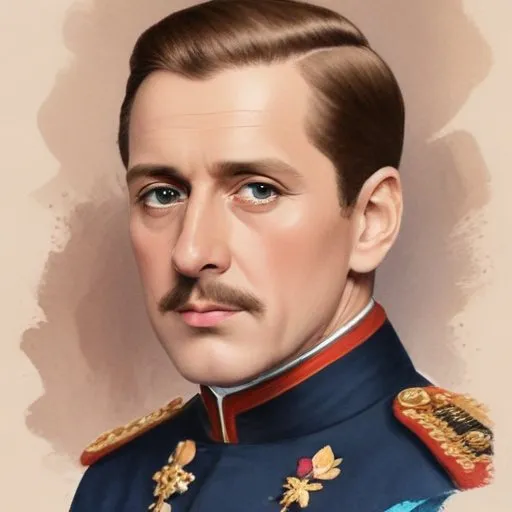
Ferdinand Charles, Archduke of Austria: A Life of Luxury and Controversy
A Legacy of Extravagance and Absolute Power
Ferdinand Charles, Archduke of Austria, is remembered for his extravagant lifestyle and absolute rule over Further Austria, including Tyrol, from 1646 to 1662. As the son of Archduke Leopold V and Claudia de Medici, he succeeded his father at a young age and went on to leave a lasting impact on the region, albeit a tumultuous one.
Early Life and Reign
Born on May 17, 1628, Ferdinand Charles was destined for greatness. As the son of Archduke Leopold V and Claudia de Medici, he was raised with the utmost privilege and luxury. Upon his father's death in 1632, Ferdinand Charles succeeded him under the regency of his mother. When he came of age in 1646, he took over his mother's governatorial duties and began to shape the region according to his own ideals.
A Life of Luxury and Extravagance
Ferdinand Charles was known for his excessive spending and love of luxury. To finance his extravagant lifestyle, he sold goods and entitlements, including the exorbitant sum paid by France for the cession of their fiefs west of the Rhine, Alsace, Sundgau, and Breisach. This lavish spending led to widespread discontent among his subjects, who felt the burden of his extravagance.
Absolutist Ruler and Controversies
Ferdinand Charles ruled with an iron fist, refusing to call any diet after 1648 and ordering the execution of his chancellor, Wilhelm Biener, in 1651 following a secret trial. This move sparked widespread criticism and discontent among his subjects, who saw him as a tyrannical ruler.
Cultural Contributions and Legacy
Despite his controversial reign, Ferdinand Charles was a lover of music and the arts. Italian opera was performed in his court, and he was a patron of the arts. His love of music and culture has left a lasting legacy in the region.
Personal Life and Marriage
Ferdinand Charles married Anna de Medici, daughter of Cosimo II de Medici, Grand Duke of Tuscany, and Maria Magdalena of Austria. They had three children:
- Claudia Felicitas of Austria (1653-1676), who married Leopold I, Holy Roman Emperor
- A daughter born and died on July 19, 1654
- Maria Magdalena of Austria (1656-1669)
Death and Legacy
Ferdinand Charles died on December 30, 1662, in Kaltern. His legacy is complex, marked by both extravagance and controversy, as well as a love of music and the arts. While his reign was marked by discontent and criticism, he has left an indelible mark on the region and its history.
Ferdinand Charles' life was a testament to the complexities of power and privilege. His reign serves as a reminder of the importance of responsible leadership and the dangers of absolute power.
FAQ
What were Ferdinand Charless accomplishments as Archduke of Austria?
Ferdinand Charles served as Archduke of Austria, governing the region during a period of significant change and reform in the Habsburg Empire.
How did Ferdinand Charless relationships with other European monarchs influence his reign?
Ferdinand Charless diplomatic efforts established alliances with other European monarchs, including the King of Spain and the Holy Roman Emperor, solidifying Austrias position in the region.
What were Ferdinand Charless contributions to the Thirty Years War?
Ferdinand Charles played a key role in the Thirty Years War, fighting against the Protestant states and contributing to the eventual defeat of the Swedish Empire.
How did Ferdinand Charless reign impact the history of Austria?
Ferdinand Charless reign marked a significant turning point in Austrian history, shaping the countrys development and setting the stage for its emergence as a major power in Europe.
What is Ferdinand Charless legacy in Habsburg history?
Ferdinand Charless accomplishments as Archduke of Austria helped solidify the Habsburg dynastys position in Europe, contributing to its enduring legacy as a major power.