


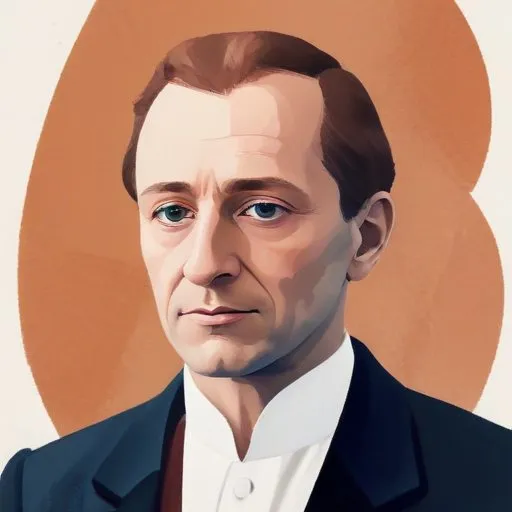
A Czech composer of the Classical period, known for his operas and sacred music, influencing the development of Viennese classical music. His works showcased a unique blend of Italian and German styles.
As one of the principal composers of dramma giocoso in the transitional period between the Baroque and Classical eras, Florian Leopold Gassmann made a lasting impact on the world of opera. His remarkable career spanned over two decades, during which he wrote an astonishing number of operas, earning him recognition as a master of his craft.
Gassmann was born on May 3, 1729, in Brx, Bohemia (now part of the Czech Republic). His father, a goldsmith, may have opposed his son's choice of a musical career, but Gassmann's passion for music prevailed. He was likely trained by Johann Woborschil, the local chorus master, and went on to hone his skills in composition.
In 1757, Gassmann began his illustrious career in Venice, writing an opera every year for the carnival season. This incredible feat not only showcased his talent but also earned him the appointment as choirmaster in the girls' conservatory in Venice. Many of his librettos were penned by the renowned Venetian playwright Carlo Goldoni, further solidifying Gassmann's reputation as a master composer.
In 1763, Gassmann was summoned to Vienna as court ballet composer, where he won the affection of Emperor Joseph II. This royal patronage led to his appointment as chamber composer to the Emperor in 1764, followed by his promotion to court conductor in 1772.
Gassmann's impact on the next generation of composers is impossible to overlook. In 1766, he met the young Antonio Salieri in Venice and took him under his wing, teaching him composition using Johann Joseph Fux's textbook Gradus ad Parnassum. Salieri went on to succeed Gassmann as chamber composer to the Emperor after his death. Gassmann's legacy extended beyond his own compositions, as he played a pivotal role in shaping the careers of future musical greats.
In 1771, Gassmann founded the Tonkünstler-Societät (Society of Musical Artists), a pioneering organization that provided concerts for the general public and supported the widows and orphans of its members. This groundbreaking institution was a testament to Gassmann's commitment to the musical community and his dedication to making music accessible to all.
Gassmann's personal life was marked by tragedy when he suffered a carriage accident during his final visit to Italy in 1774. He succumbed to his injuries on January 21, 1774, leaving behind a rich musical legacy. His daughters, Anna Fuchs and Therese Rosenbaum, both became renowned singers, with Therese earning a particular reputation as a Mozart interpreter.
Florian Leopold Gassmann's contributions to the world of opera and beyond continue to resonate with music lovers today. His remarkable compositions, innovative spirit, and nurturing of young talent have left an indelible mark on the history of music.
Born in 1756
A child prodigy and master of classical music, he composed over 600 works, including symphonies, operas, and chamber music, that continue to inspire and influence musicians today.
Born in 1714
A pioneering opera composer who revolutionized the art form with his innovative and expressive works, blending music and drama in a way that captivated audiences.
Born in 1732
A renowned composer and pianist of the Classical period, known for his symphonies, operas, and chamber music that showcased his innovative and expressive style. He played a significant role in shaping the Classical music era.
Born in 1714
A prominent composer of the Neapolitan School, he wrote over 80 operas and was a key figure in the transition between the Baroque and Classical periods. His music was known for its dramatic intensity and expressive melodies.
Born in 1750
A renowned 18th-century composer and conductor, known for his operas and rivalry with Mozart, as depicted in the movie Amadeus.
Born in 1749
An 18th-century Italian composer and educator, known for his operas and sacred music, particularly his comic operas that showcased his mastery of melody and harmony.
Born in 1740
An 18th-century Italian composer and educator, known for his operas and contributions to the development of classical music. His works were widely performed and admired by European royalty and aristocracy.
Born in 1728
An 18th-century Italian composer and educator, known for his operas and influence on the development of classical music. He was a prominent figure in the Neapolitan school of opera composition.
