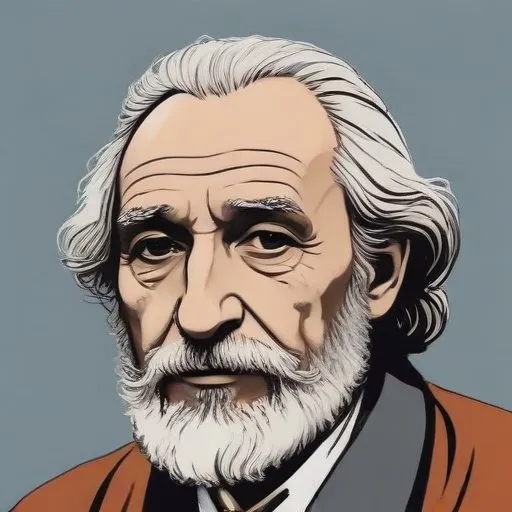
Gaston Bachelard: The French Philosopher Who Redefined Science and Poetry
Gaston Bachelard, a renowned French philosopher, made significant contributions to the fields of poetics and the philosophy of science. He is particularly known for introducing the concepts of epistemological obstacle and epistemological break, which revolutionized the way we approach scientific knowledge.
Early Life and Career
Born on June 27, 1884, in Bar-sur-Aube, France, Bachelard's early life was marked by a fascination with literature and technology. He worked as a postal clerk before pursuing higher education in physics and chemistry. His journey into philosophy was sparked by his interest in the great discoveries of the late 19th and early 20th centuries, including radioactivity, quantum and wave mechanics, relativity, electromagnetism, and wireless telegraphy.
Philosophical Contributions and Beliefs
Bachelard's philosophical stance was characterized by a rejection of positivism and a focus on the construction of scientific knowledge. He believed that the scientific object should be constructed, and therefore, information is in continuous construction. This perspective led him to emphasize the importance of empiricism and rationalism as complementary approaches to scientific research.
The Concept of Epistemological Obstacle and Break
Bachelard's most significant contribution to the philosophy of science is the concept of epistemological obstacle (obstacle épistémologique) and epistemological break (rupture épistémologique). He argued that scientific knowledge is not a continuous, cumulative process, but rather one that is characterized by obstacles and breaks, which reveal the limitations of our current understanding.
Influence on Modern Society and Philosophy
Bachelard's ideas have had a profound impact on French philosophy, influencing prominent thinkers such as
Michel Foucault,
Louis Althusser, Dominique Lecourt, and
Jacques Derrida. His work has also influenced sociologists like
Pierre Bourdieu and
Bruno Latour. His emphasis on the constructed nature of scientific knowledge has shaped the way we approach scientific research and its applications.
Major Works and Career Highlights
Bachelard's notable works include:
- "Essai sur la connaissance approche" (Essay on Approximative Knowledge), his doctoral thesis
- "Etude sur l'évolution d'un problème de physique: la propagation thermique dans les solides" (Study on the Evolution of a Physical Problem: Thermal Propagation in Solids), his complementary thesis
- "La Valeur Inductive de la Relativité" (The Inductive Value of Relativity), a work that explores the implications of relativity on our understanding of space and time
Bachelard taught at the University of Dijon from 1930 to 1940 and later held the chair in the history and philosophy of science at the University of Paris.
Legacy and Impact
Gaston Bachelard's legacy extends beyond the realm of philosophy. His ideas have influenced the way we approach scientific research, and his emphasis on the constructed nature of knowledge has shaped the way we think about the relationship between science and society. His work continues to inspire new generations of philosophers, scientists, and thinkers.
Quotes and Memorable Sayings
"The scientific object is not a thing, it's a problem."
"The history of science is not a accumulation of discoveries, but a succession of obstacles and breaks."
These quotes capture the essence of Bachelard's philosophical stance and his commitment to redefining the way we approach scientific knowledge.
FAQ
What was Gaston Bachelards contribution to the field of philosophy?
Gaston Bachelard was a French philosopher and poet who made significant contributions to the fields of epistemology, philosophy of science, and aesthetics. He is best known for his work on the philosophy of imagination and the role of imagination in human knowledge.
What were some of Gaston Bachelards most notable philosophical ideas?
Gaston Bachelards notable philosophical ideas include his concept of epistemological break, which argued that scientific knowledge is based on a series of ruptures with previous knowledge. He also developed a philosophy of imagination that emphasized the importance of imagination in human knowledge and experience.
How did Gaston Bachelards work influence the development of philosophical hermeneutics?
Gaston Bachelards work had a significant impact on the development of philosophical hermeneutics, which is the study of interpretation and understanding. His ideas on the role of imagination in human knowledge and experience influenced the work of later hermeneutic philosophers such as Hans-Georg Gadamer.
What was Gaston Bachelards role in the development of French phenomenology?
Gaston Bachelard was a key figure in the development of French phenomenology, a philosophical movement that focused on the study of conscious experience. His work on the philosophy of imagination and the role of imagination in human knowledge and experience influenced the work of later phenomenologists such as Maurice Merleau-Ponty.
What legacy did Gaston Bachelard leave behind in the field of philosophy?
Gaston Bachelard left behind a legacy as a pioneer of philosophical hermeneutics and a key figure in the development of French phenomenology. His ideas continue to influence philosophical debates on the nature of human knowledge, imagination, and experience.