


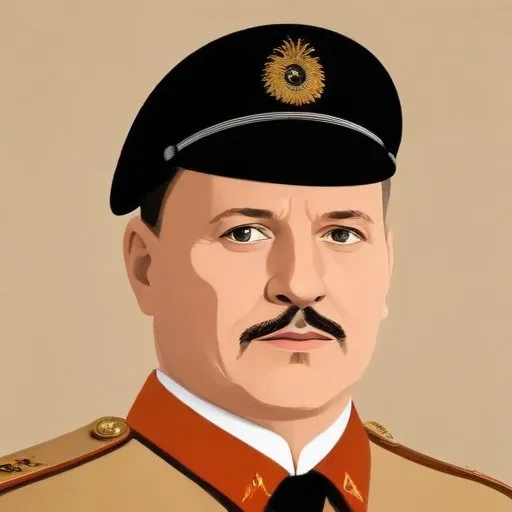
A German Federal Minister of Defence who played a key role in modernizing the country's military and was a prominent figure in the Social Democratic Party of Germany. He's also known for his humble beginnings as a soldier and later rising to become a respected politician.
Georg Leber, a prominent figure in German politics, is best known for his instrumental role in shaping the country's post-war landscape as a Trades Union leader and politician in the Social Democratic Party of Germany (SPD). Throughout his illustrious career, Leber held various ministerial positions, including Minister of Transport, Minister of Post and Telecommunications, and Minister of Defense, leaving an indelible mark on Germany's political and social fabric.
Born on October 7, 1920, in Obertiefenbach, Beselich, Leber's early life was marked by service in the Luftwaffe during World War II. This experience would later shape his political ideologies and inform his commitment to social democracy.
In 1947, Leber joined the SPD, and his political career took off. He was elected to the Bundestag in 1957, representing Frankfurt am Main I, a position he held until 1983. This period saw him take on various responsibilities, including ministerial roles, which cemented his reputation as a skilled and visionary leader.
Minister of Transport (1966-1972)
During this tenure, Leber oversaw significant infrastructure development, modernizing Germany's transportation network and paving the way for future growth.
Minister of Post and Telecommunications (1966-1972)
In this role, Leber drove the expansion of postal services and long-distance communications, fostering greater connectivity across Germany.
Minister of Defense (1972-1978)
Leber's time as Defense Minister saw the Bundeswehr undergo significant expansion, with the establishment of the Universities of the Bundeswehr in Munich and Hamburg. However, his tenure was cut short due to a controversy surrounding eavesdropping in the defense ministry.
After retiring from politics in 1986, Leber and his wife settled in the Bavarian countryside. He remained active, serving on the Advisory Board of the Bertelsmann Stiftung from 1990 to 1993. Georg Leber passed away on August 21, 2012, in his hometown of Schnau, leaving behind a rich legacy in German politics and a testament to his commitment to social democracy.
Throughout his life, Leber demonstrated unwavering dedication to the principles of social democracy, shaping the course of German politics and leaving an indelible mark on the country's history.
Born in 1918
A German leader who served as Chancellor from 1974 to 1982, known for his pragmatic and socially liberal policies, and his key role in shaping the European Union. He was also a respected economist and published author.
Born in 1913
A German statesman who served as Chancellor of Germany, known for his efforts to reconcile with Eastern Europe and his "Ostpolitik" policy, earning him a Nobel Peace Prize.
96 Years Old
The first unified Germany's leader, who oversaw the country's reunification after the Berlin Wall's fall, and is credited with creating a strong, stable economy.
Born in 1915
A prominent post-war German politician who served as Minister President of Bavaria and played a key role in shaping the country's conservative politics. He was also a strong advocate for European integration.
99 Years Old
A German statesman who served as Vice-Chancellor and Foreign Minister, playing a key role in reunifying Germany and shaping European politics. He's known for his diplomatic efforts and advocacy for human rights.
82 Years Old
The 7th Chancellor of Germany, a lawyer-turned-politician, led the country from 1998 to 2005, implementing significant economic and social reforms. He's known for his efforts to modernize Germany and strengthen the European Union.
71 Years Old
The first female Chancellor of Germany, serving for 16 years, known for her leadership during the European sovereign-debt crisis and her role in shaping the European Union's policy. She's a highly influential figure in modern politics.
