


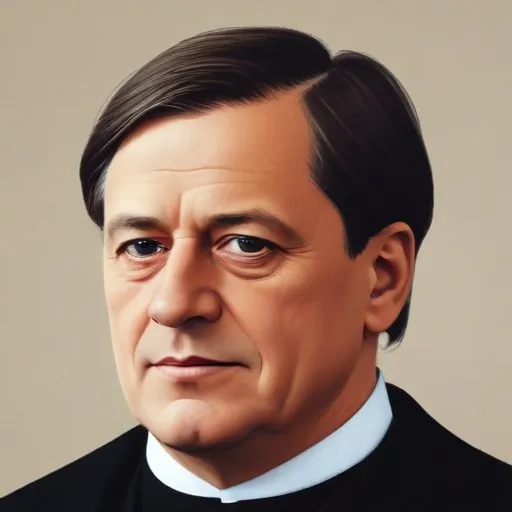
The 6th Chancellor of Germany, a brief but tumultuous tenure marked by World War I's devastating effects, and a failed attempt to reform the German government.
He studied at the University of Breslau, the University of Leipzig, and the University of Wrzburg, earning a Doctor of Laws degree in 1884. This educational background laid the foundation for his future career in law and administration.
Upon his return to Germany, Michaelis joined the Prussian administration, eventually becoming a member of the Prussian Treasury in Berlin in 1909. His experience in administration and finance would later prove instrumental in his role as Chancellor.
As Undersecretary of State in the Prussian Ministry of Finance and Commissioner of Food Supplies, Michaelis had built relationships with the High Command OHL, which facilitated his appointment. His brief tenure as Chancellor would be marked by significant challenges and controversies.
His economic background and experience in process engineering influenced his approach to governance, although he faced significant logistical and supply challenges during his time in office. Michaelis's legacy is complex, reflecting both the complexities of his time and the limitations of his brief tenure.
Michaelis's life and career are inextricably linked to the tumultuous events of World War I and the decline of the German Empire. His story serves as a reminder of the intricate relationships between politics, economics, and war, and the challenges faced by leaders in times of crisis.
Born in 1856
A German lawyer and politician who served as the 5th Chancellor of Germany from 1909 to 1917, known for his role in leading Germany into World War I. He implemented policies that led to the war, including the invasion of neutral Belgium, which drew Britain into the conflict.
Born in 1871
First President of Germany, leading the country through its early years of democracy and turmoil, known for his efforts to stabilize the government and economy.
Born in 1847
A German field marshal and politician who served as the 2nd President of Germany during the Weimar Republic, playing a crucial role in the rise of the Nazi Party. He's infamous for appointing Adolf Hitler as Chancellor of Germany in 1933.
Born in 1865
A German general and politician who played a crucial role in World War I, masterminding the 1918 Spring Offensive and later promoting Nazi ideology.
Born in 1879
A German nobleman who served as Chancellor of Germany in 1932, known for his role in appointing Adolf Hitler as Chancellor, paving the way for the Nazi regime.
Born in 1882
A German general and politician who briefly served as Chancellor of Germany in 1933, known for his failed attempts to stabilize the Weimar Republic and his role in Hitler's rise to power.
