


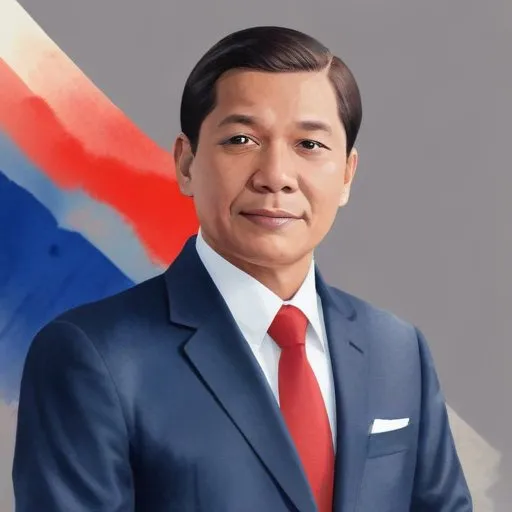
A Filipino entrepreneur and statesman who played a significant role in the country's economic development and served as a senator, known for his advocacy of free trade and economic liberalization.
Gil Puyat, a prominent figure in Philippine politics and business, served as a Senator of the Philippines from 1951 to 1972 and as Senate President from 1967 to 1972. He was a stalwart advocate for industrialization and economic growth, earning him recognition as a leading businessman and civic leader of his time.
Born on September 1, 1907, Puyat pursued higher education in commerce at the University of the Philippines, where he excelled and topped his class. His academic achievements were complemented by his involvement in the college-based Pan Xenia Fraternity and Upsilon Sigma Phi.
After completing his education, Puyat became a young professor of economics at the University of the Philippines and a member of the Rotary Club of Manila. His exceptional managerial skills caught the attention of President Manuel L. Quezon, who appointed him as the dean of the College of Business Administration at the University of the Philippines at the age of 33.
Puyat's outstanding contributions to business and civic service earned him numerous accolades, including:
Puyat's Senate career spanned over two decades, during which he played a crucial role in shaping the country's economic and industrial landscape. As Senate President, he worked closely with President Ferdinand Marcos, albeit their relationship was cut short when Marcos declared Martial Law in 1972, dissolving Congress.
Puyat was a firm believer in the importance of industrialization and economic growth. He advocated for policies that promoted entrepreneurship, job creation, and sustainable development. His philosophical contributions to the country's economic discourse continue to influence policymakers and business leaders to this day.
Despite his many achievements, Puyat's life was not without controversy. He was involved in a racist and controversial student movement group during his college days. However, he went on to become a respected figure in Philippine politics and business, earning the admiration of his peers and the gratitude of the people he served.
Gil Puyat's legacy extends beyond his Senate career and business accomplishments. He played a significant role in shaping the country's economic identity and inspiring a new generation of Filipino leaders. Today, he is remembered as a devoted public servant, a visionary entrepreneur, and a champion of industrialization and economic growth.
Born in 1917
A Filipino leader who ruled with an iron fist, implementing martial law and amassing wealth, leaving a legacy of controversy and economic turmoil.
93 Years Old
First female president of the Philippines, led the People Power Revolution, and restored democracy after decades of authoritarian rule.
93 Years Old
A Filipino journalist and politician who led the opposition against Ferdinand Marcos' regime, known for his courageous fight for democracy and human rights. Assassinated in 1983, his death sparked the People Power Revolution.
98 Years Old
The 12th President of the Philippines, a decorated war hero and leader who implemented economic reforms and brought stability to the country after a tumultuous era. He's known for his efforts to modernize the Philippines and promote national unity.
Born in 1892
This Filipino leader served as the 5th President of the Philippines, playing a key role in rebuilding the country after World War II and shaping its post-war economy. He's remembered for his efforts to restore national sovereignty and promote economic growth.
Born in 1890
The 6th President of the Philippines was a leader who played a crucial role in rebuilding the country after World War II, and is known for his efforts to restore the economy and promote national unity.
Born in 1910
A Filipino lawyer and politician who served as the 9th President of the Philippines, known for his efforts to reform the country's economy and introduce the Filipino language as the national language.
Born in 1907
A Filipino leader who served as president from 1953 to 1957, known for his anti-corruption and social reform efforts, as well as his tragic death in a plane crash.
