


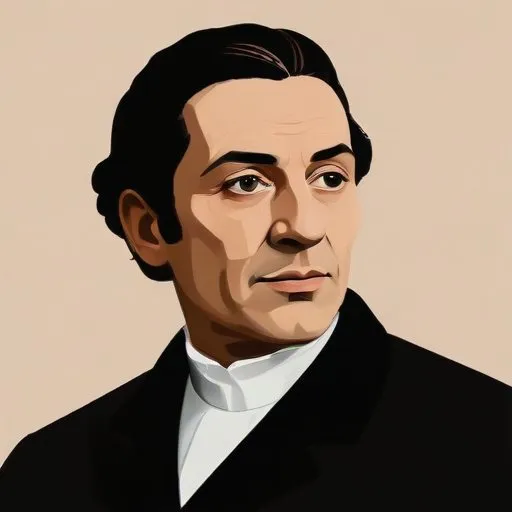
Baroque-era master of sacred music and opera, known for his innovative use of harmony and counterpoint. His works showcase a unique blend of Venetian and Roman styles.
Giovanni Legrenzi was a renowned Italian composer, organist, and priest of the Baroque era, celebrated for his remarkable contributions to the development of late Baroque idioms across northern Italy. His masterful compositions, which spanned opera, vocal, and instrumental music, continue to inspire and captivate audiences to this day.
Born on August 12, 1626, in Clusone, near Bergamo, Legrenzi was immersed in music from a young age. His father, Giovanni Maria Legrenzi, was a professional violinist and composer, and it is likely that Legrenzi received his early musical education at home.
Legrenzi's talent and dedication earned him his first appointment as Organist at Santa Maria Maggiore in Bergamo, where he would eventually become First Organist in 1653. Following his ordination as a priest in 1651, he continued to serve as a resident chaplain, combining his love of music with his devotion to the Church.
Legrenzi's compositional output was remarkable, with his first publication, music for Mass and Vespers, appearing in 1654. He went on to publish numerous works, including operas, oratorios, and instrumental pieces, which showcased his mastery of the Baroque style.
In 1656, Legrenzi became maestro di cappella at the Academy of the Holy Spirit in Ferrara, where he continued to compose music for liturgical services. His career was marked by several notable appointments, including his position as maestro di cappella at St. Mark's Basilica in Venice, which he held from 1685 until his death in 1690.
Legrenzi's music had a profound impact on the development of the late Baroque style in northern Italy. His compositions, which blended elegance and complexity, influenced a generation of composers, including Antonio Vivaldi and George Frideric Handel.
Today, Legrenzi's music is recognized for its beauty, expressiveness, and historical significance. His legacy is a testament to the power of music to transcend time and touch the human spirit.
Legrenzi was recognized for his contributions to music during his lifetime. In 1685, he was appointed to the prestigious position of maestro di cappella at St. Mark's Basilica in Venice, a testament to his talent and dedication.
Today, Legrenzi's music is celebrated for its beauty, expressiveness, and historical significance. His legacy continues to inspire and captivate audiences around the world.
Born in 1567
A Baroque music pioneer who revolutionized the opera and sacred music genres with innovative harmonies and orchestration, leaving an indelible mark on classical music.
Born in 1585
A renowned Baroque composer and organist, known for his contributions to the development of the oratorio and passion genres, creating over 500 works that showcased his mastery of choral music.
Born in 1678
A virtuosic violinist and prolific composer, he crafted over 400 concertos, including "The Four Seasons," which remains a beloved and iconic masterpiece of classical music.
Born in 1685
A master of Baroque music, he composed over 1,000 works, including orchestral suites, cantatas, and passions, that still inspire and influence musicians today. His innovative use of counterpoint and harmony raised the bar for classical music.
Born in 1685
A renowned Baroque composer and organist, famous for creating majestic orchestral suites, operas, and oratorios, including the iconic "Messiah" masterpiece.
Born in 1653
A virtuosic violinist and composer who revolutionized the concerto grosso form, creating a new era of classical music. His influential works elevated the violin to a solo instrument, shaping the course of Western classical music.
Born in 1660
Baroque-era mastermind behind over 600 cantatas, operas, and orchestral works, shaping the course of classical music with his innovative style and harmonic genius.
Born in 1685
A virtuosic harpsichordist and composer, renowned for crafting over 550 sonatas that showcased his innovative and expressive style, blending Italian and Portuguese influences. 42
