


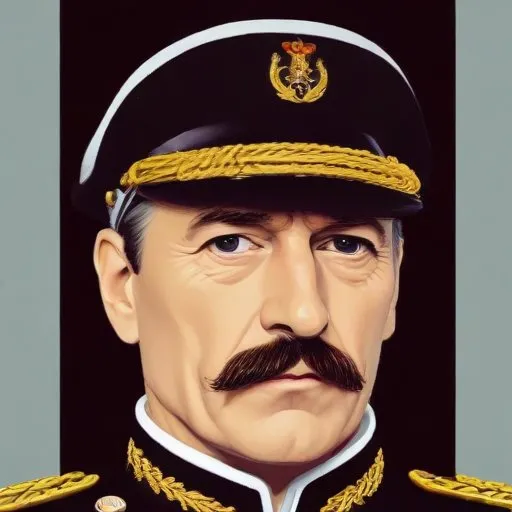
A German admiral who played a crucial role in the Battle of the Atlantic during World War II, commanding the German navy's U-boat fleet and earning the respect of his British counterparts. He is also known for his mysterious death at sea.
Günther Lütjens is best known for his exceptional bravery and tactical genius as a German admiral during World War II, particularly for his command of the battleship Bismarck during its ill-fated voyage into the Atlantic Ocean in 1941. Lütjens' 30-year military career was marked by numerous accomplishments, promotions, and honors, earning him a reputation as one of the most respected and feared naval officers of his time.
Born on May 25, 1889, in Wiesbaden, Germany, Lütjens entered the Imperial German Navy in 1907 and quickly rose through the ranks. During World War I, he served against the British Royal Navy, achieving the rank of Kapitänleutnant (captain lieutenant). Following the war, he remained in the navy, which was renamed the Reichsmarine, and built a reputation as an excellent staff officer.
In 1935, after the Nazi Party came to power, the navy was reorganized and renamed the Kriegsmarine. Lütjens' capabilities and friendship with Erich Raeder and Karl Dönitz, the two commanders-in-chief of the Kriegsmarine during World War II, led to rapid promotions and a command of the cruiser Karlsruhe. By 1937, he had risen to the rank of Konteradmiral (rear admiral).
In January 1941, Lütjens planned and executed Operation Berlin, an Atlantic raid to support U-boats in the Battle of the Atlantic by attacking British merchant shipping lanes. The operation was a tactical victory, with the German ships sailing over 18,000 miles, a record for a German battle group at the time.
In May 1941, Lütjens commanded the Bismarck, the German Navy's largest and most powerful battleship, on its maiden voyage into the Atlantic Ocean. The ship's mission was to break out into the open ocean and attack British merchant shipping convoys. Although the Bismarck sank the British battlecruiser HMS Hood, it was ultimately sunk by British naval forces on May 27, 1941. Lütjens was killed in action during the battle, along with over 2,000 crew members.
Günther Lütjens' bravery, tactical genius, and leadership skills have made him an iconic figure in German naval history. Although his life was cut short, his legacy continues to inspire and influence naval strategists and historians around the world.
Lütjens was known for his strong sense of duty, discipline, and loyalty to his crew. He was married to Margarete, and they had two sons, Gerhard and Günter.
Despite the controversies surrounding his role in World War II, Günther Lütjens remains a legendary figure in naval history, remembered for his exceptional bravery, tactical genius, and dedication to his country and crew.
Born in 1891
A German naval commander who led the U-boat fleet during World War II and briefly served as President of Germany after Hitler's death, known for his role in the war and its aftermath.
Born in 1876
A German naval leader who played a key role in the Kriegsmarine during World War II, overseeing the German U-boat fleet and naval operations. He was a close advisor to Adolf Hitler and implemented the German naval strategy during the war.
Born in 1888
A pioneering tank commander who revolutionized modern warfare with his innovative blitzkrieg tactics, earning him the nickname "Father of the Panzerwaffe".
Born in 1880
A German field marshal who led the Wehrmacht during World War II, playing a key role in the invasion of Poland and the Battle of Moscow. He was a prominent figure in the German high command during the war.
Born in 1882
A high-ranking military officer who played a crucial role in World War II, particularly in the Battle of France and the plot to assassinate Adolf Hitler.
Born in 1891
A skilled and highly decorated military leader, known for his tactical genius and defensive strategies during World War II, earning him the respect of both his allies and enemies.
Born in 1893
A high-ranking Nazi official, he was a decorated World War I fighter pilot and later became a prominent politician, serving as Minister President of Prussia. He's infamous for his role in the Nazi regime and war crimes trials.
Born in 1897
A mastermind of Nazi propaganda, he crafted a persuasive narrative that fueled the Third Reich's rise to power, leaving a lasting impact on the world.
