


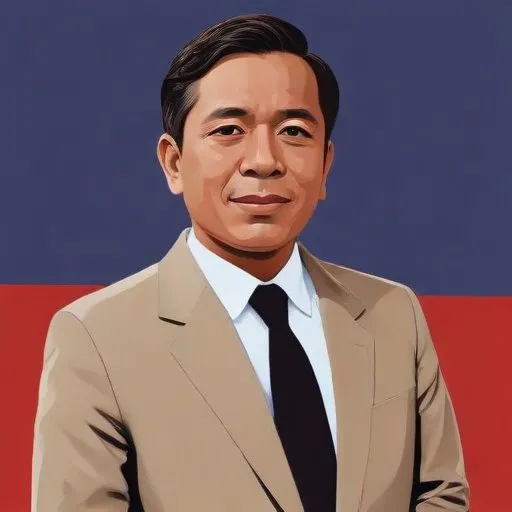
A Filipino journalist, jurist, and politician who fought for press freedom and was a key figure in the country's struggle for independence from colonial rule .
Gregorio Perfecto was a Filipino journalist, politician, and jurist who left an indelible mark on the Philippine Supreme Court with his liberal views, colorful writing style, and frequent dissenting opinions. As an Associate Justice of the Supreme Court from 1945 to 1949, Perfecto was a champion of free speech and a thorn in the side of those who abused power.
Born on November 28, 1891, in Mandurriao, Iloilo, Perfecto's family moved to Ligao, Albay, when he was a youth. He received his primary education in Ligao and later finished his secondary education at San Beda College in Manila. Perfecto then enrolled in Colegio de San Juan de Letran, where he earned his Bachelor of Arts degree. He went on to study law at the University of Santo Tomas, passing the bar examinations and being admitted to the Philippine Bar in 1916.
Perfecto began his career in journalism as a reporter for La Vanguardia and Consolidacion Nacional newspapers. By 1919, he had become the editor of the La Nacion daily newspaper, where he fearlessly took on corruption and errant public officials. His crusades earned him numerous libel suits, including four criminal libel cases, but he was acquitted of all charges by the Philippine Supreme Court between 1921 and 1922.
In 1922, Perfecto was elected to the Philippine Legislature, representing the North District of Manila. He served until 1928, during which time he continued to fight for liberal causes and free speech.
In 1931, Perfecto was stricken with polio, which left him disabled and unable to walk without crutches. However, he refused to let his disability hold him back and continued to pursue his passions, including golf. His resilience in the face of adversity earned him the respect and admiration of his peers and the public.
In 1945, Perfecto was appointed as an Associate Justice of the Supreme Court, where he continued to advocate for liberal views and free speech. His dissenting opinions, often written in his characteristic colorful style, earned him a reputation as a fearless and independent thinker. Perfecto's legacy as a champion of liberal causes and free speech continues to inspire generations of Filipinos.
Gregorio Perfecto's life and career were marked by his unwavering commitment to liberal causes and free speech. His fearless advocacy for these principles, both as a journalist and a jurist, has left an indelible mark on Philippine history. As a champion of free speech and a beacon of hope for those who seek to challenge the status quo, Perfecto's legacy continues to inspire and empower generations of Filipinos.
Born in 1878
The 2nd President of the Philippines, a key figure in the country's fight for independence from the US, known for his leadership during World War II and establishing a government-in-exile.
Born in 1878
The 4th President of the Philippines, a lawyer and politician who played a key role in the country's transition from American colonial rule to independence. He's most known for his efforts in rebuilding the war-torn nation after World War II.
Born in 1869
Led the Philippine Revolution against Spanish colonial rule and later established the First Philippine Republic, becoming its first president. He's revered as a national hero for his fight for independence.
93 Years Old
First female president of the Philippines, led the People Power Revolution, and restored democracy after decades of authoritarian rule.
Born in 1917
A Filipino leader who ruled with an iron fist, implementing martial law and amassing wealth, leaving a legacy of controversy and economic turmoil.
93 Years Old
A Filipino journalist and politician who led the opposition against Ferdinand Marcos' regime, known for his courageous fight for democracy and human rights. Assassinated in 1983, his death sparked the People Power Revolution.
Born in 1890
The 6th President of the Philippines was a leader who played a crucial role in rebuilding the country after World War II, and is known for his efforts to restore the economy and promote national unity.
