


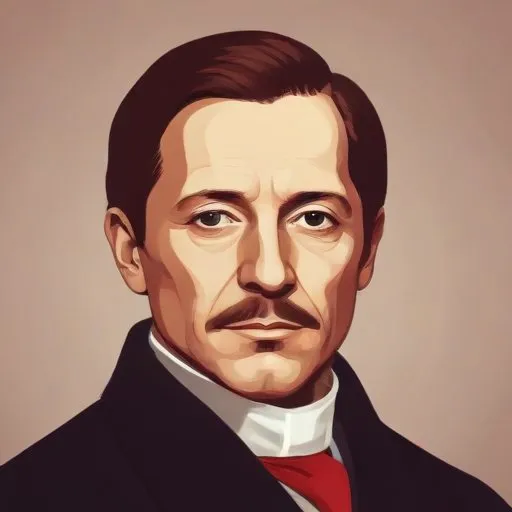
A key figure in the Vienna Circle, this philosopher developed logical positivism, a movement that sought to apply scientific methods to philosophy, and made significant contributions to the philosophy of science and probability theory.
Known for his groundbreaking contributions to the fields of philosophy, science, and education, Hans Reichenbach is revered as a leading figure in the development of logical empiricism. Through his pioneering work, he not only shaped the understanding of scientific philosophy but also inspired generations of scholars and thinkers.
Born on September 26, 1891, in Hamburg, Germany, Hans Reichenbach was the second son of a Jewish merchant, Bruno Reichenbach, who had converted to Protestantism. He grew up in a family that valued education, with his mother, Selma Menzel, being a school mistress from a long line of Protestant professionals.
Reichenbach's academic journey was marked by a passion for learning, as he studied civil engineering at the Hochschule für Technik Stuttgart and later delved into physics, mathematics, and philosophy at various universities, including Berlin, Erlangen, Göttingen, and Munich. He was fortunate to have had esteemed teachers such as Ernst Cassirer, David Hilbert, Max Planck, Max Born, and Arnold Sommerfeld, who played a significant role in shaping his intellectual curiosity.
In 1928, Reichenbach founded the Gesellschaft für empirische Philosophie (Society for Empirical Philosophy) in Berlin, also known as the Berlin Circle. This intellectual hub brought together prominent thinkers like Carl Gustav Hempel, Richard von Mises, David Hilbert, and Kurt Grelling, who shared Reichenbach's commitment to logical empiricism.
Reichenbach's work on logical empiricism aimed to reconcile the principles of science and philosophy. He believed that knowledge should be grounded in empirical evidence and that philosophy should be guided by the principles of science. Through his writings and teachings, he influenced a wide range of disciplines, from physics and mathematics to education and philosophy.
Reichenbach's seminal book, The Rise of Scientific Philosophy (1951), is regarded as one of his most significant contributions to the field of philosophy. In it, he presented a comprehensive framework for understanding the evolution of scientific thought and its implications for philosophy.
He also made lasting contributions to the study of:
Reichenbach's work was recognized with several awards and honors, including:
Hans Reichenbach's legacy extends far beyond his own remarkable contributions to philosophy and science. He inspired a new generation of scholars, including Carl Gustav Hempel, Wolfgang Stegmüller, and Hilary Putnam, who built upon his work and further developed the principles of logical empiricism.
Today, Reichenbach's ideas continue to influence fields such as artificial intelligence, cognitive science, and philosophy of science, cementing his position as a titan of 20th-century thought.
Born in 1891
Developed logical positivism, a philosophical movement that emphasized scientific evidence and rejected metaphysics, and made significant contributions to the fields of philosophy of language, philosophy of science, and epistemology.
Born in 1882
Developed the Vienna Circle's logical positivism, a philosophical movement that emphasized empirical evidence and rejected metaphysics. They also made significant contributions to the philosophy of science and ethics.
Born in 1882
Developed a visual approach to presenting complex social and economic data, creating a system of pictograms to convey information in a clear and concise manner.
Born in 1905
A key figure in the development of logical positivism, they sought to establish a scientific philosophy that emphasized empirical evidence and logical reasoning. Their work significantly influenced the philosophy of science and epistemology.
Born in 1926
A pioneer in multiple fields, this mathematician, computer scientist, and philosopher made significant contributions to the development of functional programming, philosophy of mind, and philosophy of language. Their work continues to influence contemporary debates in these areas.
Born in 1910
A prominent logical positivist, he championed the idea that only verifiable statements are meaningful, and his book "Language, Truth, and Logic" remains a seminal work in 20th-century philosophy.
Born in 1838
A pioneer in modern physics, he challenged traditional notions of space and time, and his critique of Newton's laws paved the way for Einstein's relativity. He also made significant contributions to psychology and philosophy.
