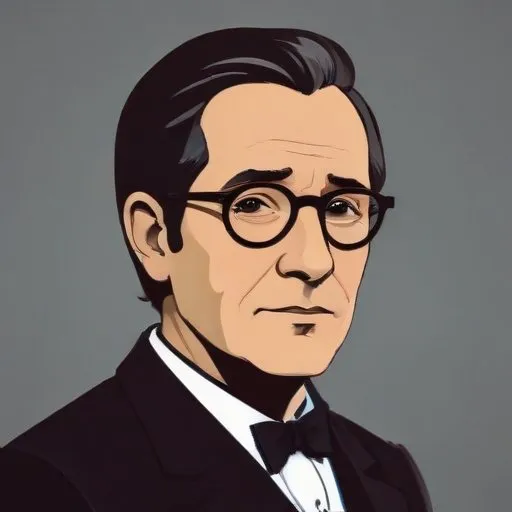
Harold Shapero: The American Composer Who Left a Lasting Legacy
A Lifetime of Musical Achievements
Harold Shapero was an American composer known for his remarkable contributions to classical music, leaving an indelible mark on the world of orchestral compositions. With a career spanning over seven decades, Shapero's works showcased his mastery of symphonies, sonatas, and chamber music, earning him numerous accolades and recognition from esteemed music institutions.
Early Life and Education
Born on April 29, 1920, in Lynn, Massachusetts, Shapero's love for music was nurtured from an early age. He learned to play the piano as a child and later founded the Hal Kenny Orchestra, a swing-era jazz band. However, his true passion lay in classical music, which led him to study with renowned musicians such as
Nicolas Slonimsky,
Ernst Krenek, and
Walter Piston at Harvard University.
Rise to Prominence
Shapero's talent was soon recognized, and he became one of the first students at Tanglewood, where he studied under the guidance of
Paul Hindemith. In 1941, he was awarded the prestigious Rome Prize for his
Nine-Minute Overture, which included a $1,000 award. Although World War II prevented him from taking advantage of the residency in Italy, Shapero continued to excel in his craft, earning the Naumberg and Paine Fellowships at Harvard.
Post-War Era and Prolific Output
The 1940s saw Shapero's output flourish, with the creation of three piano sonatas, the
Sonata for Violin and Piano, and numerous chamber ensemble works. His magnum opus, the
Symphony for Classical Orchestra, a 45-minute masterpiece, solidified his position as a leading American composer. Shapero's music was characterized by its lyrical melodies, complex harmonies, and a deep understanding of classical music's rich heritage.
Influence and Legacy
Throughout his career, Shapero's compositions were performed by esteemed orchestras, including the Boston Symphony Orchestra and the New York Philharmonic. His influence can be seen in the works of younger composers, who drew inspiration from his unique style and approach to classical music. Shapero's legacy extends beyond his music, as he played a crucial role in shaping the American classical music landscape of the 20th century.
Awards and Honors
- Rome Prize (1941)
- Naumberg Fellowship
- Paine Fellowship
Personal Milestones
Admiration and Critique
Shapero's music was often praised for its elegance, lyricism, and craftsmanship. His unique blend of traditional and modern elements created a distinctive sound that resonated with audiences and critics alike. While some critics felt his music was too conservative, Shapero remained committed to his artistic vision, leaving behind a rich legacy of classical music that continues to inspire and delight audiences today.
FAQ
What was Harold Shaperos compositional style?
Harold Shaperos compositional style was rooted in neoclassicism, with a focus on clarity, simplicity, and elegance. He was influenced by the works of Stravinsky and Hindemith.
What was Harold Shaperos most famous work?
Harold Shaperos most famous work is his Symphony for Classical Orchestra, a critically acclaimed piece that showcases his mastery of orchestration and form.
What was Harold Shaperos experience as a teacher?
Harold Shapero had a long and distinguished career as a teacher, serving on the faculty of Brandeis University and mentoring many aspiring composers.
How did Harold Shaperos Jewish heritage influence his music?
Harold Shaperos Jewish heritage had a significant impact on his music, with many of his works incorporating Jewish themes and motifs.
What was Harold Shaperos legacy in American music?
Harold Shaperos legacy in American music is that of a significant composer and educator who helped to shape the countrys musical landscape.