


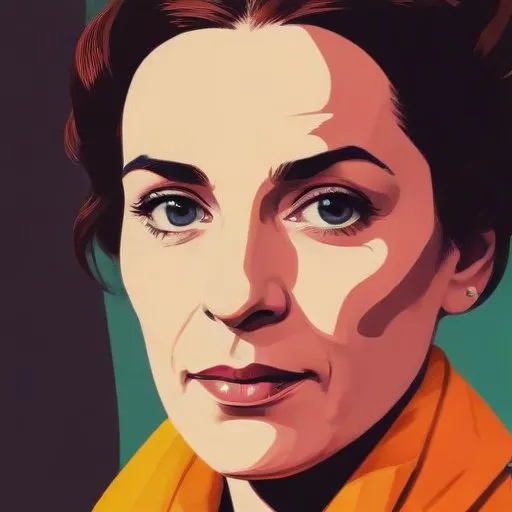
A pioneering feminist and philosopher who advocated for women's rights and education, and was a significant influence on her husband John Stuart Mill's work.
Harriet Taylor Mill, born in 1807, was a renowned English philosopher and women's rights advocate who left an indelible mark on the world of philosophy and social reform. Through her writing and advocacy, she challenged societal norms and fought tirelessly for women's emancipation, earning her a place among the pioneers of feminist thought.
Harriet Taylor Mill was born Harriet Hardy in Walworth, south London, to Thomas Hardy, a surgeon, and his wife Harriet. She received her education at home, where she developed a passion for writing poetry and cultivated radical and free-thinking ideas. Her early interests led her to associate with the congregation of Unitarian free thinker Rev. William Fox, where she met like-minded individuals who shared her vision for social change.
In 1826, Harriet married John Taylor, with whom she had three children: Herbert, Algernon, and Helen Taylor. During this period, she continued to write poetry and explore her interest in social reform. Her literary pursuits led her to write a comprehensive history of the printed and written word, titled Life of William Caxton, for the Society for the Diffusion of Useful Knowledge.
In 1830, Harriet met John Stuart Mill, a prominent philosopher and economist, through a mutual acquaintance. Their meeting marked the beginning of a lifelong partnership that would shape their intellectual and personal lives. John Stuart Mill, who treated Harriet as an intellectual equal, was drawn to her passion for social reform and her writing skills. Their friendship blossomed, and Harriet began writing on women's rights, ethics, toleration, and marriage, laying the foundation for her future work.
Harriet Taylor Mill's philosophical contributions were vast and far-reaching. She believed in the importance of individual freedom, women's emancipation, and social reform. Her writing emphasized the need for women to have equal rights and opportunities, challenging the patriarchal norms of her time. Her work on ethics, toleration, and marriage also highlighted the importance of personal autonomy and the need for social reform.
Harriet Taylor Mill's extant corpus of writing is a testament to her intellectual prowess and her commitment to social reform. Her complete works, including unpublished pieces, provide valuable insights into her philosophical beliefs and her advocacy for women's rights. The Collected Works of John Stuart Mill, particularly volume XXI, also features several pieces written by Harriet, showcasing the collaborative nature of their partnership.
Harriet Taylor Mill's legacy extends far beyond her own lifetime. Her advocacy for women's rights and social reform paved the way for future generations of feminists and social reformers. Her writing and philosophical contributions continue to inspire and educate people around the world, making her a pioneer of feminist thought and a champion of social change.
Harriet Taylor Mill's writing is replete with powerful quotes and memorable sayings that continue to inspire people today. Her advocacy for women's rights and social reform is evident in her writing, which highlights the importance of individual freedom and personal autonomy.
Through her life and work, Harriet Taylor Mill left an indelible mark on the world of philosophy and social reform. Her commitment to women's rights and social change continues to inspire people around the world, making her a true pioneer of feminist thought.
Born in 1806
A prominent 19th-century thinker who championed individual liberty, free speech, and women's rights, and is best known for his influential book "On Liberty".
Born in 1759
A pioneering advocate for women's rights and education, this 18th-century thinker wrote influential works that shaped feminist philosophy and literature.
Born in 1908
A pioneering feminist philosopher who wrote extensively on ethics, politics, and gender, famously arguing that "one is not born, but rather becomes, a woman."
Born in 1820
A 19th-century philosopher and economist who co-authored "The Communist Manifesto" with Karl Marx, shaping modern socialist and communist thought. He also wrote extensively on economics, history, and politics.
Born in 1818
A 19th-century philosopher who developed the theory of communism, arguing that capitalism would eventually be replaced by a socialist society. He's known for his critique of capitalism and the concept of class struggle.
Born in 1748
Developed the concept of utilitarianism, which aims to maximize overall happiness and well-being, and is considered the founder of modern welfare economics.
Born in 1921
Developed the concept of "justice as fairness" and argued that a just society should be based on principles that would be agreed upon by rational individuals behind a "veil of ignorance".
92 Years Old
A renowned economist and philosopher who has made significant contributions to welfare economics, social choice theory, and development economics, and is known for his work on poverty, famine, and human development.
