


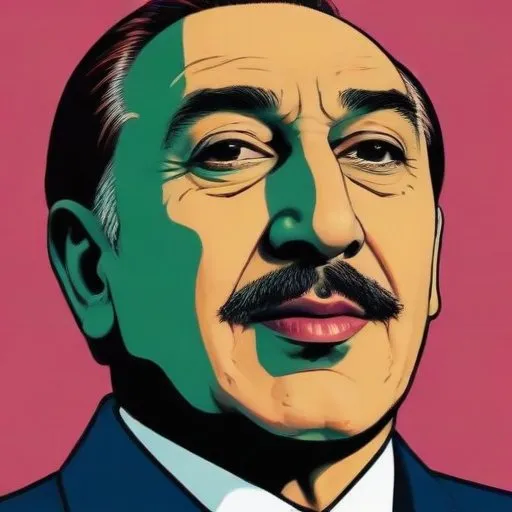
Azerbaijan's leader who ruled with an iron fist, modernizing the country while suppressing opposition, leaving a lasting legacy in the region.
Heydar Aliyev, the third president of Azerbaijan, is renowned for his instrumental role in shaping the country's modern identity. As a Soviet party boss, KGB high-ranking official, and president, Aliyev's legacy is marked by his authoritarian rule, cult of personality, and enduring impact on Azerbaijan's politics.
Born on May 10, 1923, in Nakhchivan, Azerbaijan, Aliyev rose through the ranks of the Soviet Communist Party, joining the KGB in 1941. He served for 28 years in Soviet state security organs, becoming a trusted figure in the AzSSR government.
Aliyev's close associations with Soviet leaders Leonid Brezhnev and Yuri Andropov propelled him to the top echelons of power. He governed Soviet Azerbaijan from 1969 to 1982 as First Secretary of the Communist Party of Azerbaijan and later held the post of First Deputy Premier of the Soviet Union from 1982 to 1987.
In 1993, Aliyev consolidated power after the military coup that ousted President Abulfaz Elchibey. He won the presidential election with nearly 99% of the vote, marking the end of Azerbaijan's brief democratic interlude. His regime was characterized by a strong police state, rigged elections, and repression of dissent.
Aliyev's authoritarian rule spawned a cult of personality, which persisted even after his death in 2003. His image and legacy continue to dominate Azerbaijani politics, with his son Ilham Aliyev succeeding him as president.
Aliyev's regime has been criticized for its human rights abuses, corruption, and authoritarianism. However, he is also credited with maintaining stability and promoting economic growth in Azerbaijan. His legacy remains a subject of debate, with some hailing him as a national hero and others condemning his dictatorial rule.
Aliyev's impact on Azerbaijani politics and society is undeniable. His legacy continues to shape the country's authoritarian system, with his son Ilham maintaining a tight grip on power. Despite controversies, Aliyev's role in modernizing Azerbaijan and promoting its national identity cannot be overstated.
In conclusion, Heydar Aliyev's life and legacy are a testament to his indelible mark on Azerbaijan's history. Love him or loathe him, Aliyev's influence will continue to shape the country's destiny for generations to come.
64 Years Old
The 4th President of Azerbaijan, a leader who has dominated the country's politics since 2003, known for his authoritarian rule and efforts to maintain stability in the region.
74 Years Old
A Russian politician who has dominated the country's politics for over two decades, known for his authoritarian leadership style and controversial foreign policy decisions.
72 Years Old
The 12th President of Turkey, a dominant figure in Turkish politics, known for his Islamist roots and authoritarian leadership style, shaping Turkey's modern political landscape.
69 Years Old
Iran's sixth president, a controversial figure known for his anti-Western rhetoric and disputed re-election, who sparked global concern over Iran's nuclear program.
72 Years Old
The charismatic leader who transformed Venezuela through socialist reforms and anti-imperialist rhetoric, leaving a lasting impact on the country's politics and economy.
Born in 1926
The Cuban revolutionary who led the country from 1959 to 2008, implementing socialist policies and defying US opposition, becoming an iconic figure in modern history.
89 Years Old
The authoritarian leader who ruled Iraq with an iron fist, notorious for his brutal suppression of dissent and invasion of neighboring countries.
