


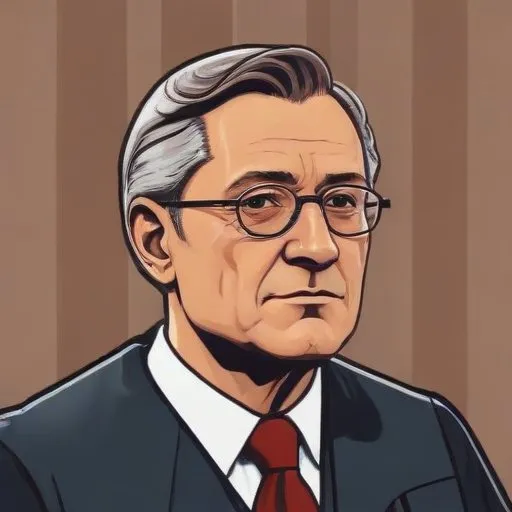
A German lawyer and politician who played a key role in the country's socialist movement during the early 20th century, advocating for workers' rights and democratic reforms.
Hugo Haase, a German socialist politician, jurist, and pacifist, is renowned for co-chairing the Council of the Peoples' Deputies during the German Revolution of 1918-1919 alongside Friedrich Ebert. His tireless efforts to promote gradual reforms and social change through peaceful means earned him recognition as a prominent figure in German politics.
Born on September 29, 1863, in Allenstein, East Prussia (now Olsztyn, Poland), Haase was the son of Jewish shoemaker and small businessman Nathan Haase and his wife Pauline (née Anker). He attended the Gymnasium at Rastenburg and later studied law in Königsberg (now Kaliningrad, Russia).
In 1887, Haase joined the Social Democratic Party of Germany (SPD) and established himself as a lawyer in Königsberg. He became the first socialist lawyer in East Prussia, taking on clients from the lower classes, including workers, peasants, journalists, and socialist functionaries. His dedication to social justice led to his election as the first Social Democrat in the municipal parliament of Königsberg in 1894.
Haase belonged to the revisionist wing of the SPD, which advocated for gradual reforms and social change through peaceful means. His commitment to this ideology led to his election as SPD chairman alongside August Bebel in 1911. After Bebel's death in 1913, Haase and Friedrich Ebert became the party chairmen.
Hugo Haase's contributions to German politics and socialism are undeniable. His pacifist stance and commitment to gradual reforms continue to inspire future generations of politicians and social activists. Through his leadership roles and notable legal cases, Haase left an indelible mark on German history, cementing his legacy as a champion of social justice and peaceful change.
Born in 1894
A high-ranking Nazi official who flew to Scotland on a solo mission to negotiate peace with the UK, but was instead arrested and imprisoned.
Born in 1889
The dictator of Nazi Germany, responsible for the genocide of six million Jews and millions of other people during World War II, and infamous for his extreme nationalist and anti-Semitic ideology.
Born in 1897
A mastermind of Nazi propaganda, he crafted a persuasive narrative that fueled the Third Reich's rise to power, leaving a lasting impact on the world.
Born in 1893
A high-ranking Nazi official, he was a decorated World War I fighter pilot and later became a prominent politician, serving as Minister President of Prussia. He's infamous for his role in the Nazi regime and war crimes trials.
Born in 1893
A German diplomat who served as the Nazi regime's Foreign Minister, orchestrating key alliances and treaties that led to World War II. He was a close associate of Adolf Hitler and played a crucial role in shaping Nazi foreign policy.
Born in 1876
A German naval leader who played a key role in the Kriegsmarine during World War II, overseeing the German U-boat fleet and naval operations. He was a close advisor to Adolf Hitler and implemented the German naval strategy during the war.
Born in 1891
A German naval commander who led the U-boat fleet during World War II and briefly served as President of Germany after Hitler's death, known for his role in the war and its aftermath.
Born in 1882
A high-ranking Nazi officer who served as the Chief of the OKW, the German High Command, during World War II, and was known for his unwavering loyalty to Hitler. He was tried and executed for war crimes after the war.
