


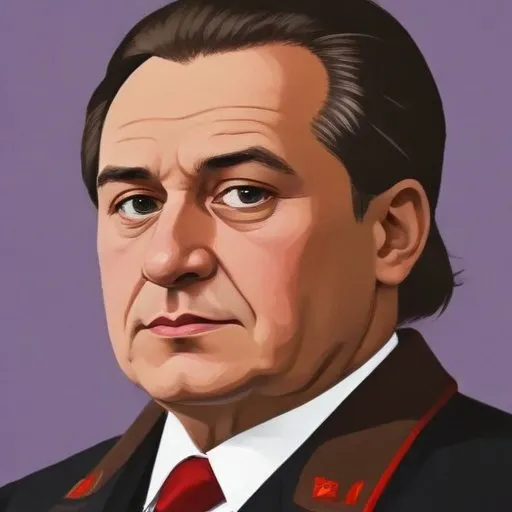
Russian engineer and politician who served as the 19th Prime Minister of Russia, playing a crucial role in the country's transition from a planned to a market economy. He implemented significant economic reforms, including privatization and deregulation.
Ivan Silayev is best known for being the last head of government of the Soviet Union, serving as Prime Minister of the Soviet Union through the offices of chairman of the Committee on the Operational Management of the Soviet economy and chairman of the Interrepublican Economic Committee from 28 August to 25 December 1991. During this tumultuous period, Silayev oversaw the economy of the Soviet Union, navigating the country through the late Gorbachev era and the eventual dissolution of the Soviet Union.
Born on 21 October 1930, Silayev graduated in the 1950s and began his political career in the Ministry of Aviation Industry in the 1970s. During the Brezhnev Era, he rose through the ranks, becoming Minister of Aviation Industry, Minister of Machine-Tool and Tool Building Industry, and a Central Committee member.
In 1985, Mikhail Gorbachev appointed Silayev as deputy chairman of the Council of Ministers in Nikolai Ryzhkov's First Government. Silayev continued to serve in various government positions, eventually becoming chairman of the Council of Ministers of the Russian SFSR in June 1990.
In 1991, Silayev's career took a dramatic turn. He faced several cabinet difficulties during his tenure as chairman of the Council of Ministers of the Russian SFSR, and his support for the majority of Boris Yeltsin's policies was tempered by his opposition to Yeltsin's secessionist policies, which ultimately led to the disintegration of the Soviet Union.
Following the failed August coup and the abolishment of the Cabinet of Ministers, Silayev's economic committee, which he had chaired since 24 August, was granted the authority of the Cabinet of Ministers, effectively making him the Prime Minister of the Soviet Union.
Silayev's tenure as Prime Minister of the Soviet Union was marked by his efforts to reform the Soviet economy and navigate the country through its transition to a post-Soviet era. Although his time in office was marked by controversy and upheaval, Silayev's dedication to public service and his commitment to reform remain an important part of his legacy.
Silayev passed away on 8 February 2023, leaving behind a rich legacy of public service and dedication to his country. Despite the challenges he faced during his time in office, Silayev remained committed to his ideals and continued to work towards a better future for the Soviet Union and its people.
Ivan Silayev's life and legacy serve as a testament to his dedication to public service and his commitment to reform, even in the face of adversity. As the last head of government of the Soviet Union, Silayev played a critical role in shaping the country's transition to a post-Soviet era, leaving behind a lasting impact on Russian and Soviet history.
95 Years Old
First President of Russia, leading the country's transition from communism to democracy, and known for his bold reforms and iconic leadership style.
95 Years Old
The last leader of the Soviet Union, who introduced reforms that led to the end of the Cold War and the collapse of communism, earning a Nobel Peace Prize. He's known for his policies of glasnost and perestroika, which transformed the Soviet Union and the world.
88 Years Old
A Russian politician who served as Prime Minister from 1992 to 1998, known for his role in shaping post-Soviet Russia's economy and politics.
70 Years Old
Russian economist and politician who played a key role in shaping the country's post-Soviet economy, introducing radical reforms to transition from a planned to a market economy.
75 Years Old
Russia's first post-Soviet foreign minister, known for his pro-Western reforms and efforts to integrate Russia into the global community. He played a key role in shaping Russia's foreign policy in the 1990s.
74 Years Old
A Russian politician who has dominated the country's politics for over two decades, known for his authoritarian leadership style and controversial foreign policy decisions.
61 Years Old
Russian lawyer and politician who served as President of Russia from 2008 to 2012, known for his efforts to modernize Russia's economy and politics. He also served as Prime Minister from 2012 to 2020.
76 Years Old
Russia's top diplomat, responsible for shaping the country's foreign policy and representing its interests on the global stage, known for his sharp wit and tough negotiating style.
