


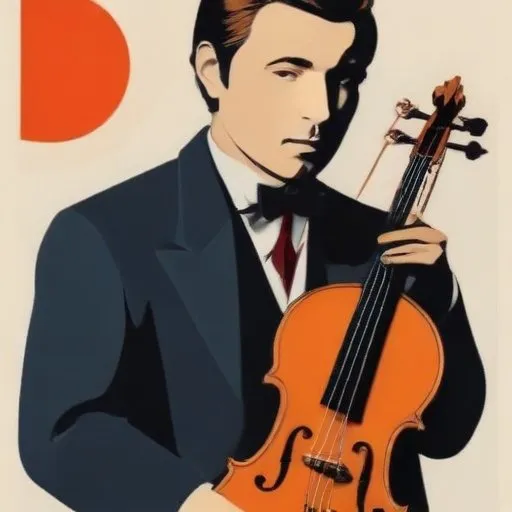
A Czech virtuoso violinist and composer, renowned for his romantic and expressive performances, particularly in the classical music genre.
Known for his mesmerizing electric violin performances, Jan Hrub is a Czech rock violinist who has left an indelible mark on the music scene. With his unique style and versatility, he has played with some of the most prominent bands and musicians in the country, earning him a reputation as one of the most respected figures in Czech rock music.
Born on December 3, 1948, in Prague, Hrub's love for music was evident from a young age. He began studying violin at the Prague Conservatory in 1964, where he honed his skills for four years. His early beginnings were marked by his involvement with the group Reciprocity, where he played bass and later violin.
Hrub's big break came when he joined Vladimír Miks' band Etc... in 1975. During his time with the band, he developed his signature electric violin sound, which became an integral part of their music. However, his stint with Etc... was cut short when Miks was banned from performing by the Communist government in 1982.
Undeterred, Hrub joined Luboš Andršt's Blues Band in 1983 and later became a member of Michal Prokop's Framus 5. His collaboration with Prokop led to the creation of the iconic album Kolej Yesterday, which showcased Hrub's remarkable skills as a violinist.
In addition to his work with Etc... and Framus 5, Hrub has been involved with several other projects, including the acoustic trio NuTrio, alongside Prokop and Andršt. He has also collaborated with various artists, such as Dagmar Andrtová-Voříšková, and recorded with bands like Jazz Q, Marsyas, and CK Vocal.
In the 1990s, Hrub's interest in Celtic music led him to form the group Kukulín, which has become a staple in the Czech music scene. He has also been part of the underground band Undrgrund, along with Vladimír Merta, Petr Kalandra, and Mik.
Throughout his illustrious career, Hrub has received numerous accolades for his contributions to Czech music. His unique style and dedication to his craft have earned him a special place in the hearts of music lovers around the world.
Jan Hrub's remarkable journey is a testament to his passion for music and his ability to adapt to different genres and styles. As a true pioneer of Czech rock music, he continues to inspire generations of musicians and fans alike.
Born in 1824
A Czech pianist and composer who is often referred to as the father of Czech national music, known for his operas and symphonic poems that evoke a strong sense of national identity.
Born in 1841
A Czech composer and academic who blended folk influences with classical music, creating iconic works like the "New World Symphony".
Born in 1854
A Czech composer and theorist who created innovative, folk-inspired operas and orchestral works that explored the human experience, often with a focus on social justice and morality.
Born in 1874
A Czech virtuoso violinist and composer, known for his romantic and expressive works, including his iconic Asrael Symphony, which showcases his mastery of orchestration and emotional depth.
Born in 1870
A Czech composer and educator who blended folk elements with modernist techniques, creating a unique national style in his orchestral and chamber works.
Born in 1850
A Czech Romantic-era composer and poet, known for his operas and symphonic poems that showcased his country's folklore and literature. His music is still widely performed in the Czech Republic today.
Born in 1879
A Czech-American pianist, composer, and academic who wrote operettas and musicals, blending European classical music with American popular music, creating iconic works like "Rose-Marie" and "The Vagabond King".
